Skip to content
Sconce & Socket

Floor, reading and task lamps judged on the only things that matter in a dark room: how much light comes out, and where it goes.

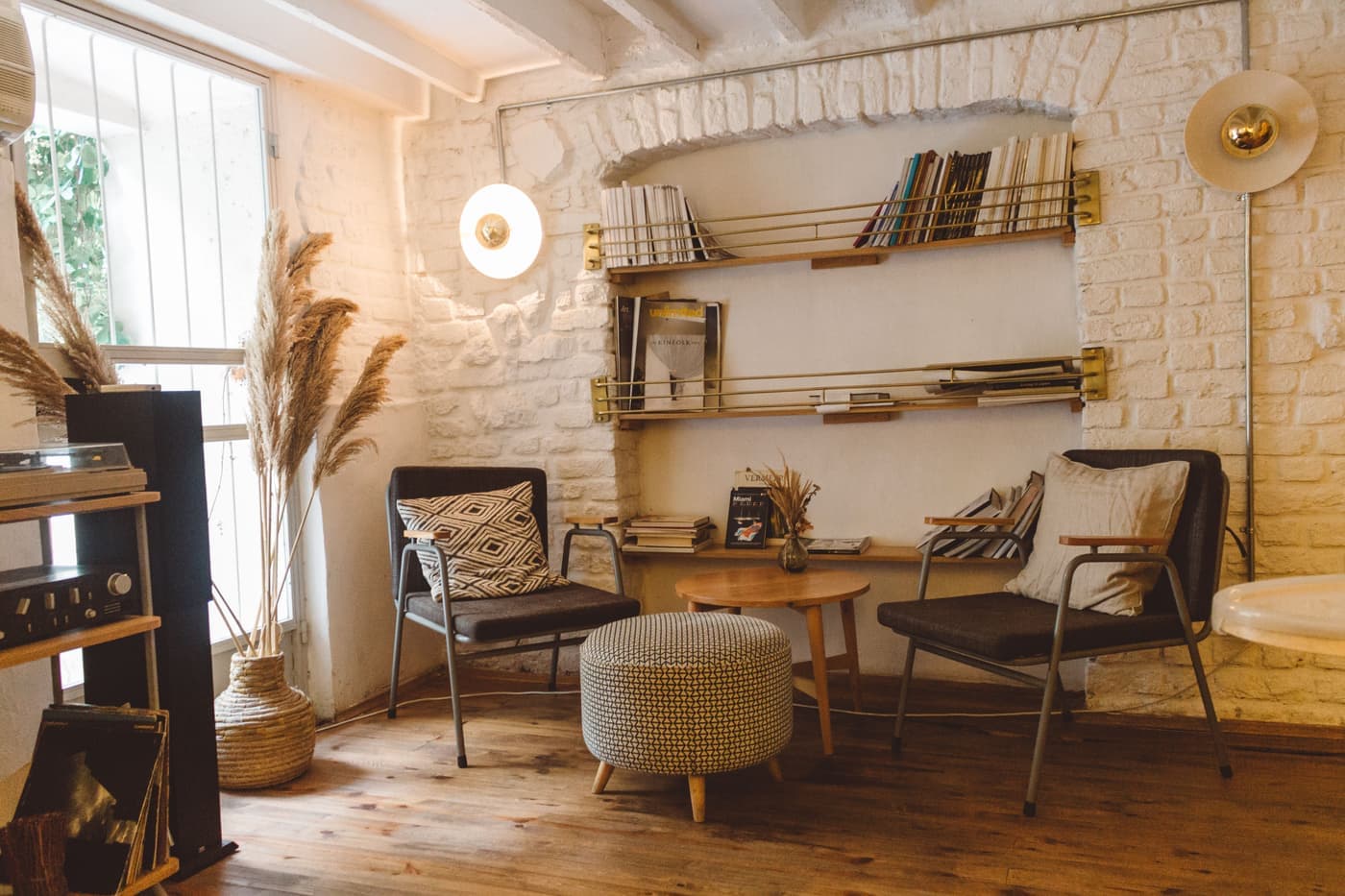
A tall floor lamp standing beside an armchair in a softly lit room after dark

Sconce & Socket earns a commission on qualifying purchases made through links on this page, at no extra cost to you. It does not change which products we pick. Full disclosure.

01

Two specs, and one of them is usually missing

Lamps are sold on appearance, which is reasonable - they are furniture. But in a room you are trying to fix, two things decide whether a lamp helps, and only one of them is on the label.

Published output. A dark room is a quantity problem, and a lamp that will not state its quantity cannot be part of a plan. Integrated-LED lamps have a figure whether or not they print it, and a surprising number do not. Standard-socket lamps genuinely have nothing to publish, because the output is the bulb you choose - which is a different thing from an omission.

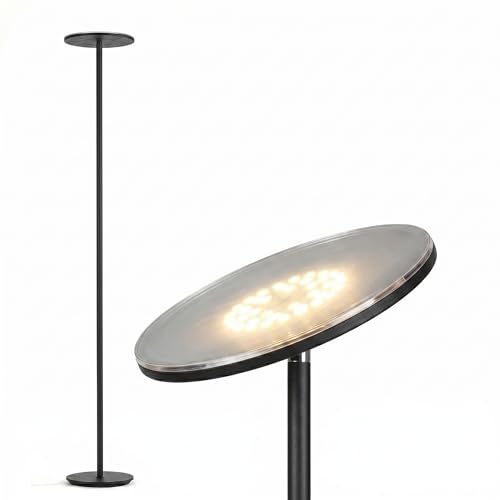
Throw direction. A lamp pointing up turns your ceiling into a large soft emitter and fills the room. A lamp pointing down lights a zone brilliantly and leaves the rest of the room where it was. Both are useful; they are not interchangeable, and buying the second when you needed the first is the most common mistake in this category.

02

Shape decides where the light lands

Three floor-lamp shapes and the different jobs they do.
ShapeWhere the light goesChoose it ifFloor space
TorchiereStraight up, bounced off the ceilingOne lamp has to carry the whole roomAbout 10 in. in a corner
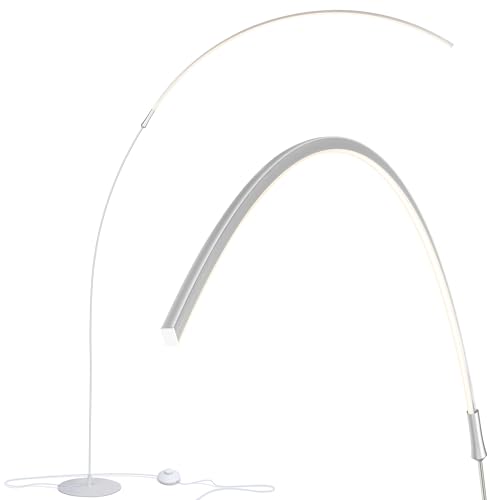
ArcDown, several feet from the baseA table or sofa needs light directly above itClearance behind furniture
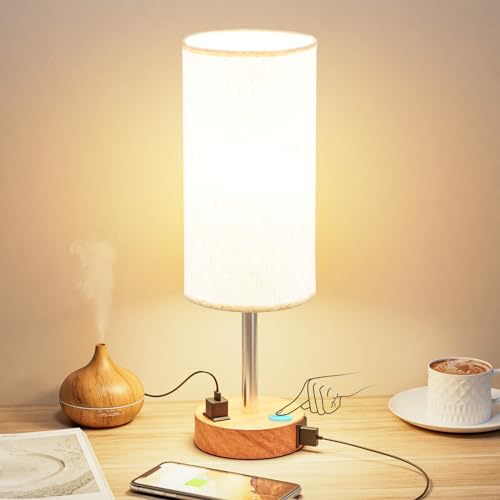
Tripod or shadedDown and out, near the baseYou are lighting a seating zone and want to pick the bulbThree feet fairly wide

Uplighting depends entirely on a pale ceiling. A white ceiling gives most of the light back; a dark or timber one absorbs a large share, and in that case a shaded lamp at seated height does more work for the same money. Check the ceiling before buying the torchiere, not after. The full comparison is in torchiere vs arc vs tripod.

03

Task lamps are judged differently

A reading or desk lamp is not a small floor lamp. It is doing a different job, and the specs that matter reorder completely.

CRI comes first. You are looking closely at something, and accurate color is the difference between a page that reads well and one that looks slightly gray. This is the one place on the site where we would pay a premium without hesitating - see high-CRI bulbs.

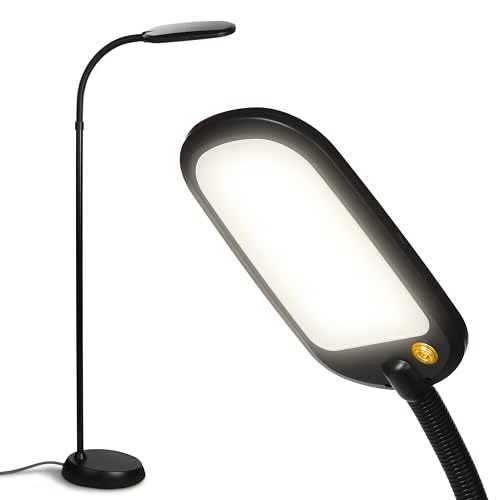
Aim comes second. An adjustable head or gooseneck, so the light lands on the page rather than on your face. A fixed-head lamp can only be aimed by moving furniture, which nobody does.

Dimming range comes third - not whether it dims but how low. A lamp whose minimum is still bright is unusable for evening reading in a dark room.

Raw output is not on that list. A properly aimed reading lamp needs far less than a lamp lighting a room, and the brightest lamp in a comparison is rarely the best one. The picks are in best reading lamps.

04

Before you buy a lamp at all

Read the lumen figure on the bulbs in the lamps you already own. If they say 450 or 600, the room's problem may not need a new lamp: three sockets moved from 600 to 1,500 lumens adds about 2,700 lumens for the price of a multipack, with nothing new to position and no cord to route.

Do that first and then re-check the arithmetic. It frequently changes the answer, and where it does not, it tells you exactly how large a gap the new lamp has to fill. The bulbs are in best LED bulbs for the home; the lamps for a genuinely dark room are in best floor lamps for dark rooms.

Pages

Everything in Lamps

FAQ

Questions people actually ask

+How many lumens should a floor lamp have?

For a lamp doing the ambient job in a 150 to 200 square foot room, 2,000 lumens and up. Below that you are adding a zone of light rather than lifting the room. Work out your own figure by multiplying floor area by 10 to 20 footcandles.

+Why do so few lamps publish their brightness?

Lamps with a standard socket genuinely have nothing to publish - the output is whatever bulb you fit. Lamps with an integrated LED do have a figure and often still do not print it, which is worth noticing when you are trying to fix a dark room.

+Is an integrated LED lamp or a standard socket lamp better?

A standard socket lets you choose lumens, color temperature and CRI, and a failure costs a few dollars rather than a new lamp. An integrated LED usually publishes a real figure and dims out of the box. If light quality matters to you, buy the socket and a 95 CRI bulb.

+Where should a floor lamp go?

An uplight belongs in the corner diagonally opposite your seat - the light crosses the whole ceiling before it comes down, and the lamp is never in your eye line. A shaded lamp belongs beside the chair it is lighting.

+How bright should a reading lamp be?

Published guidance puts a reading surface at 50 to 75 footcandles, several times a living room's ambient level - but over a small area that is a modest lumen figure. Aim matters more than output: light on the page beats light in the room.

Elsewhere

The other sections