Skip to content
Sconce & Socket

Hub

Dimmers, Switches and Controls

How light gets turned down rather than off - plug-in dimmers that need no wiring, wall dimmers that actually handle LEDs, and remotes that stick beside the switch.

A dimmer switch on a wall beside a warmly lit room

Sconce & Socket earns a commission on qualifying purchases made through links on this page, at no extra cost to you. It does not change which products we pick. Full disclosure.

01

Two ways to dim, and only one is yours to install

Dimming is the single largest quality-of-life improvement available in home lighting, and it is the one most people skip - because the obvious route runs through the wall switch, and the wall switch is not always yours to touch.

So this hub is organized around that line rather than around product categories. Everything here falls on one side or the other of a question with a clear answer: does this involve electrical work?

The cord side. Plug-in dimmers, plug-in lamp dimmers with scheduling, and battery-powered wireless remotes. All of these sit between an existing outlet and an existing lamp, install in under a minute, and leave nothing behind. If you rent, this is your entire toolkit, and it is a better one than most people realize.

The wall side. Replacing a switch with a dimmer or a motion sensor. This is real electrical work on the building - it needs the owner's permission, and for most people it needs an electrician. It is also the only route to dimming a hardwired ceiling fixture, so it is covered here honestly rather than pretended away.

Where each control type sits, and what it takes to fit.
ControlInstalls byDims?Renter-safe
Plug-in dimmerPlugging inYesYes
Plug-in lamp dimmer with app controlPlugging inYes, plus schedulesYes
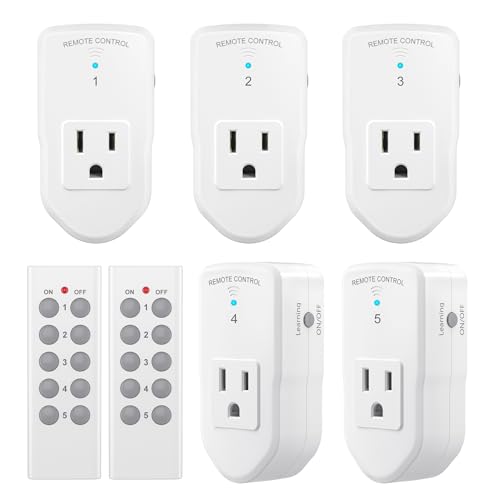
Wireless wall remoteAdhesive or a bracketYes, via a paired deviceYes
Smart plugPlugging inNo - on and off onlyYes
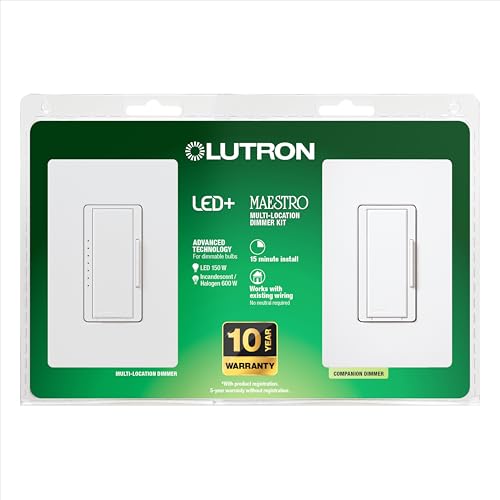
Wall dimmer switchReplacing a switchYesNo - needs permission
Motion sensor switchReplacing a switchSome modelsNo - needs permission

02

Why LEDs broke the dimmers people already had

Most complaints about dimming are actually complaints about a mismatch, and the mismatch has a specific cause.

An old wall dimmer was designed for an incandescent load - a filament drawing 60, 100 or 300 watts, behaving like a simple resistor. An LED producing the same light draws under a tenth of that and behaves like an electronic circuit rather than a resistor. Below a dimmer's minimum load the control has too little current to regulate properly, and the result is flicker, buzz, a dead band at the bottom, or bulbs that glow faintly when switched off.

None of that means LEDs dim badly. It means an LED-rated dimmer and a dimmable bulb that the manufacturer has tested together dim well, and a twenty-year-old dimmer driving two LED bulbs does not. The technical distinction sits in leading edge vs trailing edge dimmers, and the practical fault-finding is in why do my dimmable LEDs flicker.

03

Start with the lamp, not the wall

For most rooms the useful sequence runs in the opposite direction from what people expect.

First, dim the lamps. A room's evening character comes from its lamps far more than from its ceiling fixture, and a plug-in dimmer costs very little and installs in seconds. If the lamps dim, most people stop wanting the overhead light at all after dark.

Second, add a control where the switch should have been. The classic apartment problem is a lamp across the room from the door, so the room is dark for the six steps between them. A wireless wall remote stuck beside the door fixes it without wiring anything.

Third, and only if you own the place, look at the wall. Dimming a hardwired ceiling fixture genuinely requires a wall dimmer, and there is no honest workaround - what there is instead is a good chance you no longer need the ceiling fixture on in the evening.

Before buying any of it, check the bulbs. A control cannot dim a non-dimmable bulb, and a large share of dimming complaints are traced to that - the list is in best dimmable LED bulbs.

Pages

Everything in Dimmers, Switches & Controls

FAQ

Questions people actually ask

+Can you dim a lamp without changing any wiring?

Yes. A plug-in dimmer sits between the lamp's plug and the outlet and dims whatever is plugged into it, as long as the bulb is dimmable. Nothing is wired, nothing is fixed to the wall, and it comes with you when you move.

+Why do my LEDs flicker or buzz on an old dimmer?

Because most existing wall dimmers were designed for incandescent loads and expect far more wattage than an LED draws. The mismatch shows up as flicker, buzz, a dead zone at the bottom of the range, or lights that will not turn off completely.

+Do I need a neutral wire for a smart dimmer?

It depends on the model, and it is the first thing to check. Several Lutron dimmers are designed to work without a neutral, which matters because older homes frequently have no neutral wire in the switch box.

+Can renters replace a light switch?

Replacing a switch is an electrical alteration to the property, not a reversible accessory swap, so it needs the owner's permission and in most cases a qualified person. Everything on this site that dims without touching a switch exists because of that line.

+What is the difference between a dimmer and a smart plug?

A smart plug switches a lamp on and off and usually cannot dim it. A dimmer varies the level. Some plug-in devices do both - a plug-in lamp dimmer schedules and dims - which is generally what people actually wanted.

Elsewhere

The other sections