Sconce & Socket earns a commission on qualifying purchases made through links on this page, at no extra cost to you. It does not change which products we pick. Full disclosure.
| # | Product | Best for | Lumens | Price |
|---|---|---|---|---|
| 01 |  Philips Ultra Definition A19 LED, 60W equivalent, 2700K The default bulb for almost every lamp in a home | It is a bulb. Swap it, keep the old one, put it back when you leave. | 800 lm | |
| 02 |  Waveform Lighting Ultra High 95 CRI BR30 LED Bulb Recessed cans where color accuracy is the whole point | A bulb swap in an existing can. Fully reversible. | 800 lm | $19.38 - View on Amazon #ad Price as of October 18, 2026. How we earn |
| 03 | 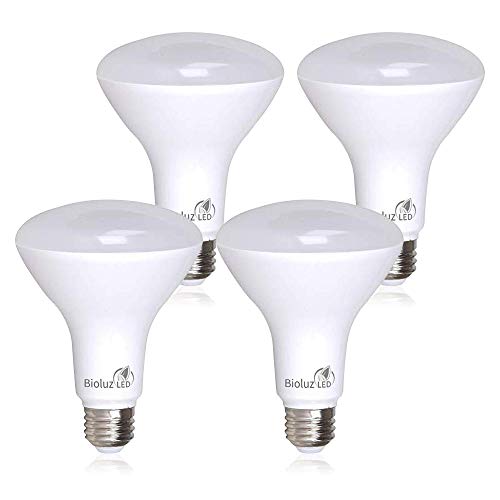 YUJILEDS CRI-MAX CRI 95+ 16W BR30 LED Bulb, 3000K High output and high color accuracy at the same time | A bulb swap. Nothing fixed, nothing to make good. | 1,200 lm | $22.99 - View on Amazon #ad Price as of October 18, 2026. How we earn |
Specifications are the manufacturer or retailer published figures, compiled by hand. We have not measured them, and where a figure is not published we write "Not published" rather than guess.
01
The answer, by room
| Room | Pick | Why |
|---|---|---|
| Living room | 2700K | Relaxation, evening use, matches the incandescent look |
| Bedroom | 2700K or warmer | Evening use; cooler light is the wrong pre-sleep signal |
| Kitchen counter | 3000K | Slightly crisper on a work surface without going cold |
| Bathroom | 3000K | Better for grooming; still warm enough at 6am |
| Home office desk | 3000K - 4000K | Alertness during working hours |
| Dining table | 2700K | Food and faces look best under warm, high-CRI light |
| Hallway and stairs | Either - match the rooms it connects | Consistency beats optimization here |
If you want one answer for a whole home and no further thought: 2700K everywhere except the kitchen counter and the bathroom. That is a defensible plan and it is what most people should do.
02
What 300 kelvin looks like
Side by side, the difference is obvious: 2700K reads faintly amber against 3000K, and 3000K reads faintly clinical against 2700K. Seen alone, in a room, with nothing to compare against, almost nobody can identify which one they are under.
That is the practical point, and it cuts both ways. It means the decision matters far less than the internet suggests, and it means mixing them in one room is worse than either choice, because you have supplied the comparison that made the difference visible.
Both sit inside what is broadly labeled "warm white," and both are far from the 4000K and 5000K options that genuinely change how a room feels. The full spread is in the color temperature chart.
03
What actually matters more than this choice
Two things beat the 2700K/3000K decision by a wide margin, and both get less attention:
- CRI. A CRI 95 bulb at 3000K will make a room look better than a CRI 80 bulb at your ideal color temperature. Color accuracy outranks color temperature. See high-CRI bulbs.
- Consistency. One temperature throughout a visual field, whichever it is, beats an optimized mixture every time.
And beneath both: total lumens. A room short of its target is dark at every color temperature.
The picks
The products behind this page
01
The default bulb for almost every lamp in a home
Philips Ultra Definition A19 LED, 60W equivalent, 2700K
800 lumens at 2700K with a published CRI 95 for the price of an ordinary bulb - the single easiest upgrade in this entire category.
| Lumens | 800 lm |
|---|---|
| Color temperature | 2700K |
| CRI | 95 |
| Power source | Screws into a standard E26 socket (8W) |
| Dimmable | Yes |
| Renter-safe method | It is a bulb. Swap it, keep the old one, put it back when you leave. |
What it gets right
- CRI 95 at a mainstream price, which almost nothing else manages
- 2700K matches the warm light most rooms were designed around
- Dimmable and rated flicker-free
What it costs you
- 800 lumens is one bulb's worth - a dark room needs several
- 2700K is too warm for detailed kitchen task work
- R9 is not published, so deep reds are an unknown
Spec source: Home Depot listing - retrieved September 3, 2026.
02
Recessed cans where color accuracy is the whole point
Waveform Lighting Ultra High 95 CRI BR30 LED Bulb
#ad Price as of October 18, 2026. How we earn
800 lumens from 10.5W at CRI 95+ with R9 above 80 - and Waveform publishes the R9 figure, which is the number almost every other brand quietly omits.
| Lumens | 800 lm |
|---|---|
| Color temperature | 2700K or 3000K |
| CRI | 95+ (R9 80+) |
| Power source | Screws into a standard E26 socket (10.5W) |
| Dimmable | Yes |
| Renter-safe method | A bulb swap in an existing can. Fully reversible. |
What it gets right
- R9 above 80 is published, so deep reds are actually accounted for
- Two warm color temperatures rather than one compromise
- BR30 shape drops straight into standard recessed cans
What it costs you
- Several times the price of a supermarket BR30
- Sold direct rather than through every retailer
- 800 lumens is standard output, not high output
Spec source: Waveform Lighting product page - retrieved September 3, 2026.
03
High output and high color accuracy at the same time
YUJILEDS CRI-MAX CRI 95+ 16W BR30 LED Bulb, 3000K
#ad Price as of October 18, 2026. How we earn
1,200 lumens at CRI 95+ with R9 up to 95+ - the only combination here that refuses to trade brightness against color quality.
| Lumens | 1,200 lm |
|---|---|
| Color temperature | 3000K |
| CRI | 95+ (R9 up to 95+) |
| Power source | Screws into a standard E26 socket (16W) |
| Dimmable | Not published |
| Renter-safe method | A bulb swap. Nothing fixed, nothing to make good. |
What it gets right
- 1,200 lumens at CRI 95+ - most high-CRI bulbs stop at 800
- R9 up to 95+, published, the strongest figure we found
- 180-degree beam spreads rather than spotlights
What it costs you
- Specialist pricing
- Dimming behavior is not published
- 16W runs warmer than a standard BR30 - not for a tight enclosed can
Spec source: YUJILEDS product page - retrieved September 3, 2026.
FAQ
Questions people actually ask
+Is 2700K or 3000K better?
Neither. 2700K is warmer and reads as more relaxed - it is the tone of an old incandescent bulb. 3000K is slightly crisper and suits surfaces where you work. For living rooms and bedrooms choose 2700K; for kitchens, bathrooms and desks choose 3000K.
+Can I mix 2700K and 3000K in the same room?
You can, and in an open-plan space with a distinct kitchen zone it is defensible. Within one visual field it usually reads as a fault, because the eye is very good at spotting the difference between two whites side by side and very bad at judging either alone.
+Which is better for a kitchen, 2700K or 3000K?
3000K. It renders slightly crisper on a work surface without going cold, and it sits comfortably next to 2700K living-room light in an open plan. Above 4000K a kitchen starts to feel clinical in a home.
+Is 2700K too yellow?
It is the color of the incandescent light almost every home was designed around, so it usually reads as normal rather than yellow. It can look yellow if it sits beside a cooler source, which is an argument for consistency rather than against 2700K.
Sources
Where the numbers came from
- Home Depot - Philips Ultra Definition A19 60W equivalent 2700K listing
- Waveform Lighting - Ultra High 95 CRI BR30 product page
- SuperBrightLEDs - IES residential recommended lighting levels
All sources retrieved September 3, 2026.
Next
Read these next
About the author
Sawyer V. An enthusiast who reads the spec sheets and does the arithmetic. No lab, no test bench.