
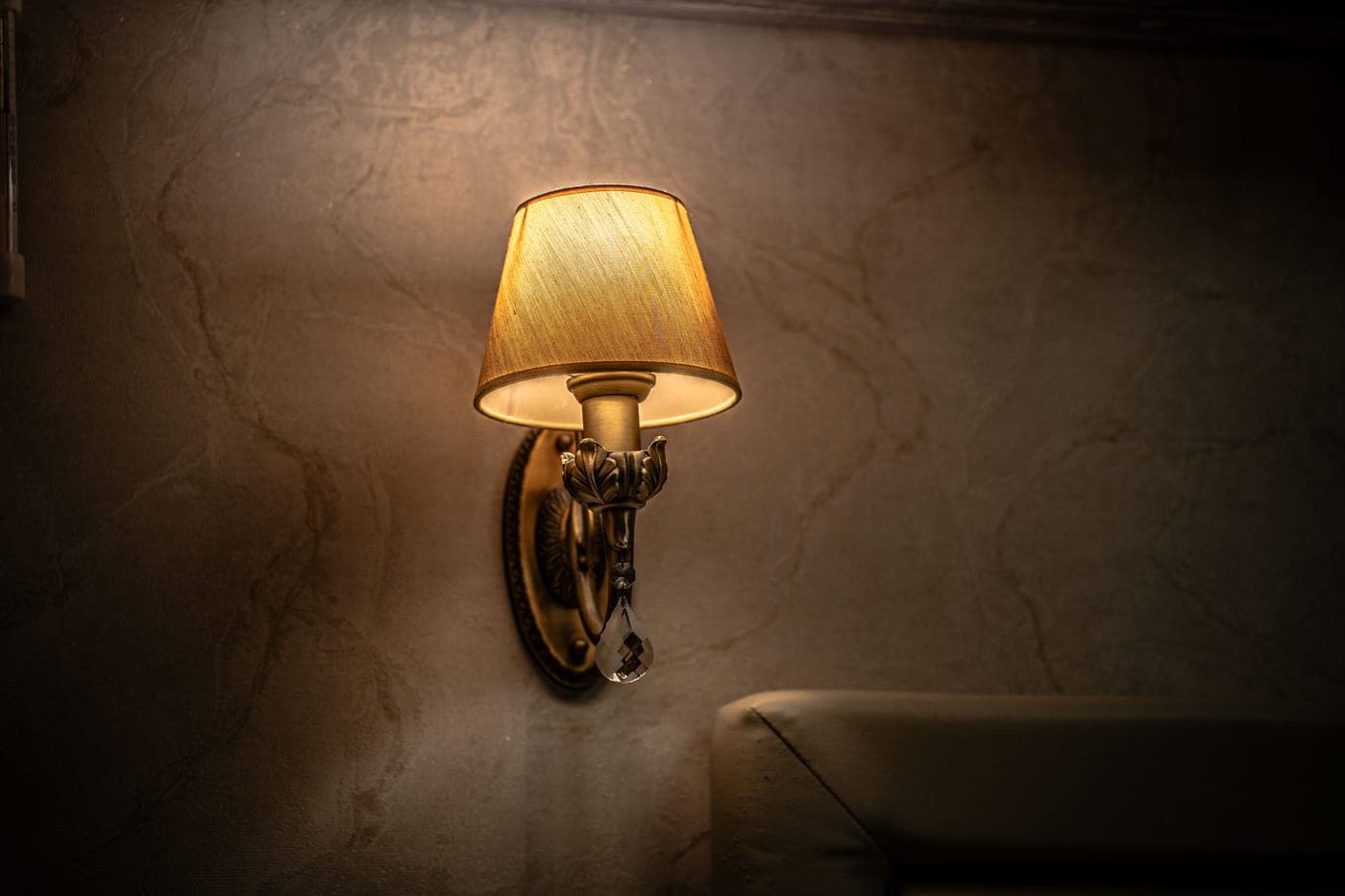
Best plug-in wall sconce setup
The best plug-in wall sconces
Outlet-powered wall sconces - what to look for, and the bulbs that decide whether they are any good.
Top pick
Philips Ultra Definition A19 LED, 60W equivalent, 2700K
Sconces, pendants and ceiling-style fixtures that run off an outlet - the way to get fixture-shaped light without touching a junction box.
Sconce & Socket earns a commission on qualifying purchases made through links on this page, at no extra cost to you. It does not change which products we pick. Full disclosure.
01
Lamps stand on the floor or on furniture. Fixtures attach to the building, and they do things lamps cannot - a sconce puts light on a wall where there is no surface for a lamp, and a pendant puts light over a table without occupying any floor.
Plug-in fixtures give you that geometry without the wiring. A sconce with a cord runs to an outlet; a swag pendant hangs from a hook and runs to an outlet. Both are fixture-shaped and neither touches a junction box, which moves them from an electrical question - permission, a qualified person, an alteration that stays behind - to a fixing and a cord, both of which are yours to solve.
This section is about doing that properly. The two things that decide whether it works are the mount and the cord, and neither is complicated once you know the constraints.
02
| Check | Why | Target |
|---|---|---|
| Socket type | Decides which bulbs fit | Standard E26 gives you every option |
| Fixture weight | Decides whether adhesive is viable | Under about 2 lb for adhesive |
| Total cord length | Whether it reaches the outlet at all | Measure the whole path, not the drop |
| Cord color | How visible it is | Match the wall, not the fixture |
| Inline switch | Whether you can reach it | On the cord, not at the fixture |
| Shade direction | Whether it lights a page or a wall | Adjustable arm if it is for reading |
Cord length is what catches people out on pendants. The path is not the drop from the ceiling - it is the drop, plus the horizontal run to the wall, plus the drop to the outlet. Fifteen feet is a realistic minimum, and measuring the whole route with a tape before ordering takes two minutes.
A standard E26 socket is genuinely the better buy in this category. It means you choose the output, the color temperature and the CRI, and you can put a smart bulb in a bedside sconce so it switches from the pillow. Most plug-in fixtures publish no lumen figure precisely because there is nothing to publish - the light is your decision.
03
On a wall, heavy-duty adhesive strips work well for fixtures under roughly two pounds, on fully cured paint, cleaned with isopropyl alcohol first. Buy for double the fixture's weight - a sconce projecting from a wall applies leverage as well as load, which is a harder case than the packaging pictures. Heavier fixtures want one small screw, filled and touched up at the end of the tenancy in five minutes.
On a ceiling, adhesive is not an option at all. A ceiling load pulls straight down on the bond, which is the direction adhesive is weakest in, and a falling pendant is the one genuinely dangerous failure in renter-safe lighting. A small hook into a joist, or a properly rated toggle anchor, is the only correct answer. The resulting hole is small and repairs in five minutes.
Full method, including how to remove adhesive without lifting paint, is in no-drill lighting. The permission picture - a fixing is a make-good obligation, not an alteration - is in can you change a light fixture in an apartment.
04
The cord is the only real objection to plug-in fixtures, and it is the reason they get treated as a compromise rather than a solution. In practice it is solvable and the result is close to invisible: adhesive channel painted the wall color and run in straight lines rather than diagonals, or small cord clips along a baseboard, or simply routing behind furniture where the geometry allows.
Three things not to do, and these are safety rather than tidiness: never run an ordinary round cord under a rug, never tape one across a doorway or walkway, and never pass one through a wall or under a door frame. Flat under-rug covers exist because people take the first route anyway. The methods are in how to hide a plug-in fixture cord.
Where to put fixtures once they are up: sconces at 30 to 36 inches above a mattress and out of the eye line of anyone lying down, or at roughly eye level either side of a mirror so light comes from the sides rather than above. Pendants at 30 to 36 inches above a tabletop.
05
The one plug-in fixture that behaves like a real ceiling installation.
Pages
Best plug-in wall sconce setup
Outlet-powered wall sconces - what to look for, and the bulbs that decide whether they are any good.
Top pick
Philips Ultra Definition A19 LED, 60W equivalent, 2700K
Best plug-in pendant setup
Swag and plug-in pendants for rooms with no ceiling box - what to check and how to hang one safely.
Top pick
Philips Ultra Definition A19 LED, 60W equivalent, 2700K

Guide
Five renter-safe ways to make a fixture cord disappear, and the one shortcut that is genuinely unsafe.
Top pick
Enbrighten 18 in. Plug-in Under Cabinet Light Bar (82785-T1)
#ad Price as of October 18, 2026. How we earn

Guide
The three no-wiring ceiling routes ranked by how much light each actually delivers.
Top pick
Philips Ultra Definition A19 LED, 100W equivalent, 1500 lm
#ad Price as of October 18, 2026. How we earn

Guide
Lighting art and display shelves with no wiring - beam angle, glazing glare, and CRI.
Top pick
Waveform Lighting Ultra High 95 CRI BR30 LED Bulb
#ad Price as of October 18, 2026. How we earn

Best plug-in chandelier setup
How to hang a plug-in chandelier, the candelabra bulbs that decide it, and the dimmer that makes it better than a wired one.
Top pick
Satco 5.5W Vintage Edison B11 Candelabra LED, 90 CRI
#ad Price as of October 18, 2026. How we earn

Best rechargeable wall sconces
Rechargeable wall sconces judged on published output and runtime - the two figures that decide whether you keep charging them.
Top pick
NIORSUN Battery Operated Wall Sconces, Set of 2
Comparison
Plug-in and rechargeable sconces compared on output, dimming, upkeep and the outlet question that decides it.
Top pick
NIORSUN Battery Operated Wall Sconces, Set of 2

Best plug-in vanity lighting
Adding side light to a bathroom mirror without wiring - plug-in and cordless routes, and the right bulbs.
Top pick
GE Lighting Relax HD G25 Vanity Globe LED, 40W Replacement
#ad Price as of October 18, 2026. How we earn
Comparison
Plug-in and hardwired wall sconces compared on installation, cords, control, placement and renting.
Top pick
Philips Ultra Definition A19 LED, 60W equivalent, 2700K

Best socket fan lights
Screw-in socket fan lights judged on published lumens, color, dimming and fan size - with honest limits.
Top pick
OSTIVE Socket Fan Light with Remote, 18 in.
#ad Price as of October 18, 2026. How we earn

Best plug-in track lighting
Plug-in track kits compared on head count, track length, cord length, adjustment and published ratings.
Top pick
TuyuBEE Plug-In Track Lighting Kit, 4 Heads
#ad Price as of October 18, 2026. How we earn

Guide
Swag kits and cord sets that turn a hardwired pendant, chandelier or sconce into something you hang and plug in - with no ceiling box and no electrician.
Top pick
Aspen Creative 21042A Chandelier Plug-in Conversion Kit with 14 ft. Cord, White
#ad Price as of October 18, 2026. How we earn
Best Christmas tree lights
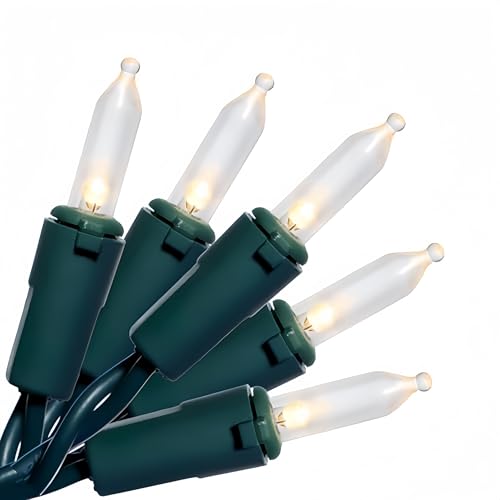
Indoor tree sets compared on length, count and wire color, including the incandescent option and when it is still the right call.
Top pick
JinBest 100 LED Warm White Christmas String Lights, Green Wire, UL Certified
#ad Price as of October 18, 2026. How we earn

Best electric window candles
Plug-in electric window candles compared on timer versus dusk-to-dawn sensing, cord length and cost per window.
Top pick
CHYSUPER 9 in. Electric Window Candles with Timer, 5 ft Cord, 4-Pack

Best LED neon sign
LED neon signs judged on published size, warm white color, dimming and USB power - and which ones are too bright for a small bedroom.
Top pick
Custom Neon Custom LED Neon Sign, Dimmable with Remote
#ad Price as of October 18, 2026. How we earn
FAQ
Yes. A plug-in sconce runs a cord to an ordinary outlet, so it needs no junction box and no electrician. The only requirement is a fixing to hold it on the wall, and adhesive mounts avoid even that for lighter fixtures.
A pendant that hangs from a ceiling hook and plugs into a wall outlet instead of being hardwired. The cord runs from the fixture up to the hook, across the ceiling to the wall, and down to the outlet. It puts a hanging fixture where there is no junction box.
A small hook into a joist, or a properly rated toggle anchor if you cannot find one. Never an adhesive hook - a ceiling load is straight tension on the bond, which is adhesive's weakest direction, and a falling pendant is the one genuinely dangerous failure here.
Adhesive cord channel painted to match the wall is the tidiest option, then small cord clips at intervals, then routing behind furniture. All three come off cleanly with a little heat. Never under an ordinary rug and never taped across a walkway.
Plugging one in does not - that is not an alteration. Attaching it to a wall or ceiling is a fixing, which sits under the make-good clause rather than the alterations clause in most leases. Replacing a hardwired fixture is different, and generally does need permission.
Usually whatever bulb you fit, because most take a standard socket - which is an advantage rather than a limitation. Fit a 95 CRI bulb for reading, a smart bulb for bedside switching, or a low-output bulb where it is purely an accent.
Elsewhere