Room guide
Living room lighting
A living room plan with a lumen target, four source positions, and one color temperature.
Top pick
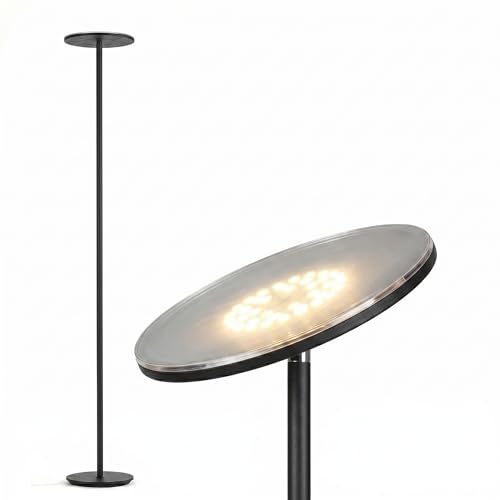
Brightech Sky LED Torchiere Floor Lamp
$74.99 - View on Amazon
#ad Price as of October 19, 2026. How we earn
A lumen target, a color temperature and a layering plan for every room in an ordinary home or apartment.
Sconce & Socket earns a commission on qualifying purchases made through links on this page, at no extra cost to you. It does not change which products we pick. Full disclosure.
01
Every room guide on this site answers the same four questions in the same order, because the order is what makes it a plan rather than a shopping list.
The arithmetic behind step one, including where it stops being accurate, is in how many lumens does a room need. The reasoning behind step three is in layered lighting explained.
02
| Room / task | Footcandles | 120 sq ft | 200 sq ft |
|---|---|---|---|
| Living room, ambient | 10 - 20 fc | 1,200 - 2,400 lm | 2,000 - 4,000 lm |
| Bedroom, ambient to task | 20 - 50 fc | 2,400 - 6,000 lm | 4,000 - 10,000 lm |
| Kitchen, general | 20 - 50 fc | 2,400 - 6,000 lm | 4,000 - 10,000 lm |
| Kitchen prep surface | 50 - 100 fc | Task area only | Task area only |
| Home office desk | 50 - 75 fc | Task area only | Task area only |
| Hallway and stairs | 5 - 10 fc | 600 - 1,200 lm | 1,000 - 2,000 lm |
Two rows are marked task area only deliberately. You do not light a whole kitchen to 100 footcandles - you light the room to the general figure and put a separate light on the counter. That distinction is the difference between a lighting plan and a very bright ceiling, and it is why under-cabinet lighting exists as a category.
The bedroom row surprises people, because it starts above the living-room range. It covers dressing and reading, which are demanding tasks. Applied to a whole bedroom it produces a room lit like a changing room - so light the room at the bottom of the range and put the extra where the task is.
03
One value per room, matched to what happens there, and everything within a visual field kept inside about 500K of everything else.
The full chart, and the retailer naming that makes buying the right one unnecessarily confusing, is in the color temperature guide.
04
Nothing above changes. The target is the same, the layers are the same, and the color temperature is the same - the ambient layer just comes from a torchiere aimed at the ceiling rather than from a fixture attached to it.
In practice, a room planned this way usually ends up better lit than one with an overhead light, because a single ceiling source produces glare in your eye line, hard shadows on faces and dark corners. That is why rooms that have one still need lamps. Starting from nothing means distributing the light correctly from the beginning.
The whole plan for that case, including how to find a switched outlet and which corner the uplight belongs in, is in lighting a room with no ceiling light.
Pages
Room guide
A living room plan with a lumen target, four source positions, and one color temperature.
Top pick
Brightech Sky LED Torchiere Floor Lamp
#ad Price as of October 19, 2026. How we earn

Room guide
A bedroom plan: two bedside sources, one dimmable ambient, everything at 2700K.
Top pick
Philips Ultra Definition A19 LED, 60W equivalent, 2700K

Room guide
Two layers, two targets: general kitchen light and the much brighter counter, both achievable without wiring.
Top pick
Enbrighten 18 in. Plug-in Under Cabinet Light Bar (82785-T1)
#ad Price as of October 19, 2026. How we earn

Room guide
A whole-apartment plan in buying order - nothing wired, nothing left behind.
Top pick
Philips Ultra Definition A19 LED, 100W equivalent, 1500 lm
#ad Price as of October 19, 2026. How we earn

Room guide
Desk-level lumen targets, screen glare, and the one room where tunable white genuinely earns its price.
Top pick
BenQ e-Reading LED Desk Lamp
#ad Price as of October 19, 2026. How we earn
Room guide
Mirror light placement, CRI at the mirror, and which bulbs survive a sealed damp-rated fitting.
Top pick
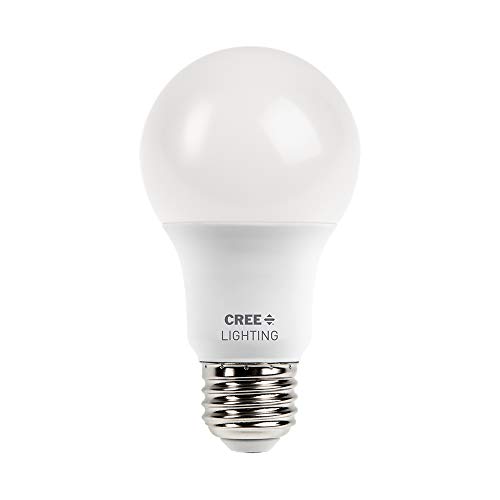
Cree Lighting A19 60W Equivalent LED, 5000K, Good for Enclosed
Room guide
Hanging height, warmth and CRI over a dining table - plus the plug-in answer when there is no ceiling box.
Top pick
Philips Ultra Definition A19 LED, 60W equivalent, 2700K
Room guide
The lowest lumen target in the home, why consistency beats brightness, and the no-wiring options.
Top pick
Philips Ultra Definition A19 LED, 60W equivalent, 2700K

Room guide
The three jobs an entry has to do, and how to cover all of them from one outlet.
Top pick
WiZ WiZ Connected Color A19 Smart Bulb
#ad Price as of October 19, 2026. How we earn
Room guide
A kids' room has to be bright for play and dim for sleep - here is the two-layer plan that does both.
Top pick
Philips Ultra Definition A19 LED, 60W equivalent, 2700K
Room guide
Higher lumen targets, flat fixtures and cooler light - what a room with no daylight actually needs.
Top pick
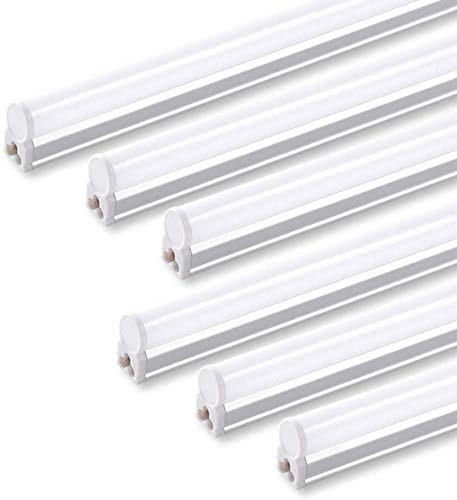
Barrina T5 Integrated LED Light Bar, 4 ft, 3000K
#ad Price as of October 19, 2026. How we earn

Room guide
Damp rating, enclosed rating and CRI - the three things a laundry actually needs from a bulb.
Top pick
Feit Electric 100W Equivalent A19 LED, 2700K, Enclosed-Rated
#ad Price as of October 19, 2026. How we earn
Room guide
Higher targets, cold-start behavior and linkable plug-in shop lights - the practical garage plan.
Top pick
Barrina T5 Integrated LED Light Bar, 4 ft, 3000K
#ad Price as of October 19, 2026. How we earn

Room guide
Battery motion lights for a space with no power - output targets, mounting position and clearance.
Top pick
Feit Electric 13 in. Rechargeable LED Closet Light
#ad No live price right now, so we show none. How we earn
Room guide
How low the light needs to go for night feeds, what to avoid near the crib, and the cord rule.
Top pick
WiZ WiZ Connected Color A19 Smart Bulb
#ad Price as of October 19, 2026. How we earn
Room guide
Even light, shadow control and switching at both ends - the three things a staircase needs.
Top pick
Philips Ultra Definition A19 LED, 60W equivalent, 2700K
Room guide
Cool, even, glare-free light for a room used lying down and in front of a mirror.
Top pick
Barrina T5 Integrated LED Light Bar, 4 ft, 3000K
#ad Price as of October 19, 2026. How we earn

Room guide
High-CRI task lighting, two-sided illumination to kill hand shadows, and the daylight question.
Top pick
Waveform Lighting Ultra High 95 CRI A19 LED Bulb, 6500K
#ad No live price right now, so we show none. How we earn
Room guide
Zoning an open-plan space so the kitchen, table and sofa each get what they need.
Top pick
Philips Ultra Definition A19 LED, 60W equivalent, 2700K

Room guide
Bias lighting behind the screen, low-level path light, and why total darkness is the wrong target.
Top pick
LIFX Z TV LED Light Strip (LZTV1MUS)
#ad Price as of October 19, 2026. How we earn
Room guide
Lighting a room with sloped ceilings, awkward heights and too few outlets.
Top pick
Brightech Sky LED Torchiere Floor Lamp
#ad Price as of October 19, 2026. How we earn
FAQ
Multiply the floor area in square feet by the published footcandle range for that room: 10 to 20 for a living room, 20 to 50 for a bedroom or general kitchen light, 50 to 100 on a kitchen prep surface, 5 to 10 for hallways. A 120 square foot living room lands at 1,200 to 2,400 lumens.
Within a room, yes - keep everything inside about 500K. Across a house you can vary: 2700K in living rooms and bedrooms, 3000K on kitchen and bathroom surfaces, 3500K to 4000K on a desk during working hours.
A kitchen, because there is rarely floor space for a torchiere and the counter has the highest published target in the home. The workable answers are a bright under-cabinet run that spills into the room, a plug-in fixture on a spare wall, or a swag pendant over a table.
Surfaces. A room with white walls and ceiling returns a large share of the light that hits them; dark walls, dark floors and full bookcases absorb most of it. Add about 25 percent to your lumen target for a dark room.
Not a different plan - the same plan, built from things that plug in. Every room guide here reaches its target with lamps, plug-in fixtures and adhesive-mounted bars, because that is what works whether or not the room has a ceiling fixture.
Elsewhere