
Best LED garage and shop lights
The best LED garage and shop lights
LED shop lights ranked on published output, linkability and how evenly they cover a bay.
Top pick
Hykolity 4 ft LED Shop Light, 6,500 lm
Chandeliers, flush mounts, track, vanity bars, island pendants and shop lights - the fixtures that need an electrician, and the bulbs that decide what they actually produce.
Sconce & Socket earns a commission on qualifying purchases made through links on this page, at no extra cost to you. It does not change which products we pick. Full disclosure.
01
Almost every hardwired fixture is bought from a photograph. That is a perfectly reasonable way to choose one, because a chandelier or a vanity bar is a piece of furniture that happens to emit light, and how it looks is most of the point.
The trouble is that the photograph tells you nothing about what the fitting will do to a room. Two identical-looking chandeliers, one holding 500 lumen bulbs at 2700K and CRI 90 and the other holding 300 lumen bulbs at 5000K and CRI 80, are completely different lights in the same shape.
So these pages are organized the way the rest of this site is: on the published numbers. Where a fitting takes standard bulbs - which most chandeliers, vanity bars, flush mounts, pendants and track heads do - the bulb is both the thing that decides the result and the only part you are free to change without an electrician.
Where a fitting has integrated LEDs and no bulb to swap, the manufacturer has made those choices for you, and then the published figures on the fixture itself are the whole story. Shop lights are the clearest case of that, which is why the garage and shop light page is the one here that ranks fixtures rather than bulbs.
| Fixture | Takes | The spec that decides it |
|---|---|---|
| Chandelier | E12 candelabra, several | Output per bulb, and matching them |
| Flush mount | E26, usually enclosed | The enclosed-fixture rating |
| Vanity bar | G25 globes or E26 | CRI, and whether the glass diffuses |
| Recessed can | BR30 or BR40 | Beam angle and can diameter |
| Island pendant | E26, on show | Warmth, and glare at seated eye level |
| Track head | GU10 | Beam angle - it is an aiming fixture |
| Shop light | Integrated LED | Published lumens on the fixture itself |
02
Everything in this hub is wired into the building rather than plugged into it. That is a single fact with large consequences, and it is worth stating plainly before you buy anything.
If you rent, replacing any of these is an electrical alteration to somebody else's property. It needs the owner's agreement and in most cases a qualified person, and the tiers are set out in can you change a light fixture in an apartment. What you can always do is change the bulb, which is reversible in thirty seconds and needs nobody's permission - and that is most of the improvement available.
If you own, the fixture is genuinely yours to change, and these pages will tell you what to put in it. Budget for an electrician per fitting unless you are qualified; a ceiling rose is not a DIY job in the way a lamp is.
Either way, look at the plug-in alternative first. For a surprising number of rooms the plug-in version of the same shape does the same job with no wiring and no permission - pendants, sconces and even ceiling-style fittings all exist in corded form, and they are in plug-in and no-wiring fixtures.
03
The one thing worth doing before opening a single product page is the arithmetic. Every fixture on this site is judged against a lumen target for the room it is going in, and the method never changes: floor area multiplied by the published illuminance range for that room's use.
Two figures matter almost as much as the total. Beam angle decides whether the light lands where you need it or pools under each fitting - it is the whole subject of beam angle and spread, and it is why track and recessed pages talk about degrees rather than only lumens. And CRI decides whether faces, food and fabric look right, which is covered in best high-CRI LED bulbs.
Then there is dimming. Most of these fittings are sized for the brightest thing the room ever needs to do, which means they are too bright for the evening unless they dim. A hardwired fitting needs a wall dimmer, covered in best dimmer switches for LEDs - and the bulb has to be dimmable too, which is not automatic.
04
Three fixture problems that come down to where the light goes rather than what it looks like.
05
Two pages for decisions made before anything is installed.
Pages
Best LED garage and shop lights
LED shop lights ranked on published output, linkability and how evenly they cover a bay.
Top pick
Hykolity 4 ft LED Shop Light, 6,500 lm

Best bathroom vanity lighting
Vanity bulbs and sizing - lumens per foot of mirror, CRI, and clear versus frosted glass.
Top pick
GE Lighting Relax HD G25 Vanity Globe LED, 40W Replacement
#ad Price as of October 24, 2026. How we earn

Best dining room chandelier bulbs
Chandelier sizing and hanging height, plus the candelabra bulbs that decide the result.
Top pick
Satco 5.5W Vintage Edison B11 Candelabra LED, 90 CRI
#ad Price as of October 24, 2026. How we earn

Best flush mount ceiling light bulbs
Flush mounts are sealed enclosures - the bulbs that survive them, and how to size the fitting.
Top pick
Feit Electric 100W Equivalent A19 LED, 2700K, Enclosed-Rated
#ad Price as of October 24, 2026. How we earn

Best track lighting kits
Track kits compared on aiming, track type and cord options - plus why supplied bulbs usually need replacing.
Top pick
TuyuBEE Plug-In Track Lighting Kit, 4 Heads
#ad Price as of October 24, 2026. How we earn

Best kitchen island pendant setup
How many island pendants, spaced how far apart and hung how high - plus the bulbs that avoid glare.
Top pick
Philips Ultra Definition A19 LED, 60W equivalent, 2700K
Best recessed lighting bulbs
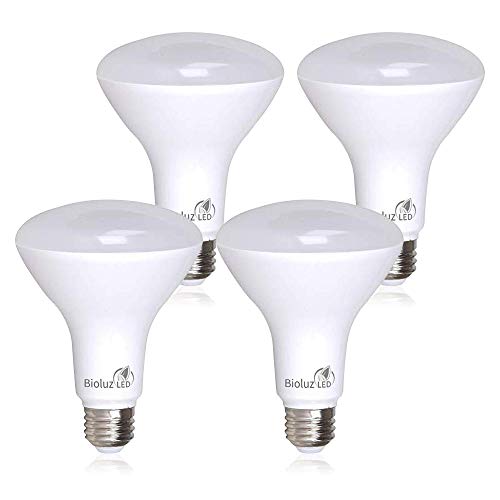
Recessed bulbs by can size and beam angle, plus the spacing rule that fixes a patchy ceiling.
Top pick
YUJILEDS CRI-MAX CRI 95+ 16W BR30 LED Bulb, 3000K
#ad Price as of October 24, 2026. How we earn
Best hardwired wall sconce bulbs
Hardwired wall sconces - the bulb each style takes, the mounting height, and why a pair beats one.
Top pick
Philips Ultra Definition A19 LED, 60W equivalent, 2700K
Comparison
Flush and semi-flush ceiling lights compared on ceiling height, light spread, heat and bulb needs.
Top pick
Feit Electric 100W Equivalent A19 LED, 2700K, Enclosed-Rated
#ad Price as of October 24, 2026. How we earn

Comparison
Integrated LED against socketed fixtures - when sealed LEDs are worth it and when they are a trap.
Top pick
Brightech Eden LED Wood Tripod Floor Lamp
Best lighting for low ceilings
Fixtures and techniques for low ceilings - slim profiles, wide beams and the uplight trick.
Top pick
Feit Electric 100W Equivalent A19 LED, 2700K, Enclosed-Rated
#ad Price as of October 24, 2026. How we earn

Best ceiling lights for a bedroom
Bedroom ceiling lights judged on published lumens, a true 2700K setting, dimming and CRI.
Top pick
Maxxima 14 in. LED Flush Mount Ceiling Light, 5 CCT, 2,500 lm
#ad Price as of October 24, 2026. How we earn

Best ceiling fans with lights
Ceiling fans with LED lights judged on published lumens, color, dimming and airflow.
Top pick
Honeywell Graceshire 52 in. Ceiling Fan with LED Light and Remote (51998)
#ad Price as of October 24, 2026. How we earn

Comparison
Can and canless recessed lights compared on ceiling depth, color quality, replacement and ratings.
Top pick
Sunco 6 in. Slim Recessed LED Light, Selectable CCT, 1,200 lm
Comparison
Chandeliers and pendants compared on light pattern, bulbs, glare and where each belongs.
Top pick
Satco 5.5W Vintage Edison B11 Candelabra LED, 90 CRI
#ad Price as of October 24, 2026. How we earn

Best bathroom fans with lights
Bathroom fans with LED lights judged on published CFM, sones, lumens, CRI, color and night light.
Top pick
Delta Breez BreezSignature SIG80-110LED Fan with LED Light
#ad Price as of October 24, 2026. How we earn

Best kitchen ceiling lights
Kitchen ceiling fixtures judged on published lumens, color, CRI, dimming, size and damp rating.
Top pick
Lithonia Lighting FMLWL 48 in. LED Wraparound (FMLWL 48 840)
#ad Price as of October 24, 2026. How we earn

Best sloped ceiling light fixtures
Semi flush fixtures for vaulted and sloped ceilings, on sockets, wattage headroom, size and what each maker publishes.
Top pick
Heircido 2-Light Semi Flush Mount for Sloped Ceilings, Black
#ad Price as of October 24, 2026. How we earn
Guide
What to fit above a kitchen sink - recessed, pendant or bar - with published heights and realistic lumen targets.
Top pick
Sunco 6 in. Slim Recessed LED Light, Selectable CCT, 1,200 lm
Guide
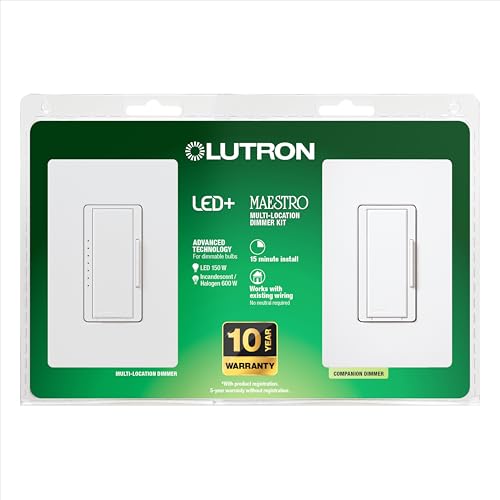
How to dim a fan light safely: what fan makers prohibit, and the three control routes that actually work.
Top pick
Lutron Maestro LED+ Dimmer Switch (MACL-153M)
#ad Price as of October 24, 2026. How we earn
Comparison
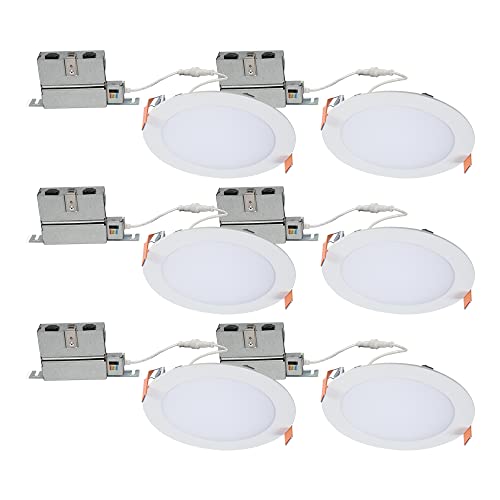
Recessed downlights against track heads on install, aiming, ceiling type, renting and what happens when the furniture moves.
Top pick
HALO HLB6 6 in. Canless LED Downlight, Selectable CCT (HLB6099FS1EMWR)

Best lighting for high ceilings
High-output bulbs and fixtures for tall rooms, chosen on published lumens, rated life and how rarely you will need the ladder.
Top pick
Philips Ultra Definition A19 LED, 100W equivalent, 1500 lm
#ad Price as of October 24, 2026. How we earn

Best schoolhouse ceiling lights
Milk-glass schoolhouse flush mounts and pendants, sized room by room - the style that diffuses properly and dates slowly.
Top pick
Goosebrite 11.4 in. Matte Black Semi Flush Mount Schoolhouse Ceiling Light, Thick Milk Glass
#ad Price as of October 24, 2026. How we earn
FAQ
Anything connected directly to the building's wiring rather than plugged into an outlet - ceiling roses, flush mounts, chandeliers, vanity bars, recessed cans and most track. Fitting or replacing one is electrical work, which is the line this whole site is organized around.
Replacing the fixture is an electrical alteration to somebody else's building, so it needs permission and generally a qualified person. Changing the bulb in it is a reversible swap that needs nobody's agreement - which is why most of the advice here is about bulbs.
Because for most hardwired fittings the fixture is chosen for how it looks and the bulb decides what it produces. Two identical-looking chandeliers with different bulbs in them are completely different lights, and the bulb is the part you can change.
If the bulb sits inside a sealed glass or plastic housing with no ventilation, it is enclosed. Flush mounts, sealed vanity domes and most porch lanterns are, and that traps the heat an LED driver makes - which is why they need bulbs carrying the enclosed-fixture rating.
The install requirement. Plug-in fixtures run from an outlet and need no electrician, so a renter can fit them. The fixtures here are wired into the building. Same shapes, very different permissions - and for many rooms the plug-in version is the better answer.
Elsewhere