Sconce & Socket earns a commission on qualifying purchases made through links on this page, at no extra cost to you. It does not change which products we pick. Full disclosure.
| # | Product | Best for | Lumens | Price |
|---|---|---|---|---|
| 01 | 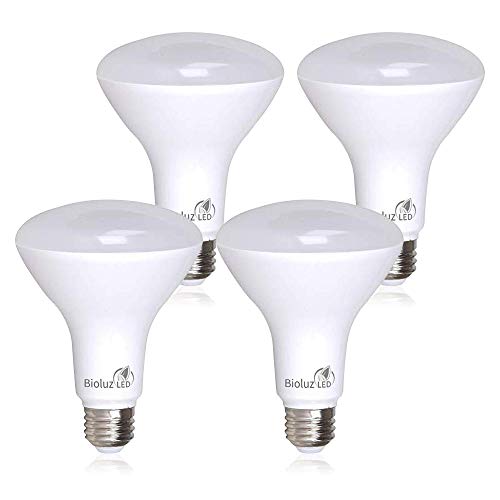 YUJILEDS CRI-MAX CRI 95+ 16W BR30 LED Bulb, 3000K High output and high color accuracy at the same time | A bulb swap. Nothing fixed, nothing to make good. | 1,200 lm | $22.99 - View on Amazon #ad Price as of October 20, 2026. How we earn |
| 02 |  Waveform Lighting Ultra High 95 CRI BR30 LED Bulb Recessed cans where color accuracy is the whole point | A bulb swap in an existing can. Fully reversible. | 800 lm | $19.38 - View on Amazon #ad Price as of October 20, 2026. How we earn |
| 03 |  Philips Ultra Definition A19 LED, 60W equivalent, 2700K The default bulb for almost every lamp in a home | It is a bulb. Swap it, keep the old one, put it back when you leave. | 800 lm | |
| 04 |  Feit Electric R20 LED, 450 lm, Damp Rated Small recessed cans and track heads | A bulb swap in an existing can. Fully reversible. | 450 lm | $11.11 - View on Amazon #ad Price as of October 20, 2026. How we earn |
Specifications are the manufacturer or retailer published figures, compiled by hand. We have not measured them, and where a figure is not published we write "Not published" rather than guess.
01
The spec that explains a failed lumen calculation
The lumen method in how many lumens does a room need gives you a total for a room. It is the right place to start, and on its own it is not enough - because a total says nothing about distribution.
Put 3,000 lumens into a room through four narrow-beam downlights and you get four bright circles with shadow between them. Put the same 3,000 lumens through wide-beam fittings, or through two lamps bounced off pale walls, and the room reads as evenly lit. Identical total, entirely different result.
Beam angle is the specification that describes this. It is the width of the cone of light in degrees, and it is published for reflector bulbs and directional fixtures and effectively meaningless for the omnidirectional bulbs most lamps use.
02
Wide for ambient, narrow for task
| Job | Wanted spread | Typical shape | Why |
|---|---|---|---|
| Whole-room ambient | Very wide, or omnidirectional | A19 in a shade, linear bar, uplight | Coverage matters more than intensity |
| Kitchen counter | Wide, from close range | Linear under-cabinet bar | A continuous line beats a row of pools |
| Reading chair | Medium, aimed | Reflector bulb or a shaded lamp | Concentrate the light on the page |
| Artwork or a feature | Narrow | Narrow reflector or spot | The point is the contrast with its surroundings |
| Hallway or stair | Wide | Omnidirectional or wide reflector | Even light matters more than brightness |
The bulb shapes exist to deliver this. A standard A19 throws light in most directions, which is exactly right inside a shade and exactly wrong in a recessed can where half the output is aimed at the inside of the fitting. Reflector shapes - BR30, R20, PAR - put a mirrored surface behind the emitter and give the light a direction.
The Yuji CRI-MAX BR30 publishes both halves of the picture: 1,200 lumens at 3000K, CRI 95+, and a 180-degree beam that the manufacturer describes as spreading rather than spotlighting. That combination - real output, published spread - is what makes a bulb specifiable rather than a guess. The Waveform 95 CRI BR30 at 800 lumens is the same idea at a lower output for smaller rooms or closer mounting.
At the other end, the Feit R20 at 450 lumens is physically smaller and correspondingly modest - the right answer for a small recessed fitting a BR30 will not fit into, and the wrong answer if you were hoping one of them would light a room. The shape codes are decoded in bulb shapes and bases. Twist-lock GU10 spot bulbs are the class where the spread varies most - from 10 degrees to 40 across the current picks in best GU10 LED bulbs.
03
Spacing, overlap, and the linear shortcut
Once you know a fitting's pool diameter, spacing becomes arithmetic rather than guesswork. The rule of thumb worth carrying: adjacent pools should overlap slightly at the working surface, because pools that merely touch leave a visible dark seam between them.
This is why the honest answer for a kitchen counter is almost never "downlights." A ceiling fitting is five feet from the counter and behind the person using it, so it produces both a pool problem and a shadow problem. A continuous linear source mounted a foot above the surface produces neither - which is the entire argument in strip vs puck vs bar.
The same logic explains why a linear bar with a 270-degree beam is such an effective way to light a garage, basement or utility room. It is not brighter than the alternatives per watt. It spreads what it has along four feet of ceiling instead of dropping it in a circle, and evenness is what those rooms are short of.
The picks
The products behind this page
01
High output and high color accuracy at the same time
YUJILEDS CRI-MAX CRI 95+ 16W BR30 LED Bulb, 3000K
#ad Price as of October 20, 2026. How we earn
1,200 lumens at CRI 95+ with R9 up to 95+ - the only combination here that refuses to trade brightness against color quality.
| Lumens | 1,200 lm |
|---|---|
| Color temperature | 3000K |
| CRI | 95+ (R9 up to 95+) |
| Power source | Screws into a standard E26 socket (16W) |
| Dimmable | Not published |
| Renter-safe method | A bulb swap. Nothing fixed, nothing to make good. |
What it gets right
- 1,200 lumens at CRI 95+ - most high-CRI bulbs stop at 800
- R9 up to 95+, published, the strongest figure we found
- 180-degree beam spreads rather than spotlights
What it costs you
- Specialist pricing
- Dimming behavior is not published
- 16W runs warmer than a standard BR30 - not for a tight enclosed can
Spec source: YUJILEDS product page - retrieved September 3, 2026.
02
Recessed cans where color accuracy is the whole point
Waveform Lighting Ultra High 95 CRI BR30 LED Bulb
#ad Price as of October 20, 2026. How we earn
800 lumens from 10.5W at CRI 95+ with R9 above 80 - and Waveform publishes the R9 figure, which is the number almost every other brand quietly omits.
| Lumens | 800 lm |
|---|---|
| Color temperature | 2700K or 3000K |
| CRI | 95+ (R9 80+) |
| Power source | Screws into a standard E26 socket (10.5W) |
| Dimmable | Yes |
| Renter-safe method | A bulb swap in an existing can. Fully reversible. |
What it gets right
- R9 above 80 is published, so deep reds are actually accounted for
- Two warm color temperatures rather than one compromise
- BR30 shape drops straight into standard recessed cans
What it costs you
- Several times the price of a supermarket BR30
- Sold direct rather than through every retailer
- 800 lumens is standard output, not high output
Spec source: Waveform Lighting product page - retrieved September 3, 2026.
03
The default bulb for almost every lamp in a home
Philips Ultra Definition A19 LED, 60W equivalent, 2700K
800 lumens at 2700K with a published CRI 95 for the price of an ordinary bulb - the single easiest upgrade in this entire category.
| Lumens | 800 lm |
|---|---|
| Color temperature | 2700K |
| CRI | 95 |
| Power source | Screws into a standard E26 socket (8W) |
| Dimmable | Yes |
| Renter-safe method | It is a bulb. Swap it, keep the old one, put it back when you leave. |
What it gets right
- CRI 95 at a mainstream price, which almost nothing else manages
- 2700K matches the warm light most rooms were designed around
- Dimmable and rated flicker-free
What it costs you
- 800 lumens is one bulb's worth - a dark room needs several
- 2700K is too warm for detailed kitchen task work
- R9 is not published, so deep reds are an unknown
Spec source: Home Depot listing - retrieved September 3, 2026.
04
Small recessed cans and track heads
Feit Electric R20 LED, 450 lm, Damp Rated
#ad Price as of October 20, 2026. How we earn
450 lumens at CRI 90+ in the smaller R20 shape, damp rated and approved for enclosed use - the bulb for a can that an ordinary BR30 will not physically fit.
| Lumens | 450 lm |
|---|---|
| Color temperature | 2700K soft white, or 5000K daylight version |
| CRI | 90+ |
| Power source | Screws into a standard E26 socket (about 5W) |
| Dimmable | Yes |
| Renter-safe method | A bulb swap in an existing can. Fully reversible. |
What it gets right
- R20 is physically smaller than BR30, so it fits shallow cans
- Damp rated and approved for enclosed fixtures
- CRI 90+ at a low price per bulb
What it costs you
- 450 lumens is modest - you need more of them
- R20 cans are less common than BR30, so check the fitting
- Not a general-purpose room bulb
Spec source: Amazon listing (R20DM/950CA/3) - retrieved September 3, 2026.
FAQ
Questions people actually ask
+What is beam angle?
The width of the cone of light a bulb or fixture produces, measured in degrees. A narrow beam concentrates the same lumens into a small bright pool; a wide beam spreads them thinly over a large area. Two bulbs with identical lumen figures can produce completely different rooms.
+What beam angle should I use for general room lighting?
Wide - 120 degrees or more, or an omnidirectional bulb with no meaningful beam angle at all. General lighting is about coverage, and a narrow beam in a ceiling fixture gives you bright circles under each fitting with gloom between them.
+Is a bigger beam angle always better?
No. Wide is right for ambient light and wrong for task light, because spreading the same lumens over a larger area means less light lands on any given point. A reading or work surface wants the light concentrated where the work is.
+Do A19 bulbs have a beam angle?
Not a useful one. A standard A19 is broadly omnidirectional, throwing light in most directions, which is why it works in a shade and poorly in a recessed can. Reflector shapes like BR30 and R20 exist precisely to give the light a direction.
+How do I work out how big a pool of light will be?
Multiply the distance from the bulb to the surface by twice the tangent of half the beam angle. In practice: a 40-degree beam 5 feet away gives a pool roughly 3.5 feet across; a 120-degree beam at the same distance covers over 17 feet.
Sources
Where the numbers came from
- Yuji International - CRI-MAX 16W BR30, 1,200 lm, 3000K, 180-degree beam
- Waveform Lighting - 95 CRI BR30, 800 lm
- Barrina - T5 4 ft LED shop light, 2,200 lm, 270-degree beam
- SuperBrightLEDs - IES residential recommended lighting levels
All sources retrieved September 3, 2026.
Next
Read these next
About the author
Sawyer V. An enthusiast who reads the spec sheets and does the arithmetic. No lab, no test bench.