Guide
Can you change a light fixture in an apartment?
The three tiers of lighting change in a rental - plug in, attach, rewire - and which one needs permission.
What you are allowed to change, what costs you a deposit, and how to light a rental properly without drilling a single hole.
Sconce & Socket earns a commission on qualifying purchases made through links on this page, at no extra cost to you. It does not change which products we pick. Full disclosure.
01
Almost every argument about what a renter may do to lighting comes from collapsing three different things into one question. They are not the same, they sit under different clauses, and only one of them is genuinely restricted.
| Tier | Examples | Permission? | Lease clause |
|---|---|---|---|
| 01 - Plug it in | Lamps, plug-in sconces, under-cabinet bars, smart plugs, any bulb | None needed | None - this is using the property |
| 02 - Attach it | A screw for a sconce, a ceiling hook, adhesive channel | Usually not, but it is a make-good obligation | Damage / make-good |
| 03 - Rewire it | Replacing a hardwired fixture or a switch, hardwiring under-cabinet lights | Yes, and often a qualified person | Alterations |
Nearly everything this site recommends is tier one. That is deliberate rather than defensive: tier one needs nobody's agreement, leaves nothing behind, and comes with you to the next place. It also happens to produce better lighting than a single hardwired ceiling fixture would, which is the argument the rest of the site makes.
Tier two is a small hole, filled and touched up at the end of a tenancy, and adhesive avoids it entirely for anything light enough. Tier three is where the real questions live, and they are worked through in can you change a light fixture in an apartment.
02
There is a second risk in tier three that gets far less attention than the lease clause, and it is the one that costs money.
Something attached to a property is generally treated in law as a fixture, and a fixture belongs to the property rather than to the person who installed it. Fit an improvement without agreement and you can end up unable to take it with you when you leave - so the exposure is not just a deposit deduction but the loss of the thing you bought.
Landlords frequently say yes to a fixture change with a condition attached: keep the original, store it safely, reinstall it at move-out. Some will have their own contractor fit it if you buy it, which removes the regulatory question and the liability at once. Neither outcome is available to someone who did not ask, and the message asking takes two minutes.
03
Every room can hit its published lumen target inside tier one. The building blocks are the same regardless of what the room lacks:
A whole apartment, in buying order, is laid out in apartment lighting.
04
The deposit risks in lighting are small, specific and entirely avoidable:
05
The bedroom completes the set alongside the kitchen and bathroom pages above.
Pages
Guide
The three tiers of lighting change in a rental - plug in, attach, rewire - and which one needs permission.

Guide
Adhesive mounting done properly - weight limits, prep, cure time, and clean removal.
Top pick
Enbrighten 18 in. Plug-in Under Cabinet Light Bar (82785-T1)
#ad Price as of October 18, 2026. How we earn

Guide
Reversible ways to deal with a builder-grade fixture - and the popular hack that is genuinely unsafe.
Top pick
Philips Ultra Definition A19 LED, 60W equivalent, 2700K
Guide
How to un-install a rental lighting setup without losing your deposit or your jumper cables.
Top pick
Philips Ultra Definition A19 LED, 60W equivalent, 2700K

Guide
Working within dorm rules - no drilling, no open flame, limited outlets - to fix a badly lit room.
Top pick
WOBANE COB LED Strip Light Kit, 9.8 ft, Dimmable
#ad Price as of October 18, 2026. How we earn
Guide
The buying order for a first apartment - what makes the biggest difference first, and what can wait.
Top pick
Philips Ultra Definition A19 LED, 60W equivalent, 2700K

Best renter-friendly light fixtures
Renter-safe fixtures ranked by the permission they need - from no fixing at all to a single ceiling hook.
Top pick
NIORSUN Battery Operated Wall Sconces, Set of 2
Best renter-friendly LED strips
LED strips for renters - where to mount them, what surface holds, and how to remove them without damage.
Top pick
WOBANE COB LED Strip Light Kit, 9.8 ft, Dimmable
#ad Price as of October 18, 2026. How we earn

Best renter-friendly bathroom lighting
Rental bathroom lighting fixed without wiring - better vanity bulbs, side light at the mirror, and a night light.
Top pick
GE Lighting Relax HD G25 Vanity Globe LED, 40W Replacement
#ad Price as of October 18, 2026. How we earn
Best renter-friendly kitchen lighting
Rental kitchen lighting without wiring - plug-in under-cabinet bars, a brighter ceiling bulb and plug-in track.
Top pick
Enbrighten 18 in. Plug-in Under Cabinet Light Bar (82785-T1)
#ad Price as of October 18, 2026. How we earn

Best renter-friendly light switch controls
Smart control of rental light switches without wiring - switch pushers, cover dimmers and stick-on remotes.
Top pick
SwitchBot SwitchBot Bot Smart Switch Button Pusher
Best renter-friendly bedroom lighting
Bedside, reading and accent lighting for a rental bedroom - adhesive, rechargeable or plug-in, all reversible.
Top pick
NIORSUN Battery Operated Wall Sconces, Set of 2
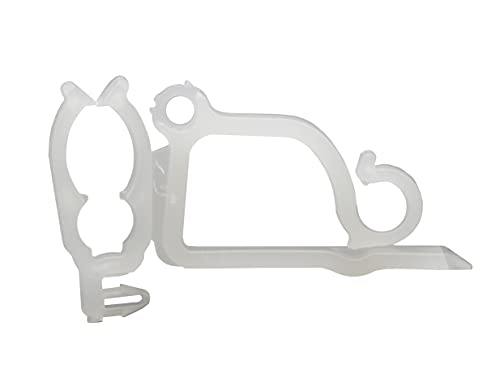
Guide
No-nail holiday mounting: which clip grips a gutter, a shingle or a brick edge, how many you need, and what defeats them.
Top pick
Projectpak All-Purpose Holiday Light Clips for Gutters and Shingles
#ad Price as of October 18, 2026. How we earn
FAQ
Anything that plugs in or screws into an existing socket: lamps, plug-in sconces, under-cabinet bars, smart plugs, smart bulbs, and any bulb swap. None of that is an alteration to the property. Attaching something to a wall is a fixing rather than an alteration, and rewiring is a different tier entirely.
Replacing a hardwired fixture is an alteration, and most leases require the landlord's written consent for alterations. Many landlords agree on condition you keep the original and reinstall it at move-out. Ask in writing. This is general information, not legal advice - lease terms and local law vary.
In most residential tenancies, replacing a burned-out bulb is treated as routine tenant upkeep, in the same category as smoke-alarm batteries. If the fixture itself fails rather than the bulb, that is generally the landlord's repair.
They can, on paint that has not fully cured - roughly four weeks - or was applied over a poorly prepared surface. Warm the strip with a hairdryer and pull slowly parallel to the wall rather than straight out. That technique is most of the difference between clean paint and a repair.
Two risks rather than one. It can be a lease violation, which affects the deposit. And anything attached to a property is generally treated in law as a fixture belonging to the property - so an improvement installed without agreement may not be yours to take when you leave.
Elsewhere