Skip to content
Sconce & Socket

Hub

Under-Cabinet and Task Lighting

Plug-in, battery and adhesive under-cabinet lighting that installs without an electrician, chosen on published lumens and CRI.

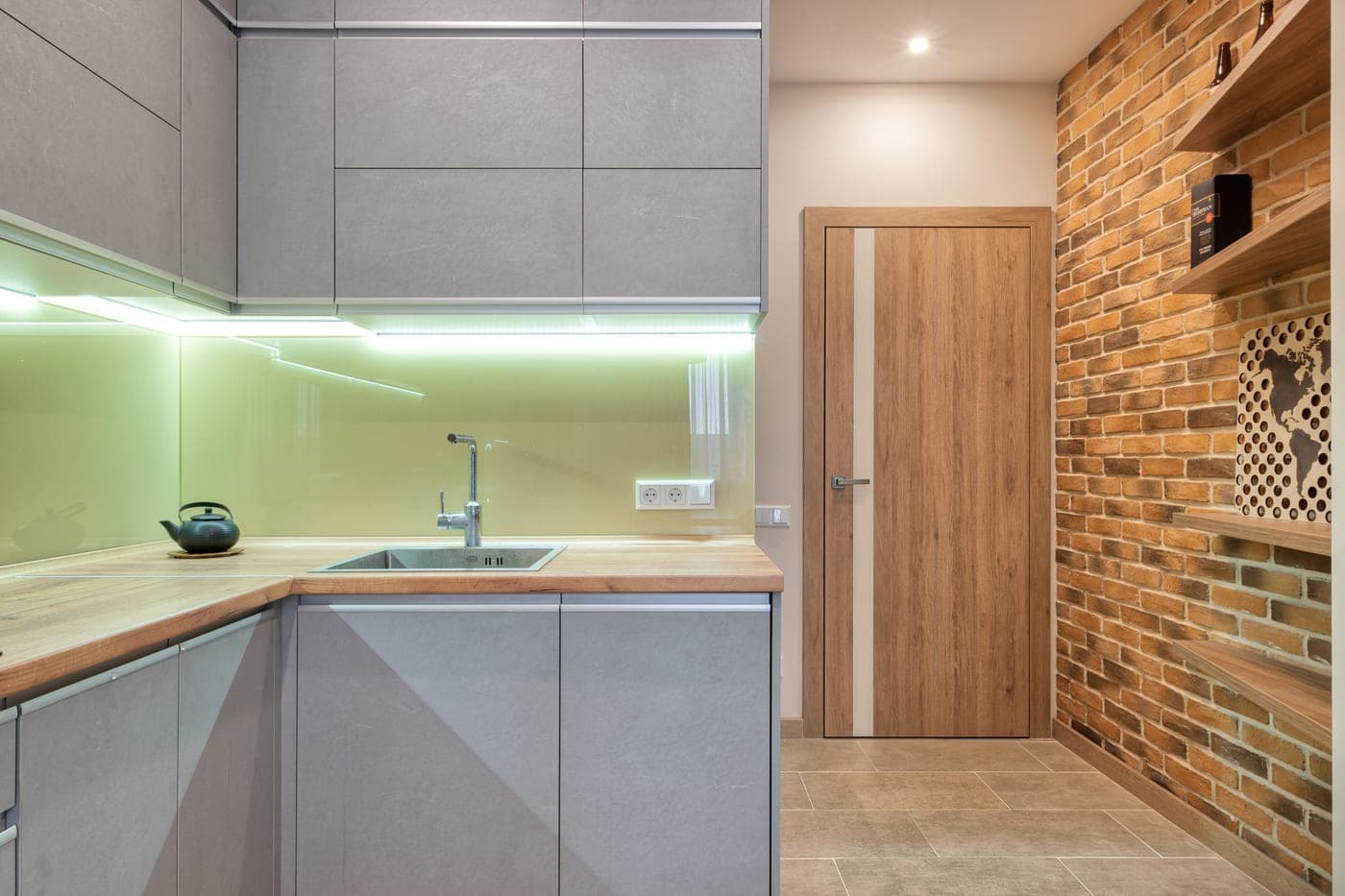
A kitchen counter lit by warm under-cabinet light bars mounted beneath the wall cabinets

Sconce & Socket earns a commission on qualifying purchases made through links on this page, at no extra cost to you. It does not change which products we pick. Full disclosure.

01

The one surface with a published target

A kitchen counter is unusual in a home: there is published illuminance guidance for it, and it is far higher than for the room around it. General kitchen lighting is put at 20 to 50 footcandles. The prep and cooking surface is put at 50 to 100.

That gap is the entire reason this category exists. You cannot get a counter to 75 footcandles by making the ceiling brighter - you would be lighting the whole kitchen like a warehouse, the wall cabinets would shadow the worktop anyway, and you would still be standing between the source and the chopping board.

02

Three specs decide it, and price predicts none of them

What actually separates one under-cabinet fixture from another.
SpecWhy it mattersWhat to look for
CRIWhether food and worktops read true or gray90 minimum; 92 - 98 is available
Color temperatureWhether it matches the rest of the room3000K, or switchable if you are unsure
DimmingA properly sized run is too bright some of the timeFull range, not two-step hi/low
LengthWhether it physically fits the cabinet sectionMeasure each section separately
LinkableWhether one plug can feed the whole runSix to eight units is typical
MountingWhether it comes off cleanlyAdhesive pads included, not just screws

CRI is the one people skip and the one that changes the most. This is the surface where you decide whether chicken is cooked through and whether the tomatoes have gone over, and a CRI 80 fixture renders deep reds poorly enough to make both judgments harder. There is no reason to accept 80 here when 92 costs almost the same. The underlying explanation is in high-CRI bulbs, and it applies identically to integrated fixtures.

Length is a measuring job rather than a spec. Cabinet runs are rarely one continuous span, so measure each section and buy bar lengths that fit inside them with an inch or two spare at each end for connectors. An 18-inch bar under a 15-inch section is a returns label.

03

Plug-in is the default, not the compromise

Under-cabinet lighting is usually discussed as a choice between battery and hardwired, which produces a false decision between dim-and-easy and bright-and-expensive. The third option beats both for most people: plug-in bars match hardwired ones on output, CRI and dimming, install with adhesive in twenty minutes, and come off the wall when you move.

Hardwired holds exactly two advantages - no visible cord, and a wall switch. Both are solvable. The cord runs down the inside back corner of the cabinet run and is invisible from any standing position; a smart plug feeding the linked run gives you app control, voice control and a schedule for a fraction of the cost of rewiring.

And hardwiring is an electrical alteration, which in a rental means a landlord's written agreement and generally a qualified person - a great deal of process for a light under a cupboard, in exchange for an improvement you cannot take with you. The three-tier permission picture is in can you change a light fixture in an apartment.

04

Format, and the gloss counter problem

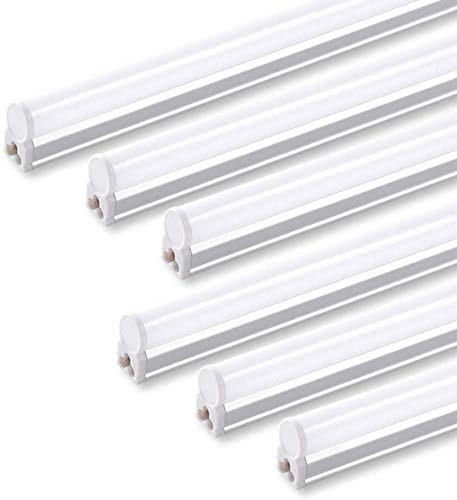
Three formats do three different things to the light on a counter. A light bar gives an even wash and is the only one that reliably publishes an output figure - it is the right choice over a working surface. A COB strip gives a continuous line and fits where a rigid bar cannot. Pucks give scalloped pools with gaps between them, which is a fault on a counter and exactly what you want inside a display cabinet.

If your worktop is polished stone or gloss laminate, there is a test worth doing before you buy anything: stand where you normally work and hold a phone torch under the front edge of the wall cabinet. If you can see it reflected in the worktop, a discrete-LED strip will reflect as a row of bright dots. A COB strip reflects as a single soft line instead. The full comparison is in strip vs puck vs light bar.

Pages

Everything in Under-Cabinet & Task Lighting

A kitchen counter lit from beneath the wall cabinets after dark

Best under-cabinet lighting overall

The best under-cabinet lighting

Under-cabinet fixtures ranked on published lumens and CRI, every one of them installable without wiring.

Top pick
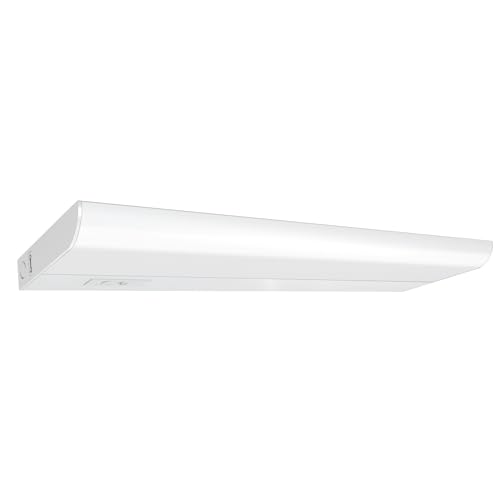
Enbrighten 18 in. Plug-in Under Cabinet Light Bar (82785-T1)

Check price on Amazon

#ad No live price right now, so we show none. How we earn

An LED strip fitted along the underside of a kitchen cabinet

Comparison

Strip vs puck vs light bar

Three under-cabinet formats compared on light distribution, glare in reflective counters, and fitting.

FAQ

Questions people actually ask

+How many lumens of under-cabinet lighting do I need?

Published guidance puts kitchen prep surfaces at 50 to 100 footcandles. An 8-foot counter run is roughly 16 square feet of working surface, so 800 to 1,600 lumens delivered to that strip. Two 18-inch bars at around 1,000 to 1,250 lumens each covers it with room to dim.

+Does under-cabinet lighting have to be hardwired?

No. Plug-in bars match hardwired ones on output and CRI, mount with adhesive, and come with you when you move. Hardwiring is an electrical alteration that generally needs a landlord's permission and a qualified person, for a fixture that produces identical light.

+What CRI should under-cabinet lighting have?

90 or above. The counter is where you judge whether meat is cooked and whether produce has turned, and an 80 CRI light renders reds badly enough to make both harder. Fixtures publishing 92 and 98 are available at ordinary prices.

+Where under the cabinet should the light go?

At the front edge, not the back. A fixture at the back throws its beam onto the backsplash and leaves you working in your own shadow. At the front, the light lands on the board where you are working.

+Can I fit under-cabinet lighting without drilling?

Yes, and the cabinet underside is close to an ideal adhesive surface - flat, hidden and horizontal. The one thing that decides success is degreasing it with isopropyl alcohol first, because cooking grease is the usual reason an adhesive mount fails.

+Are battery under-cabinet lights any good?

For a closet, a pantry or the inside of a cabinet, genuinely yes. Over a counter you cook on, no - battery products sit in the tens to low hundreds of lumens against a target of 800 to 1,600, because the energy simply is not in the pack.

Elsewhere

The other sections