Sconce & Socket earns a commission on qualifying purchases made through links on this page, at no extra cost to you. It does not change which products we pick. Full disclosure.
| # | Product | Best for | Lumens | Price |
|---|---|---|---|---|
| 01 |  WOBANE COB LED Strip Light Kit, 9.8 ft, Dimmable A continuous line of light with no visible dots | Adhesive backing. Peels off; use tape or a channel on painted surfaces. | Not published | $21.99 - View on Amazon #ad Price as of October 18, 2026. How we earn |
| 02 | 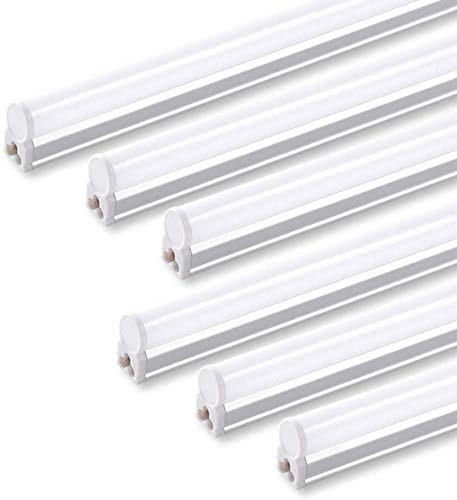 Barrina T5 Integrated LED Light Bar, 4 ft, 3000K Shelving, pantries and long runs on a tight budget | Plug and play. Ships with clips and double-sided tape - tape it and nothing is drilled. | 2,200 lm | $55.99 - View on Amazon #ad Price as of October 18, 2026. How we earn |
| 03 |  Enbrighten 18 in. Plug-in Under Cabinet Light Bar (82785-T1) Kitchen counters, no wiring, no compromise on color | Plugs in. Mounts with the supplied adhesive or two screws - adhesive keeps the deposit. | 1,245 lm | $34.98 - View on Amazon #ad Price as of October 18, 2026. How we earn |
Specifications are the manufacturer or retailer published figures, compiled by hand. We have not measured them, and where a figure is not published we write "Not published" rather than guess.
01
What to check on the box
| Spec | What it means | What to look for |
|---|---|---|
| COB or discrete | Continuous emitter, or separate LEDs with gaps | COB anywhere it will be seen |
| Color temperature | Warm to daylight, in kelvin | 3000K for a kitchen counter |
| CRI | Color rendering accuracy | 90+ over any food surface |
| Lumens | Total output, or per meter | Published at all - many are not |
| Cut interval | Where the strip can be shortened | Short intervals fit awkward runs |
| IP rating | Moisture resistance | IP20 indoors; IP65 near a sink |
| Power supply | The adapter, and where it lives | Somewhere you can hide it |
The most common gap on that list is lumens. Strip is sold on length, color and features far more often than on output, and a product that will not tell you how much light it makes is a product you cannot plan a counter around. That is not a reason to avoid strip - it is a reason to use it for decorative and shelf lighting, where the effect is judged by eye, and to use a bar with a published figure over the surfaces you cook on.
02
Fitting it without leaving a mark
Three mounting methods, in order of how much of your deposit they protect:
- Aluminum channel, adhesive-mounted. The channel takes the strip; small adhesive pads take the channel. Removal is a few small pads rather than a continuous bond, and the channel also diffuses the light and sinks heat. This is the right method on any painted surface.
- Painter's tape underlayer. Run low-tack tape along the line first and stick the strip to the tape. Cheap, quick, and it means the strip adhesive never touches the paint. Less durable in a warm kitchen.
- Direct to a cabinet underside. Fine on finished board or veneer, after degreasing with isopropyl alcohol. Not on plaster, not on wallpaper, not on freshly painted anything.
Wherever the strip goes, the power adapter has to live somewhere. Plan that before you stick anything down - inside the cabinet above, on top of a wall unit, or behind an appliance - because an adapter dangling on a worktop undoes the whole effect.
03
Where strip is genuinely the best answer
- Floating shelves. A rigid bar looks wrong under a thin shelf; a strip in a shallow channel disappears.
- Open shelving and display units. Continuous light down a run of shelves is the effect, and no bar length will match the run exactly.
- Behind a screen or headboard. Low-output bias lighting, where nobody sees the source and output figures barely matter.
- Awkward geometry. Curves, corners, short runs, and anywhere the available depth is less than a bar's thickness.
The picks
The products behind this page
01
A continuous line of light with no visible dots
WOBANE COB LED Strip Light Kit, 9.8 ft, Dimmable
#ad Price as of October 18, 2026. How we earn
COB strip at CRI 90+ and a true 3000K - the format to use when the strip will show up in a reflection, because there is no dotting down a gloss worktop.
| Lumens | Not published |
|---|---|
| Color temperature | 3000K |
| CRI | 90+ |
| Power source | Plugs in (adapter) |
| Dimmable | Yes - RF remote |
| Renter-safe method | Adhesive backing. Peels off; use tape or a channel on painted surfaces. |
What it gets right
- COB gives a continuous line rather than visible LED dots
- CRI 90+ at a true 3000K, not a nominal one
- Cuttable to length at marked intervals
What it costs you
- Total output is not published, so you cannot plan a lumen budget from it
- Adhesive can lift paint on a poorly primed surface
- The controller box needs somewhere to live
Spec source: Apartment ABC roundup (published specification, attributed) - retrieved September 3, 2026.
02
Shelving, pantries and long runs on a tight budget
Barrina T5 Integrated LED Light Bar, 4 ft, 3000K
#ad Price as of October 18, 2026. How we earn
2,200 lumens for 20W at 3000K, linkable up to eight fixtures on one plug - the cheapest way to light a long run, provided you can live with CRI 85.
| Lumens | 2,200 lm |
|---|---|
| Color temperature | 3000K |
| CRI | 85 |
| Power source | Plugs in (20W, corded) |
| Dimmable | No |
| Renter-safe method | Plug and play. Ships with clips and double-sided tape - tape it and nothing is drilled. |
What it gets right
- 2,200 lumens per bar is far more output per dollar than a cabinet-specific fixture
- Links up to eight bars on one plug
- 270-degree beam angle spreads instead of striping
What it costs you
- CRI 85 - fine for a pantry, visibly duller than 92+ over a worktop
- Not dimmable
- It looks like a shop light, because it is one
Spec source: Barrina product page - retrieved September 3, 2026.
03
Kitchen counters, no wiring, no compromise on color
Enbrighten 18 in. Plug-in Under Cabinet Light Bar (82785-T1)
#ad Price as of October 18, 2026. How we earn
1,245 lumens at 92 CRI with five white settings from 2700K to 6500K, on a plug - the rare renter-safe fixture that beats most hardwired ones on light quality.
| Lumens | 1,245 lm |
|---|---|
| Color temperature | 2700K-6500K, five settings |
| CRI | 92 |
| Power source | Plugs in |
| Dimmable | Yes - full range |
| Renter-safe method | Plugs in. Mounts with the supplied adhesive or two screws - adhesive keeps the deposit. |
What it gets right
- 92 CRI, so food and worktops read true rather than gray
- Five color temperatures means you tune it to the room, not the box
- Full-range dimming, not a two-step hi/low
What it costs you
- The cord has to reach an outlet and then be hidden
- 18 inches is longer than some cabinet sections allow
- One more power adapter on a kitchen outlet
Spec source: Enbrighten product page - retrieved September 3, 2026.
FAQ
Questions people actually ask
+What is the difference between COB and normal LED strip?
A normal strip is a row of separate LEDs with visible gaps; COB - chip on board - packs the emitters densely under a continuous phosphor layer so the strip lights as one unbroken line. COB costs slightly more and is the right choice anywhere the strip or its reflection will be seen.
+How bright should LED strip be under cabinets?
Aim for the same counter target as any other format - roughly 800 to 1,600 lumens over an 8-foot run. The difficulty is that strip products publish output far less consistently than bars do, often quoting lumens per meter or not at all. Where the figure is missing, that is worth knowing before you buy.
+Will LED strip damage my walls?
It can. Strip adhesive is a full-length bond and can pull paint, and sometimes plaster, off a wall when removed. On a cabinet underside it is generally fine. On any painted surface, mount an aluminum channel instead, or lay down low-tack painter's tape and stick the strip to that.
+Can I cut LED strip to length?
Only at the marked cut points, usually every few inches where copper pads are exposed. Cutting elsewhere breaks that segment permanently. Measure twice - this one is not reversible.
Sources
Where the numbers came from
All sources retrieved September 3, 2026.
Next
Read these next
About the author
Sawyer V. An enthusiast who reads the spec sheets and does the arithmetic. No lab, no test bench.