Sconce & Socket earns a commission on qualifying purchases made through links on this page, at no extra cost to you. It does not change which products we pick. Full disclosure.
| # | Product | Best for | Lumens | Price |
|---|---|---|---|---|
| 01 |  Philips Ultra Definition A19 LED, 60W equivalent, 2700K The default bulb for almost every lamp in a home | It is a bulb. Swap it, keep the old one, put it back when you leave. | 800 lm | |
| 02 |  Waveform Lighting Ultra High 95 CRI BR30 LED Bulb Recessed cans where color accuracy is the whole point | A bulb swap in an existing can. Fully reversible. | 800 lm | $19.38 - View on Amazon #ad Price as of October 19, 2026. How we earn |
| 03 |  Feit Electric R20 LED, 450 lm, Damp Rated Small recessed cans and track heads | A bulb swap in an existing can. Fully reversible. | 450 lm | $11.11 - View on Amazon #ad Price as of October 19, 2026. How we earn |
| 04 | 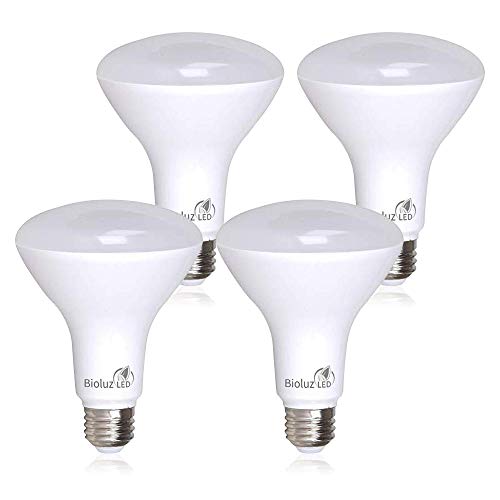 YUJILEDS CRI-MAX CRI 95+ 16W BR30 LED Bulb, 3000K High output and high color accuracy at the same time | A bulb swap. Nothing fixed, nothing to make good. | 1,200 lm | $22.99 - View on Amazon #ad Price as of October 19, 2026. How we earn |
Specifications are the manufacturer or retailer published figures, compiled by hand. We have not measured them, and where a figure is not published we write "Not published" rather than guess.
01
Two different codes on the same box
A bulb box carries two codes that people routinely conflate. One describes the shape and size of the glass. The other describes the screw thread. You need both to be right, and only one of them stops the bulb physically fitting.
| Code | Shape | Diameter | Where it belongs |
|---|---|---|---|
| A19 | Classic pear, omnidirectional | About 2.4 in. | Table lamps, floor lamps, most fittings |
| A21 | Same shape, larger | About 2.6 in. | Higher-output versions; check the fitting |
| BR30 | Bulged reflector, directional | About 3.75 in. | Standard recessed cans, track heads |
| R20 | Smaller reflector | About 2.5 in. | Shallow or narrow cans a BR30 will not fit |
| PAR38 | Parabolic reflector, tight beam | About 4.75 in. | Spotlights, outdoor floods |
| B11 / candle | Slim decorative candle | About 1.4 in. | Chandeliers, decorative sconces |
| G25 / globe | Round globe | About 3.1 in. | Bathroom vanity bars, exposed fittings |
| Base | Size | Common name | Notes |
|---|---|---|---|
| E26 | 26 mm | Standard / medium | The default household base in the US |
| E12 | 12 mm | Candelabra | Chandeliers and decorative fittings |
| E39 | 39 mm | Mogul | Large commercial fittings, rare at home |
| GU10 / GU24 | Twist-and-lock pins | Pin base | Not a screw thread - it twists in |
02
The candelabra trap
This is the practical reason the page exists. If a fitting takes E12 candelabra bulbs, your options narrow sharply - and high-CRI choices narrow more than anything. The market for 95 CRI candelabra bulbs is a fraction of the market for 95 CRI A19s, and the prices reflect it.
So check the base before you buy the fixture, not after. A decorative chandelier or sconce with five E12 sockets commits you to a smaller, more expensive bulb market for as long as you own it. A fitting with one E26 socket lets you put a mainstream CRI 95 bulb in it for the price of a coffee.
This applies with particular force to table lamps, where the light quality is entirely a function of the bulb you can fit.
03
Shape decides where the light goes
An A19 is omnidirectional: it throws light in every direction including back up into the fitting. That is exactly right in a table lamp with a shade, which needs light going sideways and up to glow.
In a recessed can it is close to wasteful. Most of the sideways output hits the inside of the housing and never reaches the room. A reflector shape - the BR30 for standard cans, the R20 for shallow ones - aims the same lumens downward, so the floor beneath gets visibly more light from an identically rated bulb.
Where you want both high output and accurate color in a can, the YUJILEDS CRI-MAX BR30 publishes 1,200 lumens at CRI 95+ with an R9 figure, which is the combination most reflector bulbs will not give you.
The picks
The products behind this page
01
The default bulb for almost every lamp in a home
Philips Ultra Definition A19 LED, 60W equivalent, 2700K
800 lumens at 2700K with a published CRI 95 for the price of an ordinary bulb - the single easiest upgrade in this entire category.
| Lumens | 800 lm |
|---|---|
| Color temperature | 2700K |
| CRI | 95 |
| Power source | Screws into a standard E26 socket (8W) |
| Dimmable | Yes |
| Renter-safe method | It is a bulb. Swap it, keep the old one, put it back when you leave. |
What it gets right
- CRI 95 at a mainstream price, which almost nothing else manages
- 2700K matches the warm light most rooms were designed around
- Dimmable and rated flicker-free
What it costs you
- 800 lumens is one bulb's worth - a dark room needs several
- 2700K is too warm for detailed kitchen task work
- R9 is not published, so deep reds are an unknown
Spec source: Home Depot listing - retrieved September 3, 2026.
02
Recessed cans where color accuracy is the whole point
Waveform Lighting Ultra High 95 CRI BR30 LED Bulb
#ad Price as of October 19, 2026. How we earn
800 lumens from 10.5W at CRI 95+ with R9 above 80 - and Waveform publishes the R9 figure, which is the number almost every other brand quietly omits.
| Lumens | 800 lm |
|---|---|
| Color temperature | 2700K or 3000K |
| CRI | 95+ (R9 80+) |
| Power source | Screws into a standard E26 socket (10.5W) |
| Dimmable | Yes |
| Renter-safe method | A bulb swap in an existing can. Fully reversible. |
What it gets right
- R9 above 80 is published, so deep reds are actually accounted for
- Two warm color temperatures rather than one compromise
- BR30 shape drops straight into standard recessed cans
What it costs you
- Several times the price of a supermarket BR30
- Sold direct rather than through every retailer
- 800 lumens is standard output, not high output
Spec source: Waveform Lighting product page - retrieved September 3, 2026.
03
Small recessed cans and track heads
Feit Electric R20 LED, 450 lm, Damp Rated
#ad Price as of October 19, 2026. How we earn
450 lumens at CRI 90+ in the smaller R20 shape, damp rated and approved for enclosed use - the bulb for a can that an ordinary BR30 will not physically fit.
| Lumens | 450 lm |
|---|---|
| Color temperature | 2700K soft white, or 5000K daylight version |
| CRI | 90+ |
| Power source | Screws into a standard E26 socket (about 5W) |
| Dimmable | Yes |
| Renter-safe method | A bulb swap in an existing can. Fully reversible. |
What it gets right
- R20 is physically smaller than BR30, so it fits shallow cans
- Damp rated and approved for enclosed fixtures
- CRI 90+ at a low price per bulb
What it costs you
- 450 lumens is modest - you need more of them
- R20 cans are less common than BR30, so check the fitting
- Not a general-purpose room bulb
Spec source: Amazon listing (R20DM/950CA/3) - retrieved September 3, 2026.
04
High output and high color accuracy at the same time
YUJILEDS CRI-MAX CRI 95+ 16W BR30 LED Bulb, 3000K
#ad Price as of October 19, 2026. How we earn
1,200 lumens at CRI 95+ with R9 up to 95+ - the only combination here that refuses to trade brightness against color quality.
| Lumens | 1,200 lm |
|---|---|
| Color temperature | 3000K |
| CRI | 95+ (R9 up to 95+) |
| Power source | Screws into a standard E26 socket (16W) |
| Dimmable | Not published |
| Renter-safe method | A bulb swap. Nothing fixed, nothing to make good. |
What it gets right
- 1,200 lumens at CRI 95+ - most high-CRI bulbs stop at 800
- R9 up to 95+, published, the strongest figure we found
- 180-degree beam spreads rather than spotlights
What it costs you
- Specialist pricing
- Dimming behavior is not published
- 16W runs warmer than a standard BR30 - not for a tight enclosed can
Spec source: YUJILEDS product page - retrieved September 3, 2026.
FAQ
Questions people actually ask
+What does A19 mean on a light bulb?
A19 is the shape and size: 'A' is the classic pear-shaped envelope and '19' is its widest diameter in eighths of an inch, so about 2.4 inches. It is the standard household bulb shape and what most lamps take.
+What is the difference between E26 and E12?
They are screw thread sizes, not shapes. E26 is the standard household base at 26 millimeters across, and E12 is the smaller candelabra base used in chandeliers, some wall sconces and decorative fittings. They are not interchangeable and E12 has a much narrower range of high-CRI options.
+What is the difference between BR30 and R20?
Both are reflector shapes for recessed cans and track heads; the number is the diameter in eighths of an inch. BR30 is about 3.75 inches across and R20 about 2.5, so R20 fits shallower and narrower cans where a BR30 physically will not.
+Can I put an A19 bulb in a recessed can?
Often physically yes, and it is usually the wrong choice. An A19 throws light in all directions, so in a can most of that output goes sideways into the housing rather than down into the room. A reflector shape puts it where you want it.
+Do bulb shapes affect brightness?
Not the total output, but very much where it goes. Two bulbs rated at 800 lumens in an A19 and a BR30 put visibly different amounts of light onto the floor beneath a recessed can, because one is directional and one is not.
Sources
Where the numbers came from
- Home Depot - Philips Ultra Definition A19 60W equivalent 2700K listing
- Waveform Lighting - Ultra High 95 CRI BR30 product page
- Amazon listing - Feit Electric R20, damp rated
All sources retrieved September 3, 2026.
Next
Read these next
About the author
Sawyer V. An enthusiast who reads the spec sheets and does the arithmetic. No lab, no test bench.