Sconce & Socket earns a commission on qualifying purchases made through links on this page, at no extra cost to you. It does not change which products we pick. Full disclosure.
| # | Product | Best for | Lumens | Price |
|---|---|---|---|---|
| 01 |  Waveform Lighting Ultra High 95 CRI BR30 LED Bulb Recessed cans where color accuracy is the whole point | A bulb swap in an existing can. Fully reversible. | 800 lm | $19.38 - View on Amazon #ad Price as of October 19, 2026. How we earn |
| 02 | 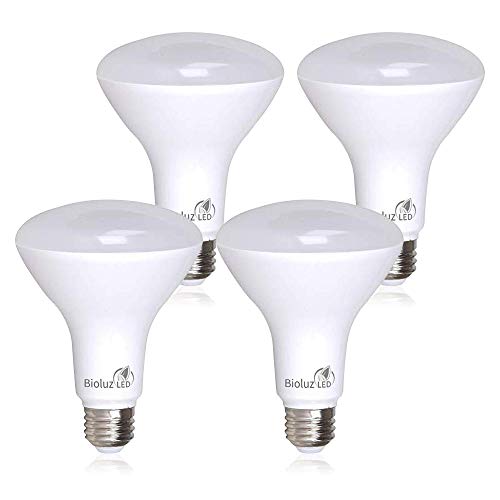 YUJILEDS CRI-MAX CRI 95+ 16W BR30 LED Bulb, 3000K High output and high color accuracy at the same time | A bulb swap. Nothing fixed, nothing to make good. | 1,200 lm | $22.99 - View on Amazon #ad Price as of October 19, 2026. How we earn |
| 03 |  WOBANE COB LED Strip Light Kit, 9.8 ft, Dimmable A continuous line of light with no visible dots | Adhesive backing. Peels off; use tape or a channel on painted surfaces. | Not published | $21.99 - View on Amazon #ad Price as of October 19, 2026. How we earn |
| 04 |  Philips Ultra Definition A19 LED, 60W equivalent, 2700K The default bulb for almost every lamp in a home | It is a bulb. Swap it, keep the old one, put it back when you leave. | 800 lm |
Specifications are the manufacturer or retailer published figures, compiled by hand. We have not measured them, and where a figure is not published we write "Not published" rather than guess.
01
This is a CRI problem, not a brightness problem
Almost every other page on this site starts with a lumen target. This one does not, because lighting a picture is not about quantity. A framed work is a small area at close range, and the amount of light needed is modest.
What decides whether it looks right is color rendering. The purpose of the light is to show the colors in the work, and a CRI 80 source renders deep reds so poorly that it materially changes what you see - skin tones go sallow, reds go brown, and a painting looks flatter than it is.
So the picks here are high-CRI light sources with published figures. The Waveform 95 CRI BR30 and YUJILEDS CRI-MAX BR30 both publish R9 - the deep-red figure that the headline CRI number leaves out - which is exactly the number that matters when the subject is a picture. The reasoning is in high-CRI LED bulbs.
02
Angles, and the glazing problem
The second thing that decides the result is where the light comes from. There is a narrow band that works and it is easy to miss in both directions.
| Angle from vertical | Result |
|---|---|
| Roughly 0 - 15 degrees | Too steep. The frame shadows the top of the work. |
| Roughly 30 degrees | The usual target. Even coverage, reflection bounces away from the viewer. |
| Roughly 45 degrees and beyond | Skims the surface. Exaggerates texture and canvas weave, and can dazzle. |
With glass or acrylic glazing the angle stops being cosmetic. Light arriving straight at the piece reflects the source back at whoever is standing in front of it, so the work becomes a mirror. Around 30 degrees from vertical throws that reflection down toward the floor instead.
A practical test before committing to a mount: hold a phone torch where you intend to put the light, stand where people actually stand, and look. If you can see the torch in the glazing, move it. It costs nothing and it is the difference between a lit picture and a bright rectangle.
03
Three no-wiring routes
- A rechargeable picture light on the frame or the wall above it. This is the one category on the site where battery power is unequivocally right: the output needed is low, the light is on for the time you are in the room, and the wall above a picture almost never has an outlet. Look for a magnetic mount on an adhesive plate so it comes down to charge.
- A plug-in wall fixture aimed at the piece, which gives you a standard socket and therefore a proper high-CRI bulb. More light and better color than any battery unit, at the cost of a cord - see plug-in wall sconces.
- A COB strip in a channel above a display shelf or inside a niche. A continuous COB strip at CRI 90+ gives an even line with no dotting, which matters when the strip itself may be visible. Use an aluminum channel on painted surfaces rather than sticking the strip directly.
Whichever route, keep the color temperature consistent with the room around it. A 4000K spotlight on a picture in a 2700K room makes the artwork look like it belongs to a different building - the chart is in the color temperature guide.
The picks
The products behind this page
01
Recessed cans where color accuracy is the whole point
Waveform Lighting Ultra High 95 CRI BR30 LED Bulb
#ad Price as of October 19, 2026. How we earn
800 lumens from 10.5W at CRI 95+ with R9 above 80 - and Waveform publishes the R9 figure, which is the number almost every other brand quietly omits.
| Lumens | 800 lm |
|---|---|
| Color temperature | 2700K or 3000K |
| CRI | 95+ (R9 80+) |
| Power source | Screws into a standard E26 socket (10.5W) |
| Dimmable | Yes |
| Renter-safe method | A bulb swap in an existing can. Fully reversible. |
What it gets right
- R9 above 80 is published, so deep reds are actually accounted for
- Two warm color temperatures rather than one compromise
- BR30 shape drops straight into standard recessed cans
What it costs you
- Several times the price of a supermarket BR30
- Sold direct rather than through every retailer
- 800 lumens is standard output, not high output
Spec source: Waveform Lighting product page - retrieved September 3, 2026.
02
High output and high color accuracy at the same time
YUJILEDS CRI-MAX CRI 95+ 16W BR30 LED Bulb, 3000K
#ad Price as of October 19, 2026. How we earn
1,200 lumens at CRI 95+ with R9 up to 95+ - the only combination here that refuses to trade brightness against color quality.
| Lumens | 1,200 lm |
|---|---|
| Color temperature | 3000K |
| CRI | 95+ (R9 up to 95+) |
| Power source | Screws into a standard E26 socket (16W) |
| Dimmable | Not published |
| Renter-safe method | A bulb swap. Nothing fixed, nothing to make good. |
What it gets right
- 1,200 lumens at CRI 95+ - most high-CRI bulbs stop at 800
- R9 up to 95+, published, the strongest figure we found
- 180-degree beam spreads rather than spotlights
What it costs you
- Specialist pricing
- Dimming behavior is not published
- 16W runs warmer than a standard BR30 - not for a tight enclosed can
Spec source: YUJILEDS product page - retrieved September 3, 2026.
03
A continuous line of light with no visible dots
WOBANE COB LED Strip Light Kit, 9.8 ft, Dimmable
#ad Price as of October 19, 2026. How we earn
COB strip at CRI 90+ and a true 3000K - the format to use when the strip will show up in a reflection, because there is no dotting down a gloss worktop.
| Lumens | Not published |
|---|---|
| Color temperature | 3000K |
| CRI | 90+ |
| Power source | Plugs in (adapter) |
| Dimmable | Yes - RF remote |
| Renter-safe method | Adhesive backing. Peels off; use tape or a channel on painted surfaces. |
What it gets right
- COB gives a continuous line rather than visible LED dots
- CRI 90+ at a true 3000K, not a nominal one
- Cuttable to length at marked intervals
What it costs you
- Total output is not published, so you cannot plan a lumen budget from it
- Adhesive can lift paint on a poorly primed surface
- The controller box needs somewhere to live
Spec source: Apartment ABC roundup (published specification, attributed) - retrieved September 3, 2026.
04
The default bulb for almost every lamp in a home
Philips Ultra Definition A19 LED, 60W equivalent, 2700K
800 lumens at 2700K with a published CRI 95 for the price of an ordinary bulb - the single easiest upgrade in this entire category.
| Lumens | 800 lm |
|---|---|
| Color temperature | 2700K |
| CRI | 95 |
| Power source | Screws into a standard E26 socket (8W) |
| Dimmable | Yes |
| Renter-safe method | It is a bulb. Swap it, keep the old one, put it back when you leave. |
What it gets right
- CRI 95 at a mainstream price, which almost nothing else manages
- 2700K matches the warm light most rooms were designed around
- Dimmable and rated flicker-free
What it costs you
- 800 lumens is one bulb's worth - a dark room needs several
- 2700K is too warm for detailed kitchen task work
- R9 is not published, so deep reds are an unknown
Spec source: Home Depot listing - retrieved September 3, 2026.
FAQ
Questions people actually ask
+What CRI do you need to light artwork?
95 or better, and this is one of the few places we would say so without qualification. The entire point of lighting a picture is showing its colors accurately, and a CRI 80 source renders reds so poorly that it visibly changes the work. Look for a published R9 figure too.
+How do you light a picture without wiring?
Three routes: a rechargeable picture light on the frame or wall above it, a plug-in wall or track fixture aimed at the piece, or an LED strip in a channel above a display shelf. All three run from an outlet or a battery and need at most an adhesive mount.
+How do you avoid glare on glazed pictures?
Aim the light at roughly 30 degrees from vertical, from above and in front. Light arriving straight on reflects the source back at anyone standing in front of the piece; too steep an angle and the frame casts a shadow across the top of the work.
+Will lighting damage artwork?
LEDs emit essentially no ultraviolet, which is the main conservation concern with older lamp types, so they are far safer for artwork than halogen or incandescent. Heat is also negligible at the distances involved. The remaining risk is cumulative visible light on genuinely delicate works, which is a museum-scale concern rather than a domestic one.
Sources
Where the numbers came from
- Style by Emily Henderson - The case for plug-in sconces and non-hardwired lighting
- Seus Lighting - Lighting without wiring: wireless solutions for US homes
- Waveform Lighting - Ultra High 95 CRI BR30 product page
All sources retrieved September 3, 2026.
Next
Read these next
About the author
Sawyer V. An enthusiast who reads the spec sheets and does the arithmetic. No lab, no test bench.