Sconce & Socket earns a commission on qualifying purchases made through links on this page, at no extra cost to you. It does not change which products we pick. Full disclosure.
| # | Product | Best for | Lumens | Price |
|---|---|---|---|---|
| 01 |  Philips Ultra Definition A19 LED, 60W equivalent, 2700K The default bulb for almost every lamp in a home | It is a bulb. Swap it, keep the old one, put it back when you leave. | 800 lm | |
| 02 |  Waveform Lighting Ultra High 95 CRI BR30 LED Bulb Recessed cans where color accuracy is the whole point | A bulb swap in an existing can. Fully reversible. | 800 lm | $19.38 - View on Amazon #ad Price as of October 22, 2026. How we earn |
| 03 | 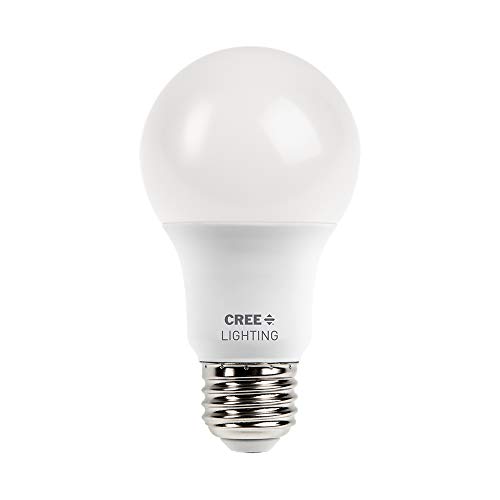 Cree Lighting A19 60W Equivalent LED, 5000K, Good for Enclosed Enclosed fixtures where you want daylight, not warmth | A bulb swap. Fully reversible. | 815 lm | |
| 04 | 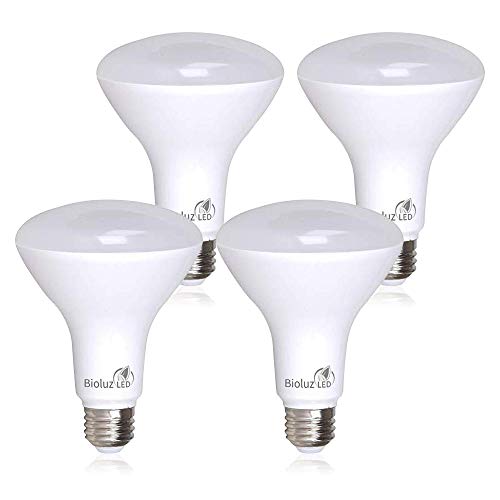 YUJILEDS CRI-MAX CRI 95+ 16W BR30 LED Bulb, 3000K High output and high color accuracy at the same time | A bulb swap. Nothing fixed, nothing to make good. | 1,200 lm | $22.99 - View on Amazon #ad Price as of October 22, 2026. How we earn |
Specifications are the manufacturer or retailer published figures, compiled by hand. We have not measured them, and where a figure is not published we write "Not published" rather than guess.
01
Five numbers, in a fixed order
Bulb packaging is mostly marketing, with one exception: a standardized panel, usually on the back or the side, that presents the same figures in the same order on every box. It exists precisely so you can compare two bulbs without decoding two different marketing vocabularies.
Learning to read it takes about a minute and it is the difference between buying on a photograph and buying on a specification.
| Line | What it means | How much it matters |
|---|---|---|
| Brightness (lumens) | Light actually produced | The most important figure on the box |
| Light appearance (Kelvin) | Warm to cool, on a scale | Decides whether the room feels right |
| Estimated yearly energy cost | A standardized comparison, not your bill | Useful only between bulbs |
| Life (years) | Rated hours converted at 3 hours a day | Conditional - see the caveat below |
| Energy used (watts) | Consumption | For running cost and fixture limits only |
Brightness is the number to read first. It is the only figure that tells you what the bulb does, and it is the one that makes the whole method in how many lumens does a room need possible, because lumens add up across fittings.
Light appearance is second, and it is a scale rather than a single point - most panels show a slider from warm to cool with the bulb's position marked. 2700K sits at the warm end and is this site's default for living spaces. What each step actually looks like is in the light bulb color temperature chart.
02
The two figures that mislead
Estimated yearly energy cost is calculated on a fixed assumption - three hours of use per day at a standard electricity rate. Neither will match your house. A porch light running dusk to dawn runs far more than three hours; a closet light runs far less. Treat the figure as a way to rank two bulbs against each other, never as a prediction. The real arithmetic is in what does an LED bulb cost to run.
Life in years is the same rated-hours figure divided by that same three hours a day. A bulb showing "22.8 years" is a 25,000 hour bulb, and it will reach that only in the conditions the rating assumes: an open fixture at normal room temperature. Put the same bulb in a sealed porch lantern and the number means very little - which is the subject of best LED bulbs for enclosed fixtures.
The Cree A19 is a good example of a bulb that publishes both halves honestly: a 25,000 hour rated life and an explicit statement that it is good for enclosed fixtures. The second claim is what makes the first one credible in a real fitting.
03
What the label does not tell you
The panel's real limitation is what it leaves out. Four specifications that change whether a bulb is right for your fitting are simply not on it.
- CRI. The biggest gap. Color rendering decides whether food, skin and fabric look right, and two bulbs with identical panels can differ enormously. Manufacturers who do well on it advertise it on the front - the Philips at CRI 95 and the Waveform at 95+ with R9 80+ both do. Silence on CRI usually means around 80. The case is in best high-CRI LED bulbs.
- Beam angle. Absent from the panel, and it decides where the light lands. The Yuji CRI-MAX BR30 publishes a 180-degree beam separately, which is why it can be specified rather than guessed - see beam angle and spread.
- Enclosed, damp and wet ratings. Printed elsewhere when stated at all. Absence is not permission.
- Dimmer compatibility. "Dimmable" appears on the front of the box; which dimmers it actually works with almost never does. That is the subject of LED dimmer compatibility.
So the practical routine is: read the panel for lumens and Kelvin, then look at the rest of the box for CRI and the ratings. If the second set is missing entirely, you are looking at a bulb sold on price.
The picks
The products behind this page
01
The default bulb for almost every lamp in a home
Philips Ultra Definition A19 LED, 60W equivalent, 2700K
800 lumens at 2700K with a published CRI 95 for the price of an ordinary bulb - the single easiest upgrade in this entire category.
| Lumens | 800 lm |
|---|---|
| Color temperature | 2700K |
| CRI | 95 |
| Power source | Screws into a standard E26 socket (8W) |
| Dimmable | Yes |
| Renter-safe method | It is a bulb. Swap it, keep the old one, put it back when you leave. |
What it gets right
- CRI 95 at a mainstream price, which almost nothing else manages
- 2700K matches the warm light most rooms were designed around
- Dimmable and rated flicker-free
What it costs you
- 800 lumens is one bulb's worth - a dark room needs several
- 2700K is too warm for detailed kitchen task work
- R9 is not published, so deep reds are an unknown
Spec source: Home Depot listing - retrieved September 3, 2026.
02
Recessed cans where color accuracy is the whole point
Waveform Lighting Ultra High 95 CRI BR30 LED Bulb
#ad Price as of October 22, 2026. How we earn
800 lumens from 10.5W at CRI 95+ with R9 above 80 - and Waveform publishes the R9 figure, which is the number almost every other brand quietly omits.
| Lumens | 800 lm |
|---|---|
| Color temperature | 2700K or 3000K |
| CRI | 95+ (R9 80+) |
| Power source | Screws into a standard E26 socket (10.5W) |
| Dimmable | Yes |
| Renter-safe method | A bulb swap in an existing can. Fully reversible. |
What it gets right
- R9 above 80 is published, so deep reds are actually accounted for
- Two warm color temperatures rather than one compromise
- BR30 shape drops straight into standard recessed cans
What it costs you
- Several times the price of a supermarket BR30
- Sold direct rather than through every retailer
- 800 lumens is standard output, not high output
Spec source: Waveform Lighting product page - retrieved September 3, 2026.
03
Enclosed fixtures where you want daylight, not warmth
Cree Lighting A19 60W Equivalent LED, 5000K, Good for Enclosed
815 lumens at 5000K with CRI 90+ and a 25,000 hour rated life, marked as good for enclosed fixtures - the one to use in a sealed utility or bathroom fitting.
| Lumens | 815 lm |
|---|---|
| Color temperature | 5000K |
| CRI | 90+ |
| Power source | Screws into a standard E26 socket |
| Dimmable | Yes |
| Renter-safe method | A bulb swap. Fully reversible. |
What it gets right
- Publishes a real lumen figure rather than only an equivalence
- 25,000 hour rated life, and rated for enclosed use
- CRI 90+ at 5000K, which is rarer than at 2700K
What it costs you
- 5000K is wrong for a living room - this is a utility and task bulb
- Rated life assumes normal ambient temperature, not a hot sealed dome
- Only 815 lumens, so a large enclosed fitting may want two
Spec source: Walmart listing - retrieved September 3, 2026.
04
High output and high color accuracy at the same time
YUJILEDS CRI-MAX CRI 95+ 16W BR30 LED Bulb, 3000K
#ad Price as of October 22, 2026. How we earn
1,200 lumens at CRI 95+ with R9 up to 95+ - the only combination here that refuses to trade brightness against color quality.
| Lumens | 1,200 lm |
|---|---|
| Color temperature | 3000K |
| CRI | 95+ (R9 up to 95+) |
| Power source | Screws into a standard E26 socket (16W) |
| Dimmable | Not published |
| Renter-safe method | A bulb swap. Nothing fixed, nothing to make good. |
What it gets right
- 1,200 lumens at CRI 95+ - most high-CRI bulbs stop at 800
- R9 up to 95+, published, the strongest figure we found
- 180-degree beam spreads rather than spotlights
What it costs you
- Specialist pricing
- Dimming behavior is not published
- 16W runs warmer than a standard BR30 - not for a tight enclosed can
Spec source: YUJILEDS product page - retrieved September 3, 2026.
FAQ
Questions people actually ask
+What is the Lighting Facts label?
A standardized panel on bulb packaging that lists brightness in lumens, estimated yearly energy cost, expected life, light appearance in Kelvin, and energy used in watts. It exists so bulbs can be compared like for like rather than on marketing claims.
+Which numbers on a bulb box matter most?
Brightness in lumens and light appearance in Kelvin. Those two decide whether a bulb produces enough light and whether it is the right color for the room. Everything else on the panel is secondary.
+Is CRI on the Lighting Facts label?
Usually not, and that is the label's biggest gap. Color rendering index is the specification that decides whether food, skin and fabric look right, and manufacturers that publish it generally print it separately on the front of the box - which itself tells you something.
+What does the estimated yearly energy cost mean?
A standardized calculation based on 3 hours of use a day at an assumed electricity rate. It is useful for comparing two bulbs against each other and not a prediction of your bill, because both your hours and your rate will differ.
+Does the label tell you if a bulb suits an enclosed fixture?
No. Enclosed-fixture suitability, damp and wet ratings, and dimmer compatibility are all printed elsewhere on the packaging when they are stated at all - and their absence is not the same as a yes.
Sources
Where the numbers came from
- Home Depot listing - Philips Ultra Definition A19, 800 lm, 2700K, 95 CRI
- Walmart listing - Cree A19, 815 lm, 25,000 hour rated life, 90 CRI
- Waveform Lighting - 95 CRI BR30, 800 lm
- Yuji International - CRI-MAX 16W BR30, 1,200 lm, 180-degree beam
All sources retrieved September 3, 2026.
Next
Read these next
About the author
Sawyer V. An enthusiast who reads the spec sheets and does the arithmetic. No lab, no test bench.