Sconce & Socket earns a commission on qualifying purchases made through links on this page, at no extra cost to you. It does not change which products we pick. Full disclosure.
| # | Product | Best for | Lumens | Price |
|---|---|---|---|---|
| 01 | 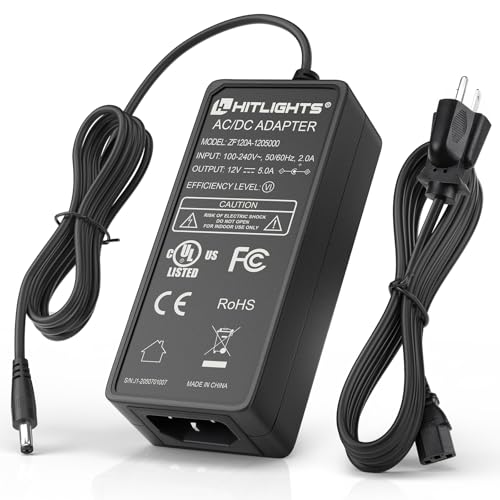 HitLights 12V 5A 60W Power Supply, Class 2, UL Listed A normal under-cabinet run, from a lighting brand rather than a parts bin | Plugs into an outlet. Nothing wired, nothing fixed, comes away with the strip. | Not applicable - this is the supply, not the light | $19.99 - View on Amazon #ad Price as of November 13, 2026. How we earn |
| 02 |  LEDMO 12V 5A 60W Max Power Supply, UL Listed The same 60 watts for about two thirds of the price | Plugs into an outlet. Nothing wired and nothing fixed. | Not applicable - this is the supply, not the light | $12.88 - View on Amazon #ad Price as of November 13, 2026. How we earn |
| 03 |  Wefomey 12V 2A 24W Power Supply Adapter, UL Listed One short strip, where a 60W brick is overkill | Plugs into an outlet. Nothing wired and nothing fixed. | Not applicable - this is the supply, not the light | |
| 04 |  HitLights 60W Dimmable LED Driver, 12V, TRIAC, UL Listed A strip that has to dim from the wall switch | Plugs in with the supplied cord, or hardwires. The plug-in route needs no electrician. | Not applicable - this is the driver, not the light | $68.99 - View on Amazon #ad Price as of November 13, 2026. How we earn |
| 05 |  LEDMO Dimmable LED Driver, 12V, 60W, TRIAC Dimming on a budget, with isolation stated | Wired between a dimmer circuit and the strip. Check what your fitting expects. | Not applicable - this is the driver, not the light | $32.99 - View on Amazon #ad Price as of November 13, 2026. How we earn |
| 06 |  EMITEVER 24V 60W Power Supply, 2.5A, Class 2, UL Listed A long run, where 12V would dim toward the far end | Plugs into an outlet. Nothing wired and nothing fixed. | Not applicable - this is the supply, not the light | $19.99 - View on Amazon #ad Price as of November 13, 2026. How we earn |
Specifications are the manufacturer or retailer published figures, compiled by hand. We have not measured them, and where a figure is not published we write "Not published" rather than guess.
01
The verdict
For an ordinary kitchen run, the HitLights 12V 60W - it states UL listing and Class 2 together, which most cheap bricks do not, at the wattage most under-cabinet runs actually need. If the budget is the point, the LEDMO 12V 60W is the same rating with UL stated for about two thirds of the price.
If the strip has to dim from a wall switch, none of the plain supplies will do it and no amount of dimmer shopping changes that. You need a driver built to accept a dimming signal: the HitLights 60W dimmable driver names TRIAC forward-phase dimming and the dimmer brands it works with, which is the only version of this purchase that is not a gamble.
| Supply | Output | Current | Dimming | Listing | Price |
|---|---|---|---|---|---|
| HitLights 12V 60W | 12V, 60W | 5A | No | UL, Class 2 | $19.99 |
| LEDMO 12V 60W | 12V, 60W max | 5A | No | UL | $12.88 |
| Wefomey 12V 24W | 12V, 24W | 2A | No | UL | $9.49 |
| HitLights 60W dimmable | 12V, 60W | 5A | TRIAC / forward phase | UL | $68.99 |
| LEDMO 60W dimmable | 12V, 60W | 5A | TRIAC | Not stated in title | $32.99 |
| EMITEVER 24V 60W | 24V, 60W | 2.5A | No | UL, Class 2 | $19.99 |
02
Sizing it, which is the whole job
Almost every complaint about a strip install - dim at the far end, hot to the touch, cuts out after twenty minutes, died in a year - is a supply that was too small for the run. The arithmetic that prevents all of it takes about a minute and needs one number off the strip: watts per foot.
That figure is on the reel, the packaging or the listing. Multiply it by the length you are actually installing, not the length of the reel, because strips are cut to fit. Then add headroom - about a fifth - so the supply is loafing rather than straining, because a supply held at its rating runs hot, and heat is what ends them.
Only then convert to whatever unit the supply is sold in. Watts divided by volts gives amps: 60 watts at 12 volts is 5 amps. The same 60 watts at 24 volts is 2.5 amps, which is the entire argument for 24V on a long run.
03
Why a strip will not dim from the wall
In a bulb, the electronics that turn mains into light sit inside the bulb. In a strip they do not - they sit in the supply, and the strip itself is just emitters on tape. That single fact is why a strip behaves so differently from a dimmable bulb when you put it on a dimmer.
Put a mains dimmer in front of a plain supply and you are feeding a chopped waveform to a device that expects a clean one. The supply tries to regulate around the gaps, and you get the reported symptoms: flicker at low settings, an audible buzz, a range that only works across the top third of the dial, or no light at all.
The fix is to dim at the driver. A dimmable driver accepts the chopped input on purpose and varies its DC output to match, which is why the two dimmable picks here state a dimming type - TRIAC, also called forward phase - rather than just the word "dimmable". The HitLights driver goes further and names Lutron and Leviton compatibility, which is the difference between a specification and a hope. The wall-dimmer half of the problem is in dimming LED strip lights.
04
What the label is telling you
- UL listed. The supply has been through a recognized safety evaluation. Five of the six picks here state it in the listing title. For a device that lives plugged in behind a cabinet, it is the single most worthwhile word on the box.
- Class 2. A safety classification applied to the low-voltage output side, and the one lighting products are generally expected to carry. Two of these six state it as well as UL; the rest state UL alone or say nothing.
- The output, in volts and watts or amps. 12V or 24V has to match your strip exactly. Watts or amps is the sizing number from the arithmetic above.
- The connector. Most of these use a 5.5 x 2.1 mm barrel jack, which is what strip pigtails expect. Hardwire-style drivers use screw terminals instead, which is a different job.
- An IP rating, if any. None of the six publishes one, so all of them are dry-location, indoor boxes. Under a cabinet is fine. Outdoors, a porch or a damp basement corner is not - that distinction is explained in wet vs damp rated.
05
How these were judged
- A published output rating. All six state volts and watts, which is the minimum for a part whose entire job is a number.
- A stated safety listing. UL on five of six, Class 2 on two. Anything that stated neither was left out.
- A stated dimming type where dimming is claimed. "Dimmable" on its own is not a specification; TRIAC or forward phase is.
- A sensible range of sizes. 24W for one short run, 60W for a kitchen, and a 24V option for a long one - because the right answer here depends entirely on the length you are feeding.
We did not test these; every figure is the listing's own and each is linked below. Lumens, kelvin and CRI appear nowhere on this page because a power supply has none - it is the box that feeds the light, not the light.
06
The picks
HitLights 12V 5A 60W, Class 2, UL - the pick. 60 watts at 12 volts, UL listing and Class 2 both stated, with the standard 5.5 x 2.1 mm barrel jack.
Who it is for: a normal kitchen run of plain, undimmed strip. Who should skip it: anyone who needs the run to dim - buy the dimmable driver instead, not this plus a dimmer.
Cons: no dimming; costs more than an unbranded brick of the same rating; no IP rating published, so indoor only; a 60W brick is not small and needs somewhere to live.
LEDMO 12V 5A 60W Max, UL listed - the value version of the same thing. The same 12V 60W rating with UL stated, at the lowest price here for that size.
Who it is for: the same run as the pick, when the brand premium is not worth it to you. Who should skip it: anyone who wants Class 2 stated as well - this lists UL only.
Cons: no Class 2 claim; no dimming; no IP rating; rated 60W maximum, so plan the load comfortably below it rather than at it.
Wefomey 12V 2A 24W, UL listed - for one short run. 24 watts at 12 volts, UL stated, and physically the smallest box on this page.
Who it is for: a single shelf, one cabinet, or a display case - the jobs where 60W is three times the supply you need. Who should skip it: anyone running two cabinet lengths; do the arithmetic first, because 24W disappears quickly.
Cons: runs out of headroom fast; no Class 2 claim; no dimming; no IP rating.
HitLights 60W dimmable driver, TRIAC, UL - the one that actually dims. 60W at 12V with TRIAC forward-phase dimming and Lutron and Leviton compatibility both named, plus a removable AC cord so it can be used plug-in now and hardwired later.
Who it is for: a kitchen run that has to come down to a low level in the evening, from the switch on the wall. Who should skip it: anyone whose strip is never going on a dimmer - this is three times the price of a plain supply for a feature you would not use.
Cons: the most expensive pick here; still needs a compatible wall dimmer, bought separately; drivers of this type can hum faintly at the bottom of the range; no IP rating.
LEDMO 60W dimmable driver, TRIAC - dimming for half the money. The same 60W TRIAC-dimmable job with isolation protection and quiet operation both claimed.
Who it is for: a dimmed run where the budget will not stretch to the HitLights. Who should skip it: anyone who wants to know in advance that it works with their dimmer - this names no compatible brands.
Cons: no UL or Class 2 claim in the listing title, unlike the other drivers here; compatibility is left for you to discover; narrower 120V-only input; no IP rating.
EMITEVER 24V 60W, Class 2, UL - for a long run. 60 watts delivered at 24 volts and 2.5 amps, with UL and Class 2 both stated.
Who it is for: a long continuous run - an island plus a counter, a full perimeter of cove - on 24V strip, where the far end of a 12V run would visibly fall away. Who should skip it: everyone with a 12V strip. This is not a better supply, it is a different system.
Cons: destroys a 12V strip; 24V strip and accessories are a smaller market; no dimming; no IP rating.
The picks
Every pick in full
01
A normal under-cabinet run, from a lighting brand rather than a parts bin
HitLights 12V 5A 60W Power Supply, Class 2, UL Listed
#ad Price as of November 13, 2026. How we earn
60 watts at 12 volts with both UL listing and Class 2 stated on the listing - the combination to look for, from a company that sells the strip as well as the box that runs it.
| Lumens | Not applicable - this is the supply, not the light |
|---|---|
| Color temperature | Not applicable |
| CRI | Not applicable |
| Power source | 60W output at 12V DC, 5A; 100-240V AC input; 5.5 x 2.1 mm DC output jack |
| Dimmable | No - this is a plain supply; dimming needs a dimmable driver |
| Renter-safe method | Plugs into an outlet. Nothing wired, nothing fixed, comes away with the strip. |
What it gets right
- States UL listing and Class 2 together, which most cheap supplies do not
- 60W covers the runs most kitchens actually install, with headroom
- Standard 5.5 x 2.1 mm barrel jack, which is what strip pigtails expect
- A lighting brand rather than a generic electronics seller
What it costs you
- No dimming - on a dimmer circuit you need the dimmable driver instead
- Costs more than an unbranded 60W brick of the same rating
- No IP rating published, so it is an indoor, dry-location box
- A 60W plug-in brick needs somewhere to live, and it is not small
Spec source: Amazon listing - HitLights 12V 5A 60W power supply, AC/DC LED adapter, Class 2, UL, 100-240V AC to 12V DC, 5.5 x 2.1 mm DC output jack, switching transformer for 12V LED strip lights - retrieved September 3, 2026.
02
The same 60 watts for about two thirds of the price
LEDMO 12V 5A 60W Max Power Supply, UL Listed
#ad Price as of November 13, 2026. How we earn
60 watts at 12 volts with UL listing stated, at the cheapest price here for that rating - the sensible default when the run is plain, undimmed strip.
| Lumens | Not applicable - this is the supply, not the light |
|---|---|
| Color temperature | Not applicable |
| CRI | Not applicable |
| Power source | 60W max output at 12V DC, 5A; 100-240V AC input |
| Dimmable | No |
| Renter-safe method | Plugs into an outlet. Nothing wired and nothing fixed. |
What it gets right
- UL listing stated, at the lowest price of the 60W supplies here
- Same 12V 5A rating as the pick, so it suits the same runs
- Sold specifically for LED strip rather than as a generic adapter
- Wide 100-240V input
What it costs you
- No Class 2 claim on the listing, unlike the HitLights
- No dimming
- No IP rating published - indoor, dry location only
- Rated 60W maximum, so plan the load below that rather than at it
Spec source: Amazon listing - LEDMO power supply 12V 5A 60W max, UL-listed transformer LED adapter, AC 100-240V to DC 12V driver for LED strip lights - retrieved September 3, 2026.
03
One short strip, where a 60W brick is overkill
Wefomey 12V 2A 24W Power Supply Adapter, UL Listed
24 watts at 12 volts with UL listing, for the single shelf or single cabinet run where buying five amps of capacity you will never use is just a bigger box to hide.
| Lumens | Not applicable - this is the supply, not the light |
|---|---|
| Color temperature | Not applicable |
| CRI | Not applicable |
| Power source | 24W output at 12V DC, 2A; 5.5 x 2.1 mm plug |
| Dimmable | No |
| Renter-safe method | Plugs into an outlet. Nothing wired and nothing fixed. |
What it gets right
- UL listing stated at the lowest price on this page
- Physically the smallest supply here, which matters inside a cabinet
- 24W is a genuine match for a single short run rather than a token rating
- Standard 5.5 x 2.1 mm barrel plug
What it costs you
- 24W runs out quickly - two cabinet runs will likely exceed it
- No Class 2 claim stated
- No dimming
- No IP rating published - indoor, dry location only
Spec source: Amazon listing - Wefomey 12V 2A power supply adapter, UL-listed, AC to 12V DC adapter transformer, 12 volt 2 amp 24W for LED strip lights and security cameras, 5.5 x 2.1 mm US plug - retrieved September 3, 2026.
04
A strip that has to dim from the wall switch
HitLights 60W Dimmable LED Driver, 12V, TRIAC, UL Listed
#ad Price as of November 13, 2026. How we earn
A 60W driver that accepts TRIAC forward-phase dimming and names Lutron and Leviton compatibility on the listing - which is the only honest way to put a strip on an ordinary wall dimmer.
| Lumens | Not applicable - this is the driver, not the light |
|---|---|
| Color temperature | Not applicable |
| CRI | Not applicable |
| Power source | 60W output at 12V DC; 120V AC input; removable AC cord included |
| Dimmable | Yes - TRIAC / forward-phase, with Lutron and Leviton compatibility stated |
| Renter-safe method | Plugs in with the supplied cord, or hardwires. The plug-in route needs no electrician. |
What it gets right
- States TRIAC forward-phase dimming and names the dimmer brands it works with
- UL listed, at 60W - the size most kitchen runs need
- Removable AC cord, so it can be used plug-in now and hardwired later
- Dimming happens at the driver, which is where a strip can actually be dimmed
What it costs you
- The most expensive pick here by a wide margin
- Still needs a compatible wall dimmer, which is a separate purchase
- Magnetic-style drivers can hum faintly at low dim levels
- No IP rating published - indoor, dry location only
Spec source: Amazon listing - HitLights 60W dimmable LED driver, 120V AC to 12V DC transformer, UL listed, TRIAC / forward-phase dimming for LED strip lights and signs, compatible with Lutron and Leviton dimmers, removable AC cord included - retrieved September 3, 2026.
05
Dimming on a budget, with isolation stated
LEDMO Dimmable LED Driver, 12V, 60W, TRIAC
#ad Price as of November 13, 2026. How we earn
The same 60W TRIAC-dimmable job for less than half the price, with isolation protection and quiet operation both claimed - and without the listed-brand dimmer compatibility the HitLights spells out.
| Lumens | Not applicable - this is the driver, not the light |
|---|---|
| Color temperature | Not applicable |
| CRI | Not applicable |
| Power source | 60W output at 12V DC; AC 100V-140V input |
| Dimmable | Yes - TRIAC dimmable stated |
| Renter-safe method | Wired between a dimmer circuit and the strip. Check what your fitting expects. |
What it gets right
- Half the price of the premium dimmable driver at the same 60W
- Isolation protection stated on the listing
- Quiet operation claimed, which is the usual complaint about dimmable drivers
- Universal regulated output
What it costs you
- No UL or Class 2 claim in the listing title, unlike the HitLights drivers
- Does not name specific compatible dimmer brands, so compatibility is a gamble
- 120V-only input range, narrower than the plain supplies here
- No IP rating published - indoor, dry location only
Spec source: Amazon listing - LEDMO dimmable LED driver 12V DC 60W, quiet operation, universal regulated, TRIAC dimmable transformer AC 100V-140V to DC 12V with isolation protection, LED power supply for strip light - retrieved September 3, 2026.
06
A long run, where 12V would dim toward the far end
EMITEVER 24V 60W Power Supply, 2.5A, Class 2, UL Listed
#ad Price as of November 13, 2026. How we earn
The same 60 watts delivered at 24 volts and 2.5 amps instead of 12 volts and 5 - half the current for the same power, which is what keeps the far end of a long strip as bright as the near end.
| Lumens | Not applicable - this is the supply, not the light |
|---|---|
| Color temperature | Not applicable |
| CRI | Not applicable |
| Power source | 60W output at 24V DC, 2.5A; 100-240V AC input |
| Dimmable | No |
| Renter-safe method | Plugs into an outlet. Nothing wired and nothing fixed. |
What it gets right
- UL listing and Class 2 both stated
- Half the current of a 12V supply at the same wattage, which is the whole point of 24V
- 60W at 24V suits the long runs where voltage drop shows
- Wide 100-240V input
What it costs you
- Only works with a 24V strip - it will destroy a 12V one
- 24V strips are a smaller market than 12V, with fewer accessories
- No dimming
- No IP rating published - indoor, dry location only
Spec source: Amazon listing - EMITEVER 24V 60W power supply, 2.5A, UL-listed LED adapter, Class 2, 100-240V AC to 24V DC converter lighting transformer for LED strip lights - retrieved September 3, 2026.
FAQ
Questions people actually ask
+What size power supply do I need for LED strip lights?
Take the watts per foot printed on the strip or its listing, multiply by the length you are running, then add about 20 percent headroom so the supply is not working at its limit. A supply run flat out gets hot, and heat is what kills them. Convert to amps if the supply is sold that way by dividing watts by volts: 60 watts at 12 volts is 5 amps, and the same 60 watts at 24 volts is 2.5.
+What happens if the power supply is too small?
Three things, usually in this order: the far end of the run looks dimmer than the near end, the supply runs hot to the touch, and then it fails early or shuts down intermittently. None of them looks like a power problem from the outside, which is why people replace the strip first. If a new run is dim at one end or cuts out after twenty minutes, add up the wattage before you blame anything else.
+Can you use any 12V adapter for LED strip lights?
Electrically a regulated 12V DC supply with enough current will light a strip, and the barrel connector is usually the common 5.5 x 2.1 mm. What you give up with a random adapter is the labeling: the supplies here state UL listing, and most state Class 2, which is the safety classification for low-voltage output that lighting products are expected to carry. For something that will be plugged in behind a cabinet for years, that label is the reason to buy a lighting supply rather than a spare router brick.
+Should I use 12V or 24V LED strip?
12V if you are buying a short run and want the widest choice of strip and accessories. 24V if the run is long, because the same wattage at twice the voltage draws half the current, and current is what causes the voltage drop that makes the far end of a long strip look dim. The two are not interchangeable in either direction - a 24V supply will destroy a 12V strip, and a 12V supply will barely light a 24V one.
+Why will my LED strip not dim from the wall switch?
Because a strip's electronics live in its power supply rather than in the strip, so a plain supply has nothing to dim with. Putting a mains dimmer in front of a non-dimmable supply chops the input to a device that expects a clean one, which produces flicker, buzz or nothing at all. The fix is a driver built to accept a dimming signal - two of the picks here are - and a wall dimmer rated to work with it. The full argument is in dimming LED strip lights.
+Where should the power supply go?
Somewhere ventilated, reachable and out of sight, which in a kitchen usually means inside the cabinet above the run or in the gap behind a kick board rather than sealed into a soffit. It needs air, and at some point it will need replacing - a supply buried behind a permanently fixed panel turns a ten-dollar part into a joinery job.
Sources
Where the numbers came from
- Amazon listing - HitLights 12V 5A 60W power supply, AC/DC LED adapter, Class 2, UL, 100-240V AC to 12V DC, 5.5 x 2.1 mm DC output jack, switching transformer for 12V LED strip lights
- Amazon listing - LEDMO power supply 12V 5A 60W max, UL-listed transformer LED adapter, AC 100-240V to DC 12V driver for LED strip lights
- Amazon listing - Wefomey 12V 2A power supply adapter, UL-listed, AC to 12V DC adapter transformer, 24W for LED strip lights, 5.5 x 2.1 mm US plug
- Amazon listing - HitLights 60W dimmable LED driver, 120V AC to 12V DC transformer, UL listed, TRIAC / forward-phase dimming, compatible with Lutron and Leviton dimmers, removable AC cord included
- Amazon listing - LEDMO dimmable LED driver 12V DC 60W, quiet operation, universal regulated, TRIAC dimmable transformer AC 100V-140V to DC 12V with isolation protection
- Amazon listing - EMITEVER 24V 60W power supply, 2.5A, UL-listed LED adapter, Class 2, 100-240V AC to 24V DC converter lighting transformer for LED strip lights
All sources retrieved September 3, 2026.
Next
Read these next
About the author
Sawyer V. An enthusiast who reads the spec sheets and does the arithmetic. No lab, no test bench.