Sconce & Socket earns a commission on qualifying purchases made through links on this page, at no extra cost to you. It does not change which products we pick. Full disclosure.
| # | Product | Best for | Lumens | Price |
|---|---|---|---|---|
| 01 |  Latband Solar Spot Lights, 53 LED Lighting a medium tree from 8 to 10 feet away | Pushes into soil or bracket-mounts. No wiring, no outlet. | 800 lm per the cited roundup; the Amazon listing states 53 LEDs and no lumen figure | $19.33 - View on Amazon #ad Price as of October 24, 2026. How we earn |
| 02 | 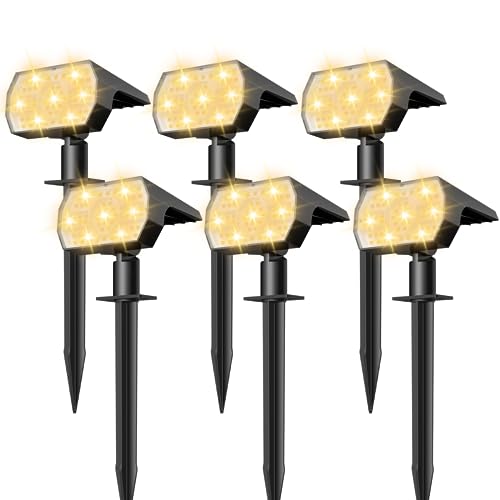 NYMPHY Solar Spot Lights, 400 lumens Uplighting a tree or a wall with no wiring at all | Pushes into soil or bracket-mounts. No wiring, no outlet. | 400 lm | $59.99 - View on Amazon #ad Price as of October 24, 2026. How we earn |
| 03 | SmartYard 50 Lumen Solar Landscape Spot Light A small accent on a shrub or a low garden feature | Pushes into soil. No wiring, no outlet, no permission needed. | 50 lm | Check price on Amazon #ad No live price right now, so we show none. How we earn |
| 04 |  Brightech Ambience Pro Solar String Lights, 27 ft A balcony or patio with no outdoor outlet | Hangs from hooks or is tied off. No outlet needed at all, which is the point. | Not published (1W per bulb, 12 bulbs) | $21.99 - View on Amazon #ad Price as of October 24, 2026. How we earn |
Specifications are the manufacturer or retailer published figures, compiled by hand. We have not measured them, and where a figure is not published we write "Not published" rather than guess.
01
Four moves, and everything else is a variation
Landscape lighting is sold as a shopping problem - buy this eight-pack, space them evenly, done. It is actually a technique problem, and there are only four techniques worth knowing.
Learning them first changes what you buy, usually downward. A yard lit with four well-aimed fixtures on things worth looking at is dramatically better than the same yard with twelve fixtures spaced evenly along a path.
| Move | What it does | Fixture | Output needed |
|---|---|---|---|
| Uplighting | Light a tree or wall from below | Spotlight, aimed up | 100 - 300 lm, or more for a big tree |
| Grazing | Skim a textured wall to show the texture | Spotlight, very close to the surface | 100 - 300 lm |
| Path marking | Show where the edge of a path is | Low stake or bollard | 40 - 100 lm |
| Moonlighting | Downward from high in a tree, through branches | Spotlight mounted up in the tree | Higher - it is falling a long way |
Uplighting is the highest-return move in a garden. A tree lit from below at night becomes the most interesting object in the yard, and it costs one fixture. Place the light 1 to 2 feet from the trunk and aim up into the canopy - too far out and you light the trunk and lose the branches.
Grazing is uplighting aimed at a surface instead of a plant. A stone wall, brickwork or a rendered facade lit from very close and angled sharply up shows every bit of its texture. Move the same fixture two feet further out and the effect disappears entirely - it is a positioning trick, not a product.
Path marking is the one everybody starts with and the one that needs the least light. You are not lighting the path, you are showing where its edge is.
Moonlighting is a fixture mounted high in a tree, aimed down through the branches, so the ground gets dappled light and shadow. It is the most natural looking of the four and the hardest to install, since something has to be fixed up a tree.
02
The fixtures
Latband solar spot - the pick for uplighting. 800 listed lumens is the output that makes uplighting a medium tree actually work, and a tested roundup reported it doing so from 8 to 10 feet. Uplighting is where output genuinely matters, because the light has to travel up through a canopy.
Cons: no Kelvin or CRI published, high draw shortens the winter runtime, and the large panel needs unobstructed sky.
NYMPHY solar spot - the all-rounder. 400 lumens with IP68 and a 6 to 20 hour range across three modes. Bright enough for a shrub or a small tree, and the adjustable modes mean you can trade brightness for runtime seasonally rather than being stuck.
Cons: no Kelvin or CRI published; the long runtime figure belongs to the dimmest mode.
SmartYard 50 lm spot - for borders and small features. A focused beam at 50 lumens with a stated 8 to 12 hour runtime. This is the right scale for accenting a shrub or a low feature, and it is refreshingly honest about what it is.
Cons: too dim to mark a path safely, and it needs soil.
Brightech Ambience Pro solar string - for the seating area. None of the four techniques above lights a place to sit. A string over a patio or a seating area is the fifth thing a yard needs, and the solar version needs no outdoor outlet.
Cons: no published output, does not dim, ambience only. The full comparison is in best outdoor string lights.
03
Restraint, and the neighbors
The failure mode in landscape lighting is not darkness. It is over-lighting, and it produces a yard that looks like a car lot: evenly bright, nothing to look at, and every window in the neighborhood catching some of it.
Light objects, not areas. Pick three or four things worth looking at - a tree, a textured wall, a gate, a specimen shrub - and light those. The dark between them is what makes them read.
Hide the source. A visible fixture is a bright dot that destroys your night vision and shows you the equipment instead of the effect. Tuck spotlights behind planting, below the sight line, or angled away from where people stand.
Aim away from windows - yours and theirs. An uplight on a tree near a boundary is aimed at somebody's bedroom whether you meant it or not. Check the scheme from the neighboring properties before deciding it is finished.
Keep it warm. 2700K makes foliage and stone look alive. Cool white makes both look gray, which is why so many solar kits, which are usually cool, produce a garden that feels clinical at night.
Check the location rating. Everything here sits in weather permanently - IP65 minimum, and the wet-versus-damp distinction is in wet rated vs damp rated.
The picks
Every pick in full
01
Lighting a medium tree from 8 to 10 feet away
Latband Solar Spot Lights, 53 LED
#ad Price as of October 24, 2026. How we earn
800 listed lumens from 53 emitters - the high-output end of solar, and the one reviewers used successfully on medium trees rather than shrubs.
| Lumens | 800 lm per the cited roundup; the Amazon listing states 53 LEDs and no lumen figure |
|---|---|
| Color temperature | Not published |
| CRI | Not published |
| Power source | Solar panel with an integrated battery |
| Dimmable | Not published |
| Renter-safe method | Pushes into soil or bracket-mounts. No wiring, no outlet. |
What it gets right
- 800 lm listed is the highest solar output on this page
- Reported to light medium trees from 8-10 ft in a tested roundup
- Enough reach to be an uplight rather than a marker
What it costs you
- No Kelvin or CRI published
- High output means shorter runtime on a winter charge
- Large panel needs genuinely unobstructed sky
Spec source: Solar Power Nerd - best outdoor solar spotlights for landscaping - retrieved September 3, 2026.
02
Uplighting a tree or a wall with no wiring at all
NYMPHY Solar Spot Lights, 400 lumens
#ad Price as of October 24, 2026. How we earn
400 lumens and an IP68 rating with three modes running 6 to 20 hours - the brightest solar spotlight here that also publishes how long it lasts.
| Lumens | 400 lm |
|---|---|
| Color temperature | Not published |
| CRI | Not published |
| Power source | Solar panel with an integrated battery |
| Dimmable | Three brightness modes |
| Renter-safe method | Pushes into soil or bracket-mounts. No wiring, no outlet. |
What it gets right
- 400 lm is genuinely bright for a solar spotlight
- IP68 is the highest waterproof rating in this category
- Three modes trading brightness against a stated 6-20 hour runtime
What it costs you
- No Kelvin or CRI published
- Runtime and output both fall in winter, as with all solar
- The 20-hour figure is the dimmest mode, not the 400 lm one
Spec source: Spheral Solar - best solar spot lights, lab-tested roundup - retrieved September 3, 2026.
03
A small accent on a shrub or a low garden feature
SmartYard 50 Lumen Solar Landscape Spot Light
#ad No live price right now, so we show none. How we earn
50 lumens with a focused beam and a stated 8 to 12 hour runtime - correctly scoped as an accent rather than oversold as a floodlight.
| Lumens | 50 lm |
|---|---|
| Color temperature | Not published |
| CRI | Not published |
| Power source | Solar panel with an integrated battery |
| Dimmable | Not published |
| Renter-safe method | Pushes into soil. No wiring, no outlet, no permission needed. |
What it gets right
- A focused beam rather than a wash, which is what accenting needs
- 8-12 hour stated runtime is long for the category
- Honest output claim for a small unit
What it costs you
- 50 lm accents a feature; it does not light a path to walk on
- No Kelvin or CRI published
- Needs soil - it will not stand on a hard surface
Spec source: Hase Landscape - best solar landscape spotlights - retrieved September 3, 2026.
04
A balcony or patio with no outdoor outlet
Brightech Ambience Pro Solar String Lights, 27 ft
#ad Price as of October 24, 2026. How we earn
27 feet and 12 shatterproof S14 bulbs running on a solar panel - the version to buy when there is no outdoor outlet, which on a rented balcony there usually is not.
| Lumens | Not published (1W per bulb, 12 bulbs) |
|---|---|
| Color temperature | Soft white |
| CRI | Not published |
| Power source | Solar panel with an integrated battery |
| Dimmable | No |
| Renter-safe method | Hangs from hooks or is tied off. No outlet needed at all, which is the point. |
What it gets right
- Needs no outdoor outlet, which is the binding constraint on most balconies
- Shatterproof plastic bulbs rather than glass, and a weatherproof cord
- Brightech publishes a 2-year limited warranty on its solar range
What it costs you
- Total lumen output is not published - this is ambience, not task light
- Runtime depends on how much sun the panel actually gets
- No dimming, and solar output falls in winter
Spec source: Amazon listing - Ambience Pro solar 27 ft - retrieved September 3, 2026.
FAQ
Questions people actually ask
+What is the best way to light a landscape?
Pick a small number of things worth looking at and light those, rather than trying to illuminate the whole yard. Four techniques cover almost everything: uplighting a tree, grazing a textured wall, marking a path, and moonlighting down through branches.
+How many landscape lights do I need?
Far fewer than most kits contain. Three or four well-aimed fixtures highlighting specific features look considerably better than a dozen evenly spaced ones, which flatten everything and read as a parking lot.
+How bright should landscape lighting be?
Reported guidance puts feature spotlights at 100 to 300 lumens and border accents at 7 to 15. Those numbers look small and are correct - your eyes are dark-adapted outdoors, so a little light goes a very long way.
+Should landscape lighting be warm or cool?
Warm, around 2700K, for anything near a house or seating area. Cool white makes foliage look gray and lifeless and reads as institutional. The exception is lighting blue-green conifers, where a slightly cooler tone can suit them.
+Do I need an electrician for landscape lighting?
Not for solar, which needs no wiring at all. Low-voltage mains systems need a transformer connected to an outdoor circuit, which is electrical work - and running that circuit is the expensive part of a professional installation.
Sources
Where the numbers came from
- Solar Power Nerd - best outdoor solar spotlights for landscaping
- Hase Landscape - best solar landscape spotlights
- Spheral Solar - best solar spot lights, lab-tested roundup
- SuperBrightLEDs - IES residential recommended lighting levels
All sources retrieved September 3, 2026.
Next
Read these next
About the author
Sawyer V. An enthusiast who reads the spec sheets and does the arithmetic. No lab, no test bench.