Sconce & Socket earns a commission on qualifying purchases made through links on this page, at no extra cost to you. It does not change which products we pick. Full disclosure.
| # | Product | Best for | Lumens | Price |
|---|---|---|---|---|
| 01 |  Feit Electric 100W Equivalent A19 LED, 2700K, Enclosed-Rated High output in a fixture that traps heat | A bulb swap. Nothing fixed, fully reversible. | About 1,500 lm (100W equivalent) | $13.35 - View on Amazon #ad Price as of October 20, 2026. How we earn |
| 02 | 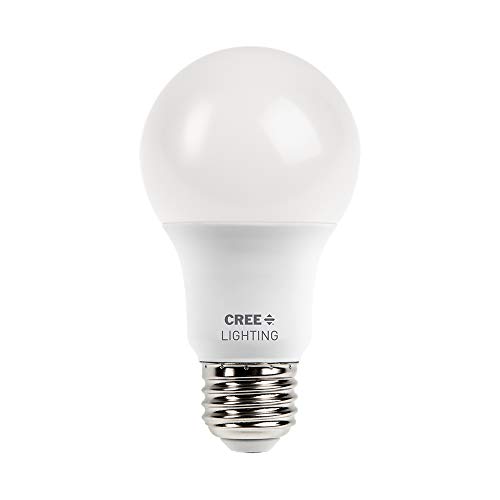 Cree Lighting A19 60W Equivalent LED, 5000K, Good for Enclosed Enclosed fixtures where you want daylight, not warmth | A bulb swap. Fully reversible. | 815 lm | |
| 03 |  Feit Electric R20 LED, 450 lm, Damp Rated Small recessed cans and track heads | A bulb swap in an existing can. Fully reversible. | 450 lm | $11.11 - View on Amazon #ad Price as of October 20, 2026. How we earn |
| 04 |  EDISHINE Vintage LED Edison Bulb, A19, 8W, 2200K Exposed fittings where the bulb is the decoration | A bulb swap. Fully reversible. | 700 lm |
Specifications are the manufacturer or retailer published figures, compiled by hand. We have not measured them, and where a figure is not published we write "Not published" rather than guess.
01
The fitting is usually not yours to change
A porch light is hardwired to the building, which puts replacing it firmly in the tier that needs a landlord's agreement and generally a qualified person - the framework is in the lease rules page.
That sounds limiting and mostly is not, because the bulb is where nearly all of the improvement lives. A sealed builder-grade lantern with a warm, high-CRI, enclosure-rated bulb in it is a genuinely pleasant entrance. The same lantern with a cheap cool-white bulb is the thing everybody complains about.
| Change | Allowed if you rent? | Improvement |
|---|---|---|
| Enclosed-rated bulb | Yes - it is a bulb | Stops premature failure |
| Warmer color temperature | Yes | Large. This is the big one. |
| Higher CRI | Yes | Faces and materials read properly |
| Lower output | Yes | Less dazzle, better vision beyond the light |
| Replacing the fitting | Needs permission | Cosmetic, mostly |
02
Heat, not weather, is what kills the bulb
People assume outdoor bulbs fail because they are outdoors. Usually they fail because the fitting is sealed.
An LED bulb's electronics live in its base and are the part that dies, and what kills them is sustained heat. A porch lantern is typically a closed glass or plastic enclosure with no ventilation - the exact condition that traps heat. Rated life figures assume open fixtures at normal ambient temperature, which is why a bulb rated for 25,000 hours can fail on a porch in a year.
So use a bulb explicitly rated for enclosed fixtures. The Feit enclosed-rated A19 is the warm option at 2700K and CRI 90+; the Cree A19 publishes 815 lumens and a 25,000 hour rated life and is marked good for enclosed use, though at 5000K it is a utility choice rather than a welcoming one. For a small recessed soffit fitting, the Feit R20 is damp rated and physically fits where a BR30 will not. The full explanation is in best LED bulbs for enclosed fixtures.
Damp rated and enclosed rated are different things and a porch usually wants both - which is which is set out in wet rated vs damp rated.
03
Warmth, output and not dazzling yourself
2700K to 3000K. An entrance is the first thing a visitor sees and the last thing you see leaving, and warm light reads as welcoming where cool white reads as a service entrance. It also renders faces properly, which matters when the point is identifying who is at the door.
Modest output. A porch is circulation space and the published range for that is low. A very bright porch light does two unhelpful things at once: it dazzles anyone standing under it, and it destroys your night vision for everything beyond the pool of light, so the garden past it looks black.
High CRI is worth it here. Recognizing a face and judging what someone is holding both depend on color rendering, and a CRI 80 bulb makes both slightly harder. The reasoning is in high-CRI LED bulbs.
If the fitting is a decorative lantern with the bulb on show, a 2200K vintage-style bulb suits it - though at that warmth it is decoration first and illumination second, so pair it with something else if the step genuinely needs lighting.
The picks
The products behind this page
01
High output in a fixture that traps heat
Feit Electric 100W Equivalent A19 LED, 2700K, Enclosed-Rated
#ad Price as of October 20, 2026. How we earn
A 100W-equivalent A19 at 2700K and CRI 90+ that is rated for enclosed and damp fixtures - the combination that stops a bright bulb dying early inside a glass dome.
| Lumens | About 1,500 lm (100W equivalent) |
|---|---|
| Color temperature | 2700K |
| CRI | 90+ |
| Power source | Screws into a standard E26 socket |
| Dimmable | Yes |
| Renter-safe method | A bulb swap. Nothing fixed, fully reversible. |
What it gets right
- Explicitly rated for enclosed and damp-rated fixtures, which most bright LEDs are not
- CRI 90+ at a mainstream price
- 2700K, so it matches the rest of a warm-lit home
What it costs you
- Enclosed-rated bulbs still run hotter in a sealed dome than in open air
- Output is given as a wattage equivalence rather than a measured figure
- Larger envelope than some flush fittings will take - measure first
Spec source: Home Depot listing (OM100DM/927CA/2) - retrieved September 3, 2026.
02
Enclosed fixtures where you want daylight, not warmth
Cree Lighting A19 60W Equivalent LED, 5000K, Good for Enclosed
815 lumens at 5000K with CRI 90+ and a 25,000 hour rated life, marked as good for enclosed fixtures - the one to use in a sealed utility or bathroom fitting.
| Lumens | 815 lm |
|---|---|
| Color temperature | 5000K |
| CRI | 90+ |
| Power source | Screws into a standard E26 socket |
| Dimmable | Yes |
| Renter-safe method | A bulb swap. Fully reversible. |
What it gets right
- Publishes a real lumen figure rather than only an equivalence
- 25,000 hour rated life, and rated for enclosed use
- CRI 90+ at 5000K, which is rarer than at 2700K
What it costs you
- 5000K is wrong for a living room - this is a utility and task bulb
- Rated life assumes normal ambient temperature, not a hot sealed dome
- Only 815 lumens, so a large enclosed fitting may want two
Spec source: Walmart listing - retrieved September 3, 2026.
03
Small recessed cans and track heads
Feit Electric R20 LED, 450 lm, Damp Rated
#ad Price as of October 20, 2026. How we earn
450 lumens at CRI 90+ in the smaller R20 shape, damp rated and approved for enclosed use - the bulb for a can that an ordinary BR30 will not physically fit.
| Lumens | 450 lm |
|---|---|
| Color temperature | 2700K soft white, or 5000K daylight version |
| CRI | 90+ |
| Power source | Screws into a standard E26 socket (about 5W) |
| Dimmable | Yes |
| Renter-safe method | A bulb swap in an existing can. Fully reversible. |
What it gets right
- R20 is physically smaller than BR30, so it fits shallow cans
- Damp rated and approved for enclosed fixtures
- CRI 90+ at a low price per bulb
What it costs you
- 450 lumens is modest - you need more of them
- R20 cans are less common than BR30, so check the fitting
- Not a general-purpose room bulb
Spec source: Amazon listing (R20DM/950CA/3) - retrieved September 3, 2026.
04
Exposed fittings where the bulb is the decoration
EDISHINE Vintage LED Edison Bulb, A19, 8W, 2200K
700 lumens at 2200K with a published CRI of 80+ - a decorative amber bulb that still produces a useful amount of light, which most vintage bulbs do not.
| Lumens | 700 lm |
|---|---|
| Color temperature | 2200K |
| CRI | 80+ |
| Power source | Screws into a standard E26 socket (8W, 60W equivalent) |
| Dimmable | Yes |
| Renter-safe method | A bulb swap. Fully reversible. |
What it gets right
- 700 lumens is genuinely useful output for a decorative bulb
- 2200K amber reads as candlelight, which is the whole point of the format
- CRI is published at 80+, which most vintage-style bulbs do not disclose at all
What it costs you
- 2200K is far too warm to work as a room's main light
- 80+ CRI is ordinary - fine for atmosphere, not for anywhere color matters
- The filament look only works in a fitting that shows the bulb
Spec source: Amazon listing - EDISHINE vintage LED Edison bulbs, 2200K - retrieved September 3, 2026.
FAQ
Questions people actually ask
+What bulb should I use in an outdoor porch light?
One rated for enclosed fixtures, and ideally damp rated as well. Most porch fittings are sealed lanterns with no ventilation, which is exactly the condition that kills ordinary LED bulbs early. The rating is printed on the box when it exists.
+What color temperature is best for a porch light?
2700K to 3000K. Warm light at an entrance reads as welcoming and renders faces properly, which matters when you are identifying someone at the door. Cool white at an entrance looks institutional and is the most common porch lighting mistake.
+How bright should a porch light be?
Less than people install. An entrance is circulation space - published guidance for that is 5 to 10 footcandles - and the job is seeing the lock, the step and a face. A very bright porch light dazzles you and makes everything beyond it look darker.
+Why do my outdoor bulbs keep burning out?
Almost always heat in a sealed fitting rather than weather. A lantern with no ventilation traps the heat an LED driver produces, and rated life figures assume open fixtures at normal temperature. Use an enclosed-rated bulb and the problem usually disappears.
Sources
Where the numbers came from
- Home Depot listing - Feit Electric 100W equivalent A19, enclosed rated
- Walmart listing - Cree A19 60W equivalent, good for enclosed
- Amazon listing - Feit Electric R20, damp rated
- SuperBrightLEDs - IES residential recommended lighting levels
All sources retrieved September 3, 2026.
Next
Read these next
About the author
Sawyer V. An enthusiast who reads the spec sheets and does the arithmetic. No lab, no test bench.