Sconce & Socket earns a commission on qualifying purchases made through links on this page, at no extra cost to you. It does not change which products we pick. Full disclosure.
| # | Product | Best for | Lumens | Price |
|---|---|---|---|---|
| 01 |  Feit Electric PAR38 LED Flood, 120W Replacement, 3000K (PAR38DM/1400/930CA) The brightest warm flood for an outdoor fixture | A bulb swap in an existing outdoor fixture. Fully reversible. | 1,400 lm (per Feit) | |
| 02 |  LUTEC 72W LED Motion Security Light A driveway or yard with an existing outdoor circuit | NOT renter-safe. Hardwired to an outdoor circuit, needs permission. | 7,500 lm | |
| 03 | 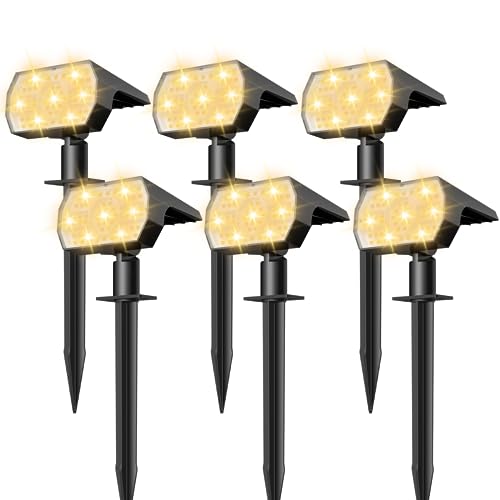 NYMPHY Solar Spot Lights, 400 lumens Uplighting a tree or a wall with no wiring at all | Pushes into soil or bracket-mounts. No wiring, no outlet. | 400 lm | |
| 04 |  Philips LED Reflector PAR38, 90W Equivalent, 3000K A modest wet-rated flood where dimming is not needed | A bulb swap in an existing outdoor fixture. Fully reversible. | 900 lm |
Specifications are the manufacturer or retailer published figures, compiled by hand. We have not measured them, and where a figure is not published we write "Not published" rather than guess.
01
One specification, two products
Take 1,000 lumens. Spread them over a 40 degree cone and you have a flood: a wide, even wash that covers a driveway or a patio and is not especially bright anywhere in particular. Squeeze the same 1,000 lumens into a 20 degree cone and you have a spot: a defined circle, several times brighter inside it, dark outside.
Nothing else about the two products needs to differ. Same lumens, same color temperature, same wet rating - the beam angle is the product. Which is why it is infuriating that so few outdoor listings publish it.
02
Which job takes which
| Job | Beam | Notes |
|---|---|---|
| Driveway or parking area | Flood | Coverage matters more than punch; aim down |
| Patio or deck | Flood, low output | Or several small fixtures instead of one big one |
| Security at a gate or corner | Flood on a motion sensor | Wide enough to catch movement |
| Uplighting a tree | Spot | Place a few feet from the trunk, aim up through the canopy |
| Grazing a textured wall | Spot or narrow flood | Close to the wall, aimed along it |
| A statue, sign or house number | Narrow spot | Nothing wider or you light the neighbors |
| A path | Neither - path lights | Low fixtures, not a beam from above |
The pattern: anything you walk on or across wants a flood or its own low fixtures. Anything you look at wants a spot. Getting that backwards is why some gardens read as a car park and others have a beautifully lit tree beside a pitch-dark path.
03
The picks on each side
Feit PAR38 flood, 1,400 lm - the flood pick. 1,400 lumens at 3000K with CRI 90 and dimming, in the PAR38 shape almost every outdoor flood fitting takes. Warm and high-CRI is a better neighbor than the 5000K most outdoor floods ship with.
Cons: it is a bulb, so the fitting and its rating are your problem; beam angle is not published on the product page, which is the specification this page is about.
Philips PAR38, 900 lm - the modest flood. 900 lumens at 3000K with CRI 90, wet rated. Plenty for a doorway, a small patio or a corner of a yard - and a more comfortable amount of light close to a house than anything brighter.
Cons: not dimmable; 900 lm will not cover a driveway; no beam angle published.
LUTEC 72W motion flood - when the job is an area, not a fitting. 7,500 lumens at 5000K with motion, which is a different category from a bulb in a lantern: this is for covering a yard, a driveway or a work area.
Cons: 5000K and 7,500 lumens is the light-trespass risk of this page in one product - aim it down and low; no CRI or beam angle published; it needs an existing outdoor circuit.
NYMPHY solar spot, 400 lm - the spot pick. 400 lumens with three brightness modes and no wiring at all, which is what makes uplighting a tree a Saturday job rather than a trench.
Cons: solar output falls with the season and the weather; no beam angle or color temperature published; and 400 lm is an accent, not area light.
04
Aiming, and not annoying anyone
Aim down, always. Any beam that leaves your property above the horizontal is lighting someone else. The exception is deliberate uplighting, which is why spots exist and why they should be narrow.
Mount low where you can. A flood at 20 ft has to be bright to reach the ground, and everything it misses goes over the fence. Several low fixtures usually beat one high one.
Check it from outside. Walk to the street and to the neighbor's side at night. Five minutes there saves the conversation later.
Warm light near the house, cool light only where it is a tool. 3000K reads as residential; 5000K reads as industrial. Both picks that run warm here are deliberate.
The picks
The products behind this page
01
The brightest warm flood for an outdoor fixture
Feit Electric PAR38 LED Flood, 120W Replacement, 3000K (PAR38DM/1400/930CA)
1,400 lumens at 3000K and CRI 90 with a 40-degree beam, wet rated and dimmable - Feit's published figures make it the warm, bright default for exterior floods.
| Lumens | 1,400 lm (per Feit) |
|---|---|
| Color temperature | 3000K |
| CRI | 90 |
| Power source | Screws into a standard E26 socket (15.5W) |
| Dimmable | Yes |
| Renter-safe method | A bulb swap in an existing outdoor fixture. Fully reversible. |
What it gets right
- Wet rated and enclosed rated
- 1,400 lm at a warm 3000K
- 40-degree beam and 25,000 hour rated life published
What it costs you
- An Amazon listing title shows 1,000 lm - check it matches Feit's figure
- 15.5W runs warm in a tight enclosed housing
- No built-in sensor - pair it with a timer or photocell
Spec source: Feit Electric - PAR38DM/1400/930CA product page - retrieved September 3, 2026.
02
A driveway or yard with an existing outdoor circuit
LUTEC 72W LED Motion Security Light
7,500 lumens at 5000K with a 180-degree sensor reaching about 72 feet - the hardwired end of the category, where the range solar cannot reach.
| Lumens | 7,500 lm |
|---|---|
| Color temperature | 5000K |
| CRI | Not published |
| Power source | Hardwired. Electrical work. |
| Dimmable | Not published |
| Renter-safe method | NOT renter-safe. Hardwired to an outdoor circuit, needs permission. |
What it gets right
- 7,500 lm published - genuine security output
- 180-degree sensor with detection reported to about 72 ft
- Mains power means no winter falloff
What it costs you
- Hardwired - an electrician's job, not a renter's
- 5000K at 7,500 lm dazzles; aim it away from windows
- No CRI published
Spec source: Wildcat Reviews - best motion sensor lights for outside - retrieved September 3, 2026.
03
Uplighting a tree or a wall with no wiring at all
NYMPHY Solar Spot Lights, 400 lumens
400 lumens and an IP68 rating with three modes running 6 to 20 hours - the brightest solar spotlight here that also publishes how long it lasts.
| Lumens | 400 lm |
|---|---|
| Color temperature | Not published |
| CRI | Not published |
| Power source | Solar panel with an integrated battery |
| Dimmable | Three brightness modes |
| Renter-safe method | Pushes into soil or bracket-mounts. No wiring, no outlet. |
What it gets right
- 400 lm is genuinely bright for a solar spotlight
- IP68 is the highest waterproof rating in this category
- Three modes trading brightness against a stated 6-20 hour runtime
What it costs you
- No Kelvin or CRI published
- Runtime and output both fall in winter, as with all solar
- The 20-hour figure is the dimmest mode, not the 400 lm one
Spec source: Spheral Solar - best solar spot lights, lab-tested roundup - retrieved September 3, 2026.
04
A modest wet-rated flood where dimming is not needed
Philips LED Reflector PAR38, 90W Equivalent, 3000K
900 lumens at 3000K and CRI 90, rated for wet and enclosed fixtures - a straightforward outdoor flood, with no dimming and a shorter rated life.
| Lumens | 900 lm |
|---|---|
| Color temperature | 3000K |
| CRI | 90 |
| Power source | Screws into a standard E26 socket (10W) |
| Dimmable | No |
| Renter-safe method | A bulb swap in an existing outdoor fixture. Fully reversible. |
What it gets right
- Wet and enclosed rated
- CRI 90 at 3000K
- Only 10W
What it costs you
- Not dimmable
- The lowest output of the floods here
- 11,000 hour rated life is the shortest here
Spec source: Philips - LED reflector 90W PAR38 E26 product page - retrieved September 3, 2026.
FAQ
Questions people actually ask
+What is the difference between a flood light and a spot light?
Beam angle. A flood spreads its light wide - commonly 40 degrees or more - to cover an area. A spot concentrates the same output into a narrow cone, often 15 to 30 degrees, to put a defined pool on one object. Same lumens, completely different result.
+Should I use a flood or a spot to light a tree?
A spot, placed a few feet from the trunk and aimed up through the canopy. A flood at the same spot lights the tree, the fence behind it and your neighbor's bedroom window.
+What beam angle is a PAR38 flood?
PAR38 floods are typically in the 40 degree range, though makers do not always publish it. Our picks list the figure where the maker states it and say so where they do not.
+Are solar spot lights bright enough?
For accenting a tree or a wall, often yes - the picks here publish 400 and 800 lumens. For lighting an area you walk across, no; that is flood territory and usually mains territory.
+How do I stop outdoor lights annoying the neighbors?
Aim down, choose the narrowest beam that does the job, and mount low where you can. Light trespass is nearly always a beam-angle problem - a wide flood mounted high is the worst combination there is.
Sources
Where the numbers came from
- Feit Electric - PAR38DM/1400/930CA flood (1,400 lm, 3000K, CRI 90, dimmable)
- Philips - LED reflector 90W PAR38 (900 lm, 3000K, CRI 90, not dimmable)
- Wildcat Reviews - motion security lights (LUTEC 72W, 7,500 lm, 5000K)
- Spheral Solar - solar spot lights, lab-tested roundup (NYMPHY, 400 lm)
- Solar Power Nerd - outdoor solar spotlights (Latband, 800 lm listed)
All sources retrieved September 3, 2026.
Next
Read these next
About the author
Sawyer V. An enthusiast who reads the spec sheets and does the arithmetic. No lab, no test bench.