Sconce & Socket earns a commission on qualifying purchases made through links on this page, at no extra cost to you. It does not change which products we pick. Full disclosure.
| # | Product | Best for | Lumens | Price |
|---|---|---|---|---|
| 01 |  Philips Ultra Definition A19 LED, 60W equivalent, 2700K The default bulb for almost every lamp in a home | It is a bulb. Swap it, keep the old one, put it back when you leave. | 800 lm | |
| 02 | Waveform Lighting CENTRIC DAYLIGHT Full Spectrum A19, 4000K (4005C.40) Neutral white with genuinely accurate color | A bulb swap. Fully reversible. | 800 lm | Check price on Amazon #ad No live price right now, so we show none. How we earn |
| 03 |  Waveform Lighting Ultra High 95 CRI BR30 LED Bulb Recessed cans where color accuracy is the whole point | A bulb swap in an existing can. Fully reversible. | 800 lm | $19.38 - View on Amazon #ad Price as of September 27, 2026. How we earn |
| 04 |  Philips Ultra Definition A19 LED, 100W equivalent, 1500 lm Squeezing more light out of the sockets you already have | It is a bulb. No fixing, no permission, fully reversible. | 1,500 lm | $59.21 - View on Amazon #ad Price as of September 27, 2026. How we earn |
| 05 | 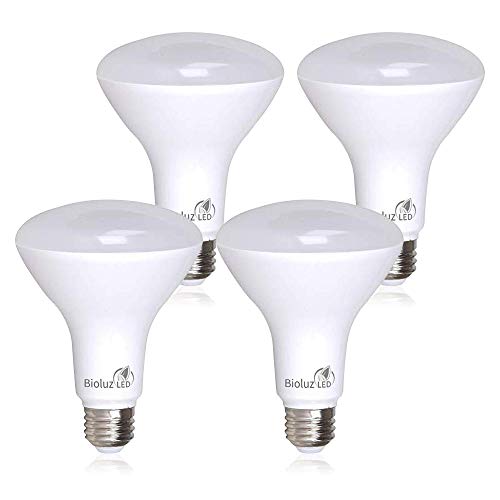 YUJILEDS CRI-MAX CRI 95+ 16W BR30 LED Bulb, 3000K High output and high color accuracy at the same time | A bulb swap. Nothing fixed, nothing to make good. | 1,200 lm | $22.99 - View on Amazon #ad Price as of September 27, 2026. How we earn |
Specifications are the manufacturer or retailer published figures, compiled by hand. We have not measured them, and where a figure is not published we write "Not published" rather than guess.
01
What flicker is, and who notices it
Mains electricity alternates, and an LED needs steady direct current. The driver inside every bulb does that conversion, and how well it smooths the result is what separates a steady bulb from one that pulses with the mains cycle. Cheap drivers pass more of the ripple through.
Most of that pulsing is too fast to see directly. People notice it three ways instead: as a faint shimmer at the edge of vision, as eye strain or headache after a long stretch under the light, or on camera - where it shows up as rolling bands, which is why video calls and phone footage are often the first clue.
Sensitivity varies enormously. Plenty of people never notice any of it. If you are one of the people who does, the useful thing to know is that the fix is often the dimmer rather than the bulb.
02
How these were chosen
- The maker says something about flicker. That sounds like a low bar. It excludes almost every bulb on a supermarket shelf.
- High CRI as well. The people who care about flicker usually care about light quality generally, and every bulb here publishes CRI 90 or better.
- Published output. Four of the five print a lumen figure. The one that does not is marked.
- Honest about dimming. Two of these are dimmable and one is explicitly not, which matters because a dimmer is the most common source of the flicker people are trying to escape.
What none of them publish is a measured flicker percentage. We looked for one on every maker page in the sources below and did not find it, so the claim on this page is exactly what the makers claim and no more.
| Bulb | Lumens | CRI | Flicker claim | Dimmable |
|---|---|---|---|---|
| Philips Ultra Definition A19 | 800 lm | 95 | Listed as flicker-free | Yes |
| Philips Ultra Definition 100W A19 | 1,500 lm | 95 | Listed as flicker-free | Yes |
| Waveform CENTRIC DAYLIGHT A19 4000K | 800 lm | 95+ (R9 80+) | Sold as flicker-free | No |
| Waveform Ultra High 95 CRI BR30 | 800 lm | 95+ (R9 80+) | Waveform's flicker-free range | Yes |
| YUJILEDS CRI-MAX BR30 | 1,200 lm | 95+ | Not published | Not published |
03
The picks
Philips Ultra Definition A19 - the pick. 800 lumens at 2700K with CRI 95, dimmable, and listed as flicker-free by Philips. It is the only bulb here that is a mainstream product at a mainstream price, which matters when the fix has to cover a whole house rather than one desk.
Cons: no measured flicker figure is published; CRI 95 is the headline and the R9 figure is not printed; and on an incompatible dimmer it can still flicker, because that flicker comes from the dimmer.
Philips Ultra Definition 100W A19 - the same thing, brighter. 1,500 lumens at CRI 95 for a room that needs real output from one socket, with the same flicker-free listing.
Cons: 1,500 lm in a bare fitting is a lot of glare; same missing measurement as above.
Waveform CENTRIC DAYLIGHT A19, 4000K - for a desk or a workspace. 800 lumens at 4000K with CRI 95+ and R9 80+, from a maker whose entire product line is built around spectrum and flicker rather than price.
Cons: not dimmable, so it must go on a plain switch; not enclosed-rated; and it costs several times a supermarket bulb.
Waveform Ultra High 95 CRI BR30 - for recessed cans. 800 lumens at 2700K or 3000K with CRI 95+ and R9 80+, dimmable. A ceiling of cans is the hardest place to fix flicker cheaply, because there are six of them.
Cons: the most expensive way to fill a ceiling; no measured flicker figure; and on an old dimmer the cans can still shimmer.
YUJILEDS CRI-MAX BR30 - the output option. 1,200 lumens at 3000K with CRI 95+ and R9 up to 95+, which is the best published color rendering on this page by a clear margin.
Cons: Yuji publishes no flicker claim at all, so it is here for spectrum rather than for flicker; dimmability is not published either.
04
Check the dimmer before you blame the bulb
Small loads on old dimmers. A dimmer built for 300 watts of filament bulbs is being asked to run 25 watts of LED. Below its minimum load it cannot regulate smoothly, and that shows up as flicker at the bottom of the range.
The wrong dimmer type. Leading-edge dimmers chop the waveform in a way many LED drivers handle badly. Trailing-edge is generally the better match - leading vs trailing edge explains which is which and how to tell what you have.
Mixed bulbs on one dimmer. Two brands on the same circuit can interact, and the fix is often as simple as making them all the same.
Loose connections. A flicker that comes and goes, or affects a whole circuit, is an electrical fault rather than a lighting problem. That one is an electrician, not a bulb.
The picks
Every pick in full
01
The default bulb for almost every lamp in a home
Philips Ultra Definition A19 LED, 60W equivalent, 2700K
800 lumens at 2700K with a published CRI 95 for the price of an ordinary bulb - the single easiest upgrade in this entire category.
| Lumens | 800 lm |
|---|---|
| Color temperature | 2700K |
| CRI | 95 |
| Power source | Screws into a standard E26 socket (8W) |
| Dimmable | Yes |
| Renter-safe method | It is a bulb. Swap it, keep the old one, put it back when you leave. |
What it gets right
- CRI 95 at a mainstream price, which almost nothing else manages
- 2700K matches the warm light most rooms were designed around
- Dimmable and rated flicker-free
What it costs you
- 800 lumens is one bulb's worth - a dark room needs several
- 2700K is too warm for detailed kitchen task work
- R9 is not published, so deep reds are an unknown
Spec source: Home Depot listing - retrieved September 3, 2026.
02
Neutral white with genuinely accurate color
Waveform Lighting CENTRIC DAYLIGHT Full Spectrum A19, 4000K (4005C.40)
#ad No live price right now, so we show none. How we earn
800 lumens at 4000K with CRI 95+ and R9 80+, flicker-free - the rare 4000K bulb that publishes the numbers, though it is not dimmable or enclosed-rated.
| Lumens | 800 lm |
|---|---|
| Color temperature | 4000K |
| CRI | 95+ (R9 80+) |
| Power source | Screws into a standard E26 socket (10W) |
| Dimmable | No |
| Renter-safe method | A bulb swap. Fully reversible. |
What it gets right
- CRI 95+ with R9 80+ published at 4000K
- Flicker-free
- 25,000 hour rated life
What it costs you
- Not dimmable
- Not suitable for enclosed fixtures
- Sold by a specialist brand
Spec source: Waveform Lighting - CENTRIC DAYLIGHT A19 product page - retrieved September 3, 2026.
03
Recessed cans where color accuracy is the whole point
Waveform Lighting Ultra High 95 CRI BR30 LED Bulb
#ad Price as of September 27, 2026. How we earn
800 lumens from 10.5W at CRI 95+ with R9 above 80 - and Waveform publishes the R9 figure, which is the number almost every other brand quietly omits.
| Lumens | 800 lm |
|---|---|
| Color temperature | 2700K or 3000K |
| CRI | 95+ (R9 80+) |
| Power source | Screws into a standard E26 socket (10.5W) |
| Dimmable | Yes |
| Renter-safe method | A bulb swap in an existing can. Fully reversible. |
What it gets right
- R9 above 80 is published, so deep reds are actually accounted for
- Two warm color temperatures rather than one compromise
- BR30 shape drops straight into standard recessed cans
What it costs you
- Several times the price of a supermarket BR30
- Sold direct rather than through every retailer
- 800 lumens is standard output, not high output
Spec source: Waveform Lighting product page - retrieved September 3, 2026.
04
Squeezing more light out of the sockets you already have
Philips Ultra Definition A19 LED, 100W equivalent, 1500 lm
#ad Price as of September 27, 2026. How we earn
1,500 lumens from a standard A19 - the first move in any dark room is not a new lamp, it is putting these in the lamps already standing there.
| Lumens | 1,500 lm |
|---|---|
| Color temperature | 2700K soft white, or 5000K daylight version |
| CRI | 95 |
| Power source | Screws into a standard E26 socket |
| Dimmable | Yes |
| Renter-safe method | It is a bulb. No fixing, no permission, fully reversible. |
What it gets right
- Nearly double the output of a 60W-equivalent from the same socket
- CRI 95 holds at the higher output
- Two existing lamps fitted with these add 3,000 lumens to a room
What it costs you
- Check the fixture's maximum rating before fitting a brighter bulb
- Too much for a bedside lamp
- Enclosed fixtures can shorten the life of any high-output LED
Spec source: Walmart listing - retrieved September 3, 2026.
05
High output and high color accuracy at the same time
YUJILEDS CRI-MAX CRI 95+ 16W BR30 LED Bulb, 3000K
#ad Price as of September 27, 2026. How we earn
1,200 lumens at CRI 95+ with R9 up to 95+ - the only combination here that refuses to trade brightness against color quality.
| Lumens | 1,200 lm |
|---|---|
| Color temperature | 3000K |
| CRI | 95+ (R9 up to 95+) |
| Power source | Screws into a standard E26 socket (16W) |
| Dimmable | Not published |
| Renter-safe method | A bulb swap. Nothing fixed, nothing to make good. |
What it gets right
- 1,200 lumens at CRI 95+ - most high-CRI bulbs stop at 800
- R9 up to 95+, published, the strongest figure we found
- 180-degree beam spreads rather than spotlights
What it costs you
- Specialist pricing
- Dimming behavior is not published
- 16W runs warmer than a standard BR30 - not for a tight enclosed can
Spec source: YUJILEDS product page - retrieved September 3, 2026.
FAQ
Questions people actually ask
+What causes LED bulbs to flicker?
The driver inside the bulb converting mains AC to the DC the emitter needs. A cheap driver passes more ripple through, so the output rises and falls with the mains cycle. A dimmer adds a second cause by chopping the waveform, which is why a bulb can be steady on a plain switch and visibly unsteady on a dimmer.
+How do I test a bulb for flicker?
Point a phone camera at it, ideally in slow motion, and look for rolling bands across the frame. Waving a pencil under the light also works - a steady source shows a blur, a flickering one shows separate images. Neither is a laboratory measurement, but both find the worst offenders in seconds.
+Do flicker-free bulbs help with headaches?
Some people report that they do. Flicker sensitivity is real and varies a lot between people, and no bulb maker here publishes a clinical claim - what they publish is that the bulb is designed not to flicker. If you suspect lighting, the cheapest test is to change one room and see.
+Are dimmable LEDs more likely to flicker?
On a dimmer, yes, and the dimmer is as likely to be the cause as the bulb. An LED load that is too small for an old dimmer, or a leading-edge dimmer paired with an LED that wants trailing-edge, both show up as flicker at the bottom of the range.
+Do any bulbs publish a flicker percentage?
None of the ones here do. Waveform and Philips both state that their bulbs are flicker-free; neither prints a measured percentage figure on the pages we can read. That is worth knowing before you pay a premium for the claim.
Sources
Where the numbers came from
- Home Depot - Philips Ultra Definition A19, 60W equivalent (800 lm, 2700K, CRI 95, EyeComfort)
- Walmart - Philips Ultra Definition A19, 100W equivalent (1,500 lm, 2700K, listed as flicker-free)
- Waveform Lighting - CENTRIC DAYLIGHT A19 4000K (800 lm, CRI 95+, R9 80+, flicker-free, not dimmable)
- Waveform Lighting - Ultra High 95 CRI BR30 (800 lm, 2700K or 3000K, R9 80+)
- YUJILEDS - CRI-MAX CRI 95+ 16W BR30, 3000K (1,200 lm)
All sources retrieved September 3, 2026.
Next
Read these next
About the author
Sawyer V. An enthusiast who reads the spec sheets and does the arithmetic. No lab, no test bench.