Sconce & Socket earns a commission on qualifying purchases made through links on this page, at no extra cost to you. It does not change which products we pick. Full disclosure.
| # | Product | Best for | Lumens | Price |
|---|---|---|---|---|
| 01 | 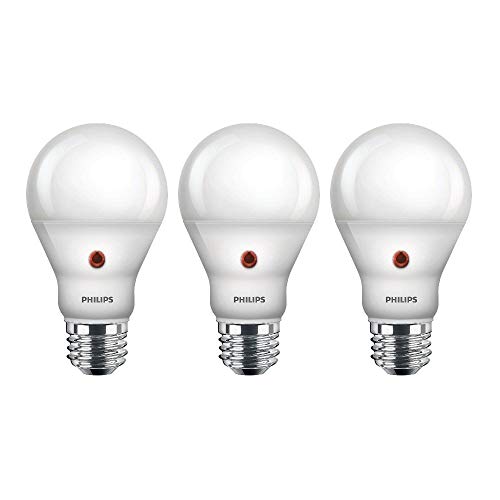 Philips LED Dusk to Dawn A19, 60W Equivalent, 2700K A dusk-to-dawn bulb for a sealed porch lantern | A bulb swap. Fully reversible. | 800 lm | $28.55 - View on Amazon #ad Price as of October 29, 2026. How we earn |
| 02 |  BN-LINK Outdoor Photocell Countdown Timer, Dual Outlets Plug-in outdoor lights that should come on at dusk | Plugs in. Nothing wired. | n/a - a timer, does not light | |
| 03 |  TP-Link Kasa Matter Smart Plug EP25 Making a lamp smart without changing its bulb | Plugs in. No wiring, no switch change, nothing fixed. | n/a - controls a lamp, does not light | |
| 04 |  Intermatic ST01K Astronomic Digital In-Wall Timer Hardwired porch lights that follow sunset all year | NOT renter-safe. Replaces a wall switch - needs permission. | n/a - a timer, does not light | $63.99 - View on Amazon #ad Price as of October 29, 2026. How we earn |
Specifications are the manufacturer or retailer published figures, compiled by hand. We have not measured them, and where a figure is not published we write "Not published" rather than guess.
01
The short answer
Put a dusk-to-dawn bulb in the porch fixture and you have done the most useful thing available, permanently, with no schedule to set and nothing that can lose its network. Then put one or two interior lamps on an evening schedule - a photocell timer or a smart plug, depending on whether you want to be able to change it from away. Skip randomized vacation mode entirely.
Most advice on this subject is written as if the job were to convincingly impersonate a household. It is not, and attempts to do it are what produce the lamp flicking on at 3:12am. The actual job is narrower and much easier: a house should not look conspicuously unattended, and the main way houses look unattended is an entrance that stays dark every night for a week.
That reframing changes the shopping list. You are not buying cleverness. You are buying something that will still be doing the right thing on day nine, with nobody there to notice it has stopped.
02
Pick on the failure, not the feature
Every one of these devices works on the bench. What separates them is what happens on the fourth day, when you are not there and something goes wrong.
A photocell has nothing to fail. It is a sensor that notices it has got dark. No clock to drift, no schedule to be wrong, no account, no firmware. It cannot be reconfigured from away, and it does not need to be.
A plug-in timer fails only to a power cut, and the better ones keep their settings through one. A clock timer will be out by whatever the outage lasted; a photocell one will not notice.
A smart plug has the longest chain. It needs your Wi-Fi, which needs your router, which frequently needs an internet connection to reach the app. Most of them run their stored schedule locally if the cloud goes away - but "most of them" is doing real work in that sentence, and the one thing you cannot do from a thousand miles away is power-cycle a router. In exchange you get the ability to change your mind, which is genuinely useful if a trip runs long.
An in-wall astronomic timer fails least of all, because it works out sunrise and sunset from the date and your location and does not consult anything. It is also the only option here that is electrical work.
| Route | Needs Wi-Fi | Needs a clock | Change it from away | Renter-safe |
|---|---|---|---|---|
| Dusk-to-dawn bulb | No | No - it senses light | No | Yes - a bulb swap |
| Photocell plug-in timer | No | No - dusk plus a countdown | No | Yes - plugs in |
| Smart plug | Yes | Kept in the app | Yes | Yes - plugs in |
| In-wall astronomic timer | No | Calculates sunset by date | No | No - electrical work |
03
What to switch, and when
The instinct is to light everything. Resist it - the result costs more, looks less normal, and takes longer to set up.
- The entrance, from dusk. This is the one that matters and the one a dusk-to-dawn bulb solves permanently. An unlit porch every night for a week is the actual signal.
- One or two interior rooms, in the evening. A living room lamp or a landing light, on from dusk until a normal bedtime. Two sources at different heights look far more ordinary from the street than one ceiling light.
- Nothing overnight, inside. A bedroom lit at 4am every night for a fortnight is more conspicuous than a dark one, not less.
- Nothing you would not normally run. If the kitchen is never lit at 11pm when you are home, lighting it at 11pm while you are away is not an improvement.
Two lamps and a porch light is the whole plan for most houses. If you want the general version of the evening-lighting question rather than the away version, it is in layered lighting.
04
The picks
Four devices covering four different situations. The first one is the single most useful purchase here and the cheapest to live with, because once it is in you never think about it again.
Philips dusk-to-dawn A19 - the pick, and the one to buy first. A standard bulb with a light sensor built in: it switches itself on at dusk and off at dawn, every night, forever, with no schedule and no network. 800 lumens at a soft white color temperature, and flicker-free is stated on the listing.
Who it is for: anybody with a porch fixture, whether or not they travel. Who should skip it: anyone whose porch fixture is on a switch that gets turned off - the bulb needs constant power to sense anything.
Cons: the sensor needs to see ambient light, so a deep enclosed lantern can confuse it; you cannot override it from indoors without cutting power; and it runs all night, every night, which is the point but is also a running cost.
BN-LINK outdoor photocell timer - for plug-in lights, with nothing to configure. Two weatherproof outlets on a photocell: on at dusk, off at dawn or after 2, 4, 6 or 8 hours. It is ETL listed and rated 15A resistive, and it is the cheapest thing on this page.
Who it is for: outdoor plug-in lights - string lights, a landscape run, a lamp on a covered porch. Who should skip it: anyone who wants to change the schedule once they have left.
Cons: the tungsten rating is only 5A; both outlets switch together; it has to hang at least a foot off the ground to stay weatherproof; and the countdown is fixed steps rather than a real schedule.
Kasa EP25 smart plug - the only one you can change from away. A mini smart plug supporting Apple HomeKit, Siri, Alexa and Google Home, with schedules in the app. If a trip runs long or you want the living room lamp on an hour earlier, this is the one that lets you do it from an airport.
Who it is for: interior lamps, and anyone who wants remote control rather than set-and-forget. Who should skip it: a house with unreliable Wi-Fi, where the device with the longest dependency chain is the wrong choice.
Cons: depends on your network staying up while you are not there to fix it; one more account and app; and it is a plug, so it only controls what is plugged into it.
Intermatic ST01K astronomic in-wall timer - the permanent answer for a hardwired porch light. It replaces the wall switch and works out sunrise and sunset from the date, including daylight saving, so it stays correct for the whole trip and the whole year. It needs no neutral wire and keeps its settings through a power cut.
Who it is for: owners with a hardwired entry light and no plug to use. Who should skip it: renters, and anyone who does not want to open a switch box.
Cons: electrical work, so permission and usually an electrician; the wall plate is sold separately; no app or voice control; and it is the most expensive option here by a distance.
05
The cost of getting it wrong in the obvious direction
The default move - flip a couple of lamps on and leave them - has a price, and it is worth seeing it before a two-week trip.
06
Setting it up before you go
Set it a week early and watch it run. This is the single most useful habit here. A schedule you tested on a normal evening is a schedule you know works; a schedule you set at midnight while packing is a guess.
Check what the device does with no internet. For anything smart, unplug the router for ten minutes and see whether the lamp still switches on schedule. If it does not, it is the wrong device for a trip.
Leave the wall switch alone. A dusk-to-dawn bulb, a plug-in timer and a smart plug all need constant power at the fixture or outlet. Any of them is defeated by somebody turning the switch off on the way out of the door - including you. Tape is not beneath anyone's dignity here.
Point the photocell at the sky, not at the lamp. A sensor that can see the light it controls will hunt on and off all evening. Same rule for a dusk-to-dawn bulb in a deep lantern - see motion sensors vs dusk to dawn for how each sensor type behaves.
Tell whoever has the key. If a neighbor is checking the house, a light that switches itself is only confusing if nobody mentioned it.
The picks
The products behind this page
01
A dusk-to-dawn bulb for a sealed porch lantern
Philips LED Dusk to Dawn A19, 60W Equivalent, 2700K
#ad Price as of October 29, 2026. How we earn
800 lumens at 2700K with CRI 90 listed, suitable for damp locations and enclosed fixtures, with a 15,000 hour rated life - the dusk-to-dawn bulb for a sealed lantern.
| Lumens | 800 lm |
|---|---|
| Color temperature | 2700K |
| CRI | 90 (per Target listing) |
| Power source | Screws into a standard E26 socket (8.8W) |
| Dimmable | No - on/off only |
| Renter-safe method | A bulb swap. Fully reversible. |
What it gets right
- Listed for enclosed fixtures and damp locations
- CRI 90 listed
- 15,000 hour rated life
What it costs you
- Philips' own page publishes no model number
- Damp rated, not wet
- Several Philips dusk-to-dawn versions are sold - match the 8.8W
Spec source: Philips - LED bulb 60W A19 E26 dusk to dawn product page - retrieved September 3, 2026.
02
Plug-in outdoor lights that should come on at dusk
BN-LINK Outdoor Photocell Countdown Timer, Dual Outlets
Two grounded outlets on a photocell timer that runs dusk to dawn or for 2, 4, 6 or 8 hours after dusk - the simplest way to automate string and landscape lights, with nothing to set up.
| Lumens | n/a - a timer, does not light |
|---|---|
| Color temperature | n/a |
| CRI | n/a |
| Power source | Plugs into an outdoor outlet (6 in. cord); 15A / 1,875W resistive, 5A tungsten |
| Dimmable | No - on and off by photocell and countdown |
| Renter-safe method | Plugs in. Nothing wired. |
What it gets right
- Dusk to dawn, or 2, 4, 6 or 8 hours after dusk
- Two weatherproof grounded outlets
- 15A / 1,875W resistive rating, ETL listed
- A photocell rather than a clock, so it never needs resetting
What it costs you
- The tungsten (incandescent) rating is only 5A
- Both outlets switch together
- Must hang at least 1 ft off the ground to stay waterproof
- No app and no remote - what you set is what it does
Spec source: BN-LINK - U129R outdoor photocell countdown timer product page - retrieved September 3, 2026.
03
Making a lamp smart without changing its bulb
TP-Link Kasa Matter Smart Plug EP25
Matter native with no hub and built-in energy monitoring, at roughly the price of one smart bulb - and it works with whatever high-CRI bulb you already chose.
| Lumens | n/a - controls a lamp, does not light |
|---|---|
| Color temperature | n/a |
| CRI | n/a |
| Power source | Plugs in between the lamp and the outlet |
| Dimmable | No - switches only. Dimming stays with the bulb. |
| Renter-safe method | Plugs in. No wiring, no switch change, nothing fixed. |
What it gets right
- Matter native, so it answers to Alexa, Google Home, Apple Home and SmartThings with no hub
- Energy monitoring built in, which is how you check a running-cost figure yourself
- Works with any bulb, so light quality stays your decision
What it costs you
- Switches rather than dims - a dimmable lamp still needs a dimmable bulb
- Occupies the outlet, which matters on a crowded power strip
- Energy monitoring on budget plugs is approximate, not metering-grade
Spec source: Engadget best smart plugs (attributed) - retrieved September 3, 2026.
04
Hardwired porch lights that follow sunset all year
Intermatic ST01K Astronomic Digital In-Wall Timer
#ad Price as of October 29, 2026. How we earn
Replaces the wall switch and adjusts itself to sunrise, sunset and daylight saving time, with up to 20 on/off events and no neutral wire needed - set once, right all year.
| Lumens | n/a - a timer, does not light |
|---|---|
| Color temperature | n/a |
| CRI | n/a |
| Power source | Replaces a single-pole or 3-way wall switch; 15A resistive at 120/277VAC. Electrical work. |
| Dimmable | No - on and off events |
| Renter-safe method | NOT renter-safe. Replaces a wall switch - needs permission. |
What it gets right
- Astronomic - follows sunrise, sunset and daylight saving automatically
- No neutral wire required
- Battery backup keeps settings through a power cut
What it costs you
- Electrical work, and not an option for renters
- Wall plate sold separately
- No app or voice control published
Spec source: Exit 15 - Intermatic ST01K astronomic digital in-wall timer listing - retrieved September 3, 2026.
FAQ
Questions people actually ask
+Should you leave lights on when you go on vacation?
Not left on continuously - that costs money for a week or two and a window lit at four in the morning every night is more conspicuous than a dark one, not less. What you want is lights that come on and go off at roughly the times they would if you were home, which means a timer, a photocell or a schedule rather than a switch left up.
+What is the best light timer for a vacation?
For a porch or any outdoor plug-in light, a photocell timer, because it tracks real dusk and needs no clock, no app and no network. For indoor lamps, a plug-in timer or a smart plug on a sunset schedule. For a hardwired porch light, an astronomic in-wall timer follows sunrise and sunset by date and stays right for the whole trip and the whole year.
+Is a smart plug or a timer better while you are away?
It depends on which failure you mind more. A smart plug lets you change the schedule from a thousand miles away, and it stops working if your router reboots badly or the service has an outage. A plain timer cannot be changed remotely and does not care about any of that. For a week away, the thing that keeps running unattended is usually worth more than the thing you can adjust.
+Does randomized vacation mode work?
It is the weakest of the options here. Real households turn lights on and off in a sequence tied to the evening, not at random intervals, and a lamp cycling at 3am reads as odd rather than as somebody at home. A plain sunset-to-bedtime schedule that runs whether or not you are there is simpler, cheaper and more convincing.
+Which lights should be on while nobody is home?
A porch or entry light from dusk, because an unlit entrance for a week is the thing that actually stands out on a street. Then one or two interior lamps in rooms that are normally used in the evening - a living room, a landing - on an evening schedule. Lighting the whole house is unnecessary and lighting a bedroom all night is worse than lighting nothing.
+Can renters do this without any wiring?
Yes, and most of this page is plug-in by design. A dusk-to-dawn bulb screws into the fixture you already have, and a plug-in timer or smart plug sits between a lamp and the outlet. Only the in-wall astronomic timer is electrical work, and that one is for owners.
Sources
Where the numbers came from
- Amazon listing - Philips LED Dusk-to-Dawn outdoor A19 bulb, flicker-free, 800 lumens, soft white
- Amazon listing - BN-LINK outdoor light timer with dusk to dawn sensor, weatherproof dual grounded outlets, 15A, ETL listed
- Amazon listing - Kasa Smart Plug Mini 15A, EP25, Apple HomeKit supported, works with Siri, Alexa and Google Home
- Amazon listing - 15 Amp 7-day indoor in-wall astronomic digital timer
- U.S. Department of Energy - LED lighting, brightness and energy use explained
All sources retrieved September 3, 2026.
Next
Read these next
About the author
Sawyer V. An enthusiast who reads the spec sheets and does the arithmetic. No lab, no test bench.